
Reviewed · BRUSSELS BIKE TOURS
Brussels Highlights & Hidden Gems Bike Tour
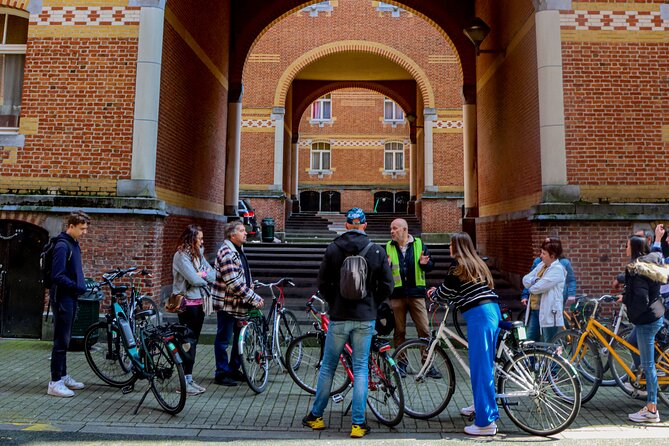
Brussels has a talent for mixing beauty with grit. This small-group bike loop helps you see key sights fast while keeping things practical and fun. You’ll also get bike rental included, so you’re not hunting for gear right when you arrive.
I love that the stops are short and timed well, so you can cover a lot without feeling rushed. La Bourse de Bruxelles, Place Sainte-Catherine, and the big viewpoints around the Palace of Justice are all included, and each stop is designed so you can understand what you’re seeing on the street. It’s also a smart value: free admissions at the stops, plus a guide who explains the why behind the where.
One consideration: you do need a decent comfort level on a bike. Expect hills and some cobblestones, and if you’re nervous in traffic or you ride very rarely, you may find the pace tiring.
In This Review
- Key Things to Know Before You Ride
- Why This 3.5-Hour Brussels Bike Loop Works
- Start at Grand Hospice (Rue du Grand Hospice 7) and Get the Local Context
- The Route: Stop-by-Stop Highlights You Can Actually Use
- La Bourse de Bruxelles and Place de la Bourse
- Place Sainte-Catherine: Fishmarket Roots and a Church Landmark
- La Fonderie Bruxelles: Industrial Brussels Reframed
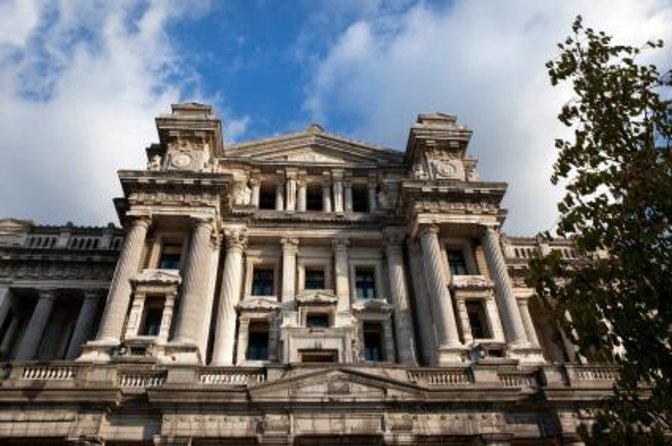
- Palace of Justice View: Place Poelaert and a Big City Perspective
- Quartier Marolles and the Flea Market Feel
- Gare Maritime and the Tour & Taxis Transformation
- Palais Royal de Bruxelles and the Royal Park Perspective
- Grand Hospice: The Tour’s Starting Point, Now With Meaning
- How Hard Is the Riding, Really?
- The Real Value: You Learn How Brussels Fits Together
- Who Should Book This Bike Tour?
- Should You Book? My Honest Recommendation
- FAQ
- FAQ
- Is the tour in English?
- How long is the Brussels bike tour?
- Is bike rental included in the price?
- Do I need to pay for admission at the stops?
- What should I bring for the ride?
- How big is the group?
Key Things to Know Before You Ride
- Small group (max 14) means you’re not stuck behind a crowd of strangers.
- Short stops keep the tour moving while still letting you take in the details.
- Helmet (Fietshelm) and bike rental included removes a common Brussels planning headache.
- Cobblestones and hills make this more than a flat city stroll.
- You’ll ride beyond the postcard center and get context for how Brussels actually functions.
Why This 3.5-Hour Brussels Bike Loop Works
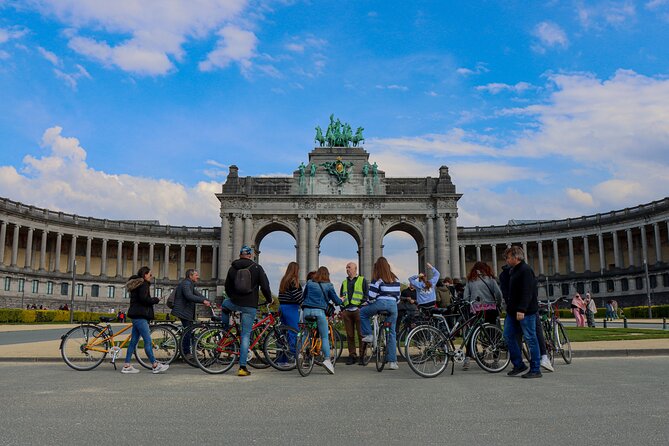
This tour is built for the way most trips unfold. You land, you want the big landmarks, but you also want to understand the city you’re standing in. Bikes make that possible because Brussels is compact enough that you can jump between areas quickly, yet different neighborhoods still feel genuinely different once you start moving.
What I like most is the pacing. You’re not on the bike nonstop for 3.5 hours. You stop often, then roll again. Those quick breaks matter because they give you time to look around properly and absorb what the guide is explaining. A well-run ride also keeps the group together, which is a real quality-of-life thing on two wheels.
The second big reason it’s good value: bike rental is included, and a helmet is provided. At $39.92 for about 3 hours 30 minutes, you’re paying for time with a guide plus the ability to cover distance without renting equipment separately. And the itinerary includes free admission at each listed stop, which helps if you’re trying to keep your Brussels budget under control.
The ride itself is best described as active city cycling. Reviews point out that it’s generally manageable for many people, even beginners, but there are hills and bumpy cobblestones. Plan for it, and you’ll enjoy it more.
Back in the saddle, more Brussels rides
- Brussels: City Highlights and Hidden Gems Bike Tour
★ 4.8 · 344 reviews - Small-Group Highlights of Brussels Bike Tour
★ 4.5 · 260 reviews - Brussels Highlights & Hidden Gems Bike Tour
★ 5.0 · 195 reviews
Start at Grand Hospice (Rue du Grand Hospice 7) and Get the Local Context
The tour meets at Grand Hospice on Rue du Grand Hospice 7, back at the start point at the end. This neoclassical building is nearly 200 years old and today it’s used as a temporary cultural venue. That starting choice sets the tone: you’re not only biking past monuments. You’re also looking at how older spaces get reused.
Guides really shape the experience here. In the feedback, I saw names like Andrea (Andrea/Andréa), Jessica, Vito, Mauro, and Philippe repeatedly linked to clear explanations and organized group care. One strong theme: the guides don’t just list facts. They connect architecture and street scenes to everyday life, including social and economic contrasts in Brussels. Even if that angle isn’t your focus, it helps you read the city instead of just consuming it.
Also, this is a volunteer-guided operation. Several people specifically mentioned that aspect, so it’s worth knowing going in: you’re getting help from people who chose to do this, not staff simply doing a shift. It doesn’t mean the tour is less professional. It usually means you’ll get a guide who genuinely likes sharing their city.
One practical note: this tour needs good weather. If it gets canceled for weather, you’ll be offered another date or a full refund. And since it ends back at the meeting point, you can easily pivot to dinner or a museum visit right after, without a long commute.
The Route: Stop-by-Stop Highlights You Can Actually Use
The itinerary is structured as a series of quick introductions. You’ll hop off, learn what you’re looking at, then ride to the next area. Here’s how each stop fits together—and where to pay attention.
La Bourse de Bruxelles and Place de la Bourse
You kick off at La Bourse de Bruxelles on Place de la Bourse. It’s one of the liveliest civic spaces in central Brussels, and it’s an easy first stop because the surroundings help you orient quickly. The guide’s job here is to connect the architecture and the square to Brussels’ role as a commercial and cultural crossroads.
How to enjoy this stop: look past the building itself. Check the street layout and where pedestrians naturally flow. That helps you understand how the center works before the tour shifts into more “local” neighborhoods.
Potential drawback: because this is central, you may feel it’s a little more public than the later stops. That’s not a problem, just a heads-up that the tour doesn’t start in the quietest corner.

Place Sainte-Catherine: Fishmarket Roots and a Church Landmark
Next is Place Sainte-Catherine, described as the old fishmarket area, along with Church Sainte-Catherine. This is where Brussels starts to feel like a city with layers. You’re seeing a functional historic market zone, not just a standalone monument.
Why it matters: market places often tell you what a city valued day to day. Even if you don’t know the details yet, the feel of the square helps you guess how people once gathered, traded, and moved.
What to watch: the church and the square’s shape. The guide typically uses this sort of stop to explain how old functions shaped later development.
La Fonderie Bruxelles: Industrial Brussels Reframed
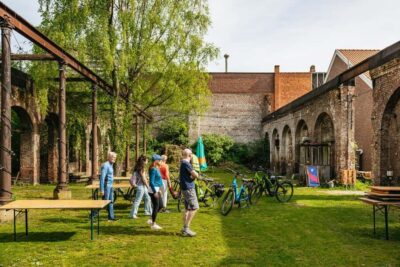
Then comes one of the more surprising stops: La Fonderie Bruxelles – Musée bruxellois des industries et du travail. This is the industrial heritage side of Brussels, a reminder that the city isn’t only about palaces and grand facades.
How this stop pays off: once you see the industrial story, the later logistics and redevelopment areas make more sense. Brussels’ shift from old industrial uses to new districts is easier to understand when you’ve already seen how industrial work shaped the city.
Potential drawback: if you’re expecting a purely scenic tour, this is more interpretive. You’ll still get great visuals, but the focus is on meaning.
Palace of Justice View: Place Poelaert and a Big City Perspective
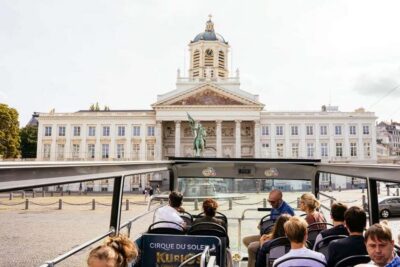
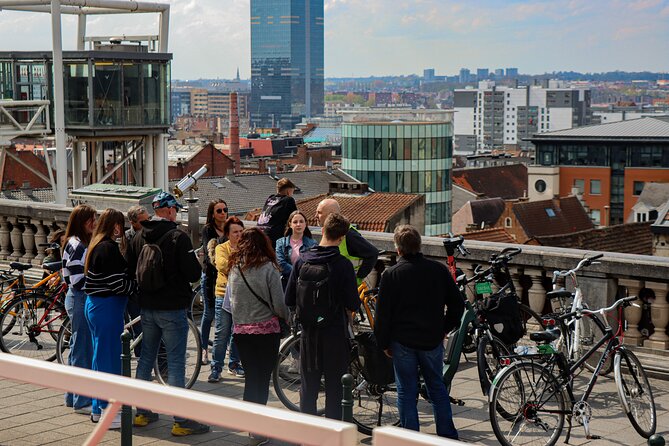
At Place Poelaert, you’ll get views on the Palace of Justice, plus sights toward Les Marolles and across the city. This stop is classic Brussels drama. The scale is what hits you first—then the guide typically helps you understand why the city chose this monumental focus.
Practical tip: treat this like your photo break. The viewpoints are useful, but they’re also where your legs rest before more cycling.
Consideration: it’s also one of the places where walking around too long can cost you energy. Stay aware of the timing so you don’t get caught lingering while the group moves on.
Quartier Marolles and the Flea Market Feel
Next is Quartier Marolles, including a flea market area and the view link to the Palace of Justice zone. Marolles is one of those neighborhoods where the city’s social mix shows up clearly on the street. The tour uses it to move from the giant courthouse perspective into a more human-scale daily reality.
Why this stop is valuable: Brussels isn’t one mood. Marolles adds texture. If you only stick to central sights, you’ll miss how different communities live alongside the major institutions.
Potential drawback: flea market areas can mean extra pedestrians. The bike route tends to handle it, but slower cycling and tighter navigation can happen.
Gare Maritime and the Tour & Taxis Transformation
Then you head to Gare Maritime, linked with Tour&Taxis and the broader question of how a historic logistics and industrial site got transformed into a multifunctional district.
This stop works best if you pay attention to the redevelopment story while you’re riding through the area. You’re not just seeing newer buildings. You’re seeing an example of how Brussels reuses space.
What to look for: contrasts—old industrial logic versus newer uses. It’s easier to spot once the guide frames it.
Palais Royal de Bruxelles and the Royal Park Perspective
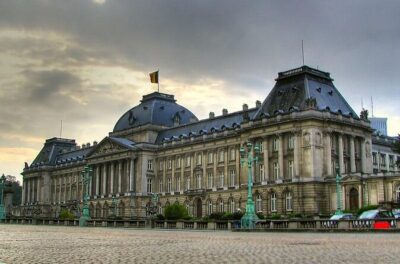
You finish the scenic/ceremonial arc near Palais Royal de Bruxelles, stopping at the Royal Park next to the Royal Palace. The guide explains why this area is symbolic and what it represents historically.
Why it’s a good final highlight: you get a calmer, more polished atmosphere after the work-and-neighborhood stops. It gives your trip a sense of structure.
Practical tip: if you’re the kind of person who likes a final panoramic moment, this is the one to stand still for a minute and let your eyes adjust.
Grand Hospice: The Tour’s Starting Point, Now With Meaning
You return to the meeting point at Grand Hospice, which is nearly 200 years old and used as a cultural venue. Ending where you started makes it easy to plan the rest of your day. You’ve also got a better read on the building now, since it started the tour and tied the whole route into a story about reuse and place.
How Hard Is the Riding, Really?
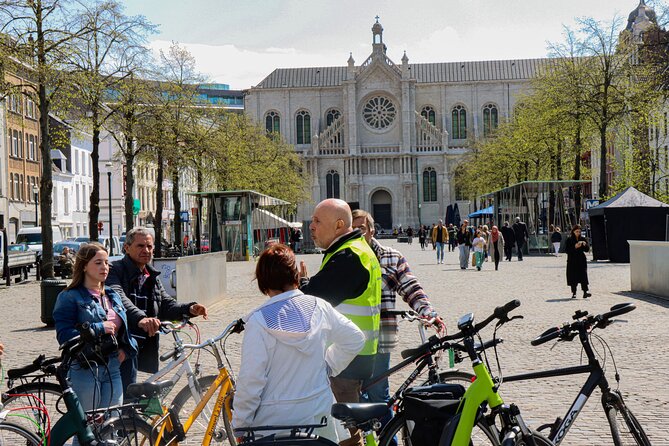
Based on the feedback, this ride is easiest if you’re comfortable on a bike in city conditions. People describe it as manageable for beginners, but also note two challenges: cobblestones and hills.
Cobblestones create the bumpy feel people talk about. You don’t need to be a mountain biker, but you do need to expect discomfort and keep your grip steady. Hills are the other big point. Several reviews mention long or challenging climbs, but also say they were still doable with an average cycling effort.
Another important note: this isn’t an e-bike included situation. One response mentioned e-bikes exist, but they’re only bookable directly through the operator’s website. So if you need assistance, plan ahead and don’t assume it’s part of every booking.
And yes, water planning matters. One review specifically complained about having to carry a bottle while keeping pace with the guide. The tour provides a helmet and bike, not necessarily water holders. If you like sipping often, bring your own bottle and consider how you’ll carry it comfortably.
The Real Value: You Learn How Brussels Fits Together
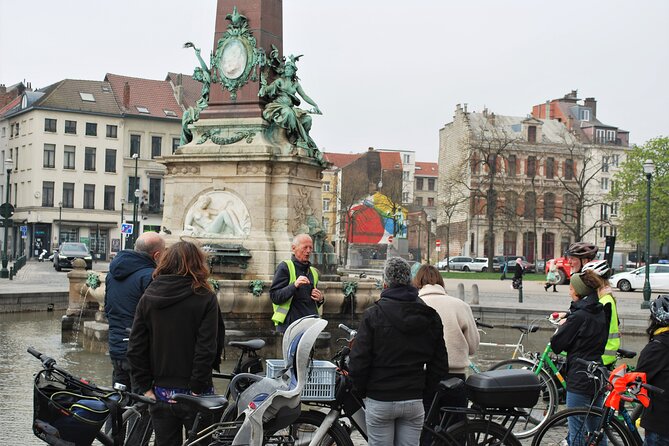
There’s a big difference between seeing landmarks and understanding how a city works. This tour leans toward the second one. The route deliberately mixes central sights with areas that many casual visitors skip.
One review criticism said the tour sometimes felt more like cycling with limited information after a couple stops. That can happen if a guide’s style doesn’t match your expectations. The best way to avoid that disappointment is to come ready to ask questions. If you want story, prompt the guide.
On the other hand, strong reviews consistently mention guides who kept things organized, explained the history behind what you saw, and made sure the group stayed together. People also mentioned that the ride helped them return later to festivals or places they spotted on the route.
Also, keep your expectations realistic. This bike loop does not cover every top icon in the center. One response specifically noted that some major sights like Grand Place and Manneken Pis aren’t part of the tour, and that you can handle those by yourself since they’re easy to reach from the center. Think of this ride as the way to get the city’s structure and neighborhood rhythm, then use your remaining time to pick what you want to revisit up close.
Who Should Book This Bike Tour?
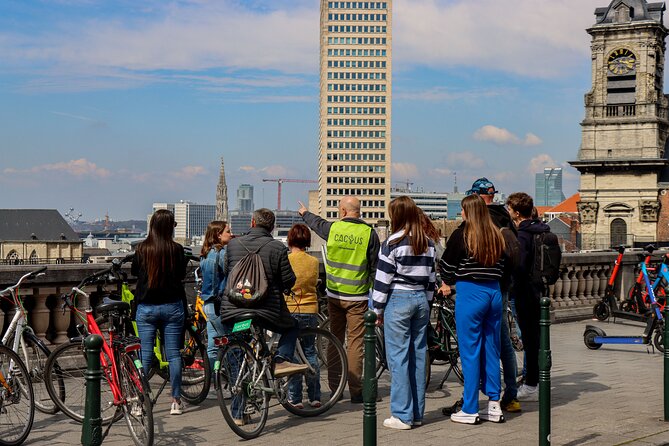
Book it if you want:
- A fast orientation to Brussels that goes beyond the most crowded tourist blocks
- A small-group ride (max 14) where you can actually hear the guide
- A practical way to see multiple neighborhoods in a single morning or afternoon window
- Helmet and bike handled for you without extra bookings
Skip it or at least think hard if:
- You avoid hills and bumpy surfaces
- You’re very new to cycling and would rather not ride around traffic
- You want only the absolute biggest postcards in one package
It’s also a good fit for people who like architecture plus street-level context. The route touches finance and civic buildings, then pivots into industrial heritage, royal spaces, and working neighborhoods.
Should You Book? My Honest Recommendation
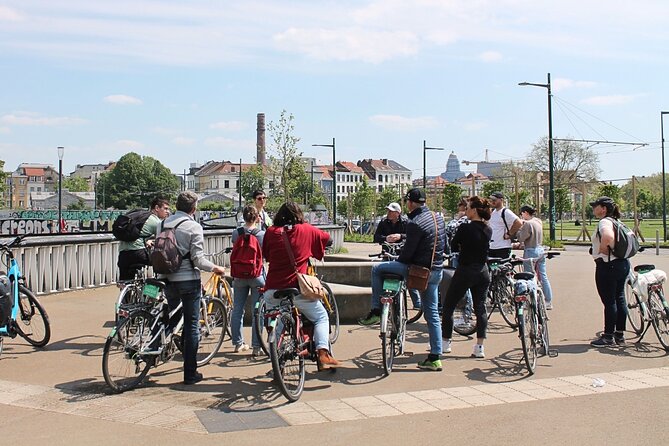
If you’re trying to get the most Brussels for your limited time, I’d say this tour is a strong bet. The price is reasonable for the duration, the bike and helmet are included, and the route is built to help you understand how different parts of Brussels connect. The stops are short, which keeps the day moving, and the mix of highlights plus less-frequented areas is exactly what makes a bike tour worthwhile.
But be honest about your riding comfort. This isn’t a slow cruise with perfect flat streets. If you can handle some bumps and hills, you’ll likely find it fun and efficient. If you can’t, look for an alternative plan or confirm whether you can access an e-bike option.
FAQ
FAQ
Is the tour in English?
Yes. The tour is offered in English, and you’ll receive a mobile ticket.
How long is the Brussels bike tour?
It runs for about 3 hours 30 minutes.
Is bike rental included in the price?
Yes. Bicycle rent is included, and you’ll also receive a helmet (Fietshelm).
Do I need to pay for admission at the stops?
No. The listed stops have free admission included as part of the experience.
What should I bring for the ride?
Bring your own water if you like to drink during breaks. Coffee or tea is optional and not included in the price.
How big is the group?
The tour has a maximum of 14 travelers, so it stays small-group sized.
More Brussels Outings
More Tour Reviews in Brussels




Brussels on Two Wheels



Hot Off the Press: New Brussels Reviews


Brussels Bike Tours, compared.
 ★ 4.8City Highlights and Hidden Gems Bike TourFrom $40344 reviews
 ★ 4.5Small-Group Highlights of Brussels Bike TourFrom $47260 reviews
 ★ 4.7Sightseeing Bike TourFrom $45106 reviews
 ★ 4.5Lovely Leuven Highlights Biketour NEDERLANDSFrom $3223 reviews
 ★ 4.5Bright Brussels Highlights BikeTour ENGLISHFrom $3819 reviews
 ★ 5.0Lively Brussels Highlights Bike tour DUTCHFrom $3611 reviews
Browse the lists this tour appears in