
Reviewed · BRUGES DAY TRIPS FROM BRUSSELS
From Brussels: Guided Day Trip to Bruges and Ghent
Bruges and Ghent in one day sounds intense, but it actually works. You get a guided walk packed with the big visual hits: medieval canals, major bell towers, and Ghent’s star church, Saint Bavo Cathedral. I love the way the day mixes structured stops with breathing room, so you can enjoy the photos and still choose where to eat.
Two things I really like: the guided storytelling at the key monuments (especially in Ghent) and the practical pacing that gives you actual free time in both cities. One thing to consider: it is a long day in total, so comfortable shoes matter, and you won’t be doing museum-level deep dives or long sits inside major churches.
In This Review
- Key highlights to look for
- Why this Bruges-and-Ghent day trip makes sense from Brussels
- Getting to Bruges: the meet point and bus ride reality
- Bruges first: canals, beguinage quiet, and medieval street theater
- Bruges set pieces: Rozenhoedkaai, the Belfry, and Grote Markt
- Bruges free time: lunch, chocolates, and how not to lose the group
- Head to Ghent: the shift from Bruges romance to big-city personality
- Ghent guided highlights: Saint Bavo Cathedral and the Mystic Lamb link
- Ghent churches and guild houses: St. Nicholas and the Masons’ Guild facade
- Ghent’s medieval port: Graslei, markets, and where the city traded
- Free time in Ghent: the smartest way to use your last hours
- Price and value: what $55 buys you (and what it doesn’t)
- Comfort, sound, and small friction points that matter
- Who should book this tour, and who should skip it
- Should you book this Bruges and Ghent day trip?
- FAQ
- Where do I meet the tour in Brussels?
- How long is the day trip?
- Which languages are offered by the guide?
- What is included in the price?
- What is not included?
- Do I need headphones?
- Is there free time for lunch?
- Can I eat on the bus?
- Is this tour suitable for wheelchair users or limited mobility?
Key highlights to look for
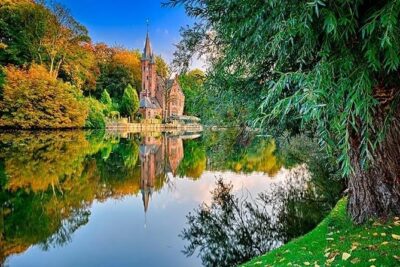
- Minnewater Lake and the Begijnhof (founded 1245): calm, historical, and very “Flanders at human speed.”
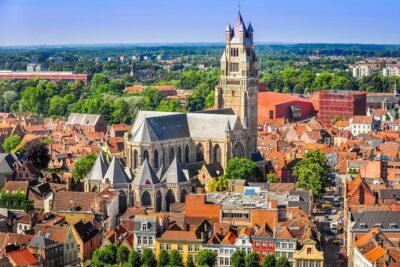
- Church of Our Lady in Bruges: see the world’s second-tallest brickwork tower from the street.
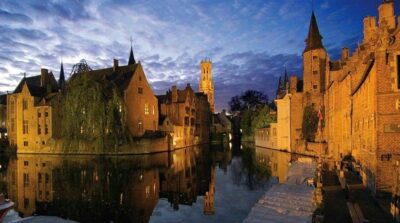
- Rozenhoedkaai viewpoint and canals: prime photo area, classic Bruges angles.
- Saint Bavo Cathedral in Ghent: linked to the Van Eyck brothers and The Adoration of the Mystic Lamb.
- Graslei port embankments: the medieval riverfront that makes Ghent feel cinematic.
- Belfries and market squares: you get the “why these places matter” part, not just a checklist.
Why this Bruges-and-Ghent day trip makes sense from Brussels
Brussels is a perfect base for day trips, because you can reach Flanders quickly and then feel like you’re in a whole different world. This trip strings together two of Belgium’s most atmospheric historic cities—Bruges first, then Ghent—without making you plan train times or transfers.
The value here is not just the destination list. It’s that you get a guide for the walking sections, plus radio systems so you can keep moving and still hear the story. You’ll also have timed gaps to wander on your own instead of being herded nonstop.
That “guided plus free time” balance is what helps on days like this. It’s also why this works best if you want the highlights, not a slow-browse vacation.
On to Bruges, more day trips from Brussels
- From Brussels: Guided Day Trip to Bruges and Ghent
★ 4.6 · 8,353 reviews - From Brussels: Bruges & Ghent Day Tour – 2 Fairytale Cities
★ 4.7 · 8,242 reviews - Bruges and Ghent – Belgium’s Fairytale Cities – from Brussels
★ 4.0 · 4,809 reviews
Getting to Bruges: the meet point and bus ride reality
You meet at Carrefour de l’Europe, under the columns at the main entrance of Brussel-Centraal, in front of the Hilton Grand Place Hotel. The guide waits there with ID for the tour, so you’re not playing guess-the-meeting-point.
Once you start rolling, you’re on a coach ride that’s long enough to make a difference. The route is about 100 kilometers, and the schedule is built around that travel time so you’re not arriving to Bruges too late in the day.
A few practical notes for comfort: bring comfortable shoes, because the walking is steady. Also, you cannot eat on the vehicle, and there’s no smoking on board, so plan snacks for your free time stops.
Bruges first: canals, beguinage quiet, and medieval street theater
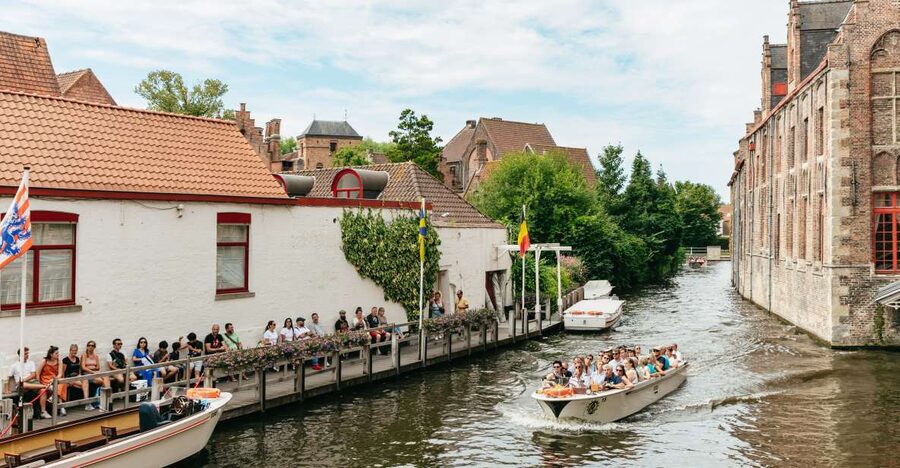
Bruges is the kind of place where your brain switches modes from modern city to old-world fairytale. Your guided walking time focuses on the landmarks that explain why the historic center was recognized as UNESCO World Heritage—not just where to stand for a selfie.
Minnewater Lake (the Lake of Love) is a great opener. It’s scenic without needing a ticket, and it sets the tone: quiet water, old stone, and a calmer pace before the busier market areas.
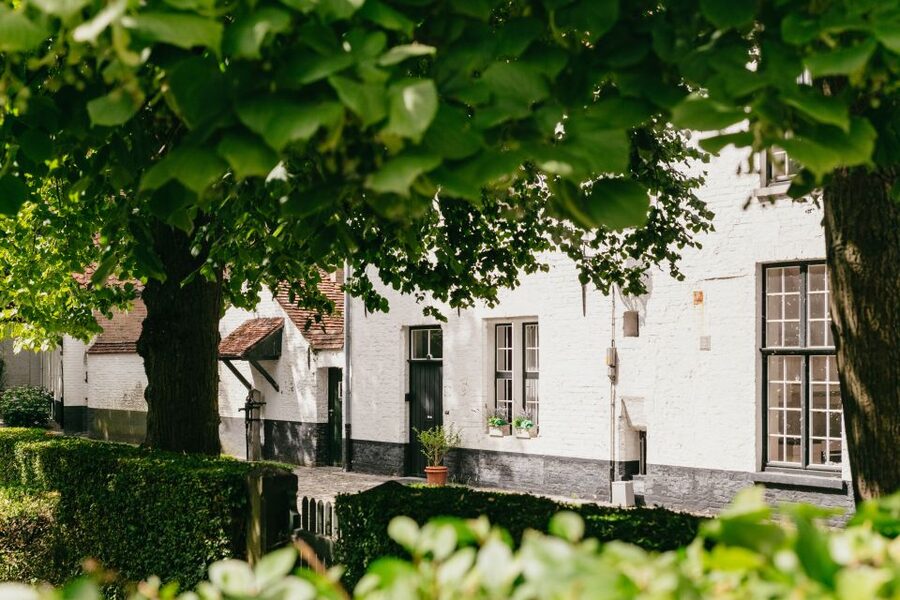
Then comes the Begijnhof, founded in 1245. This is the part that often surprises people because it feels peaceful inside a busy city. You’re seeing a specific social history, too: a community created to house lay religious women, which gives the visit more meaning than a pretty courtyard alone.
Your walk also includes Walplein Square, where you can duck into the café rhythm. And along the route you’ll see Stoofstraat, known as the former Red Light District site, plus medieval monuments like Old St. John’s Hospital from the 11th century. It’s a reminder that old cities had jobs, rules, and complicated lives—right where tourists now take photos.
A nice built-in payoff: you’ll get explanations at places you’d otherwise skim past. That matters because Bruges is visually dense, and the guide helps you notice what’s important.
Bruges set pieces: Rozenhoedkaai, the Belfry, and Grote Markt
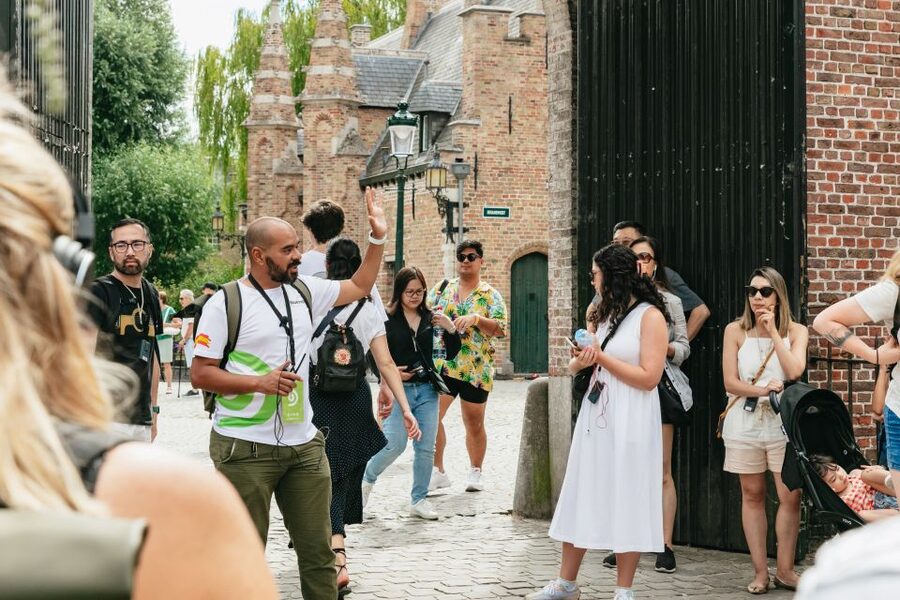
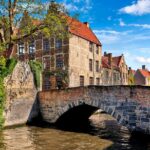
After the quieter corners, Bruges brings the dramatic viewpoints. One of the most photographed areas is Rozenhoedkaai, a canal-side spot that’s famous for its angles and reflections. Even if you’re not a “photo person,” it’s a must because it’s Bruges at postcard scale.
You’ll also visit the Church of Our Lady, famous for housing the world’s second tallest brickwork tower. Standing near it (rather than just seeing it online) helps you understand how towering religious architecture dominated the city’s skyline.
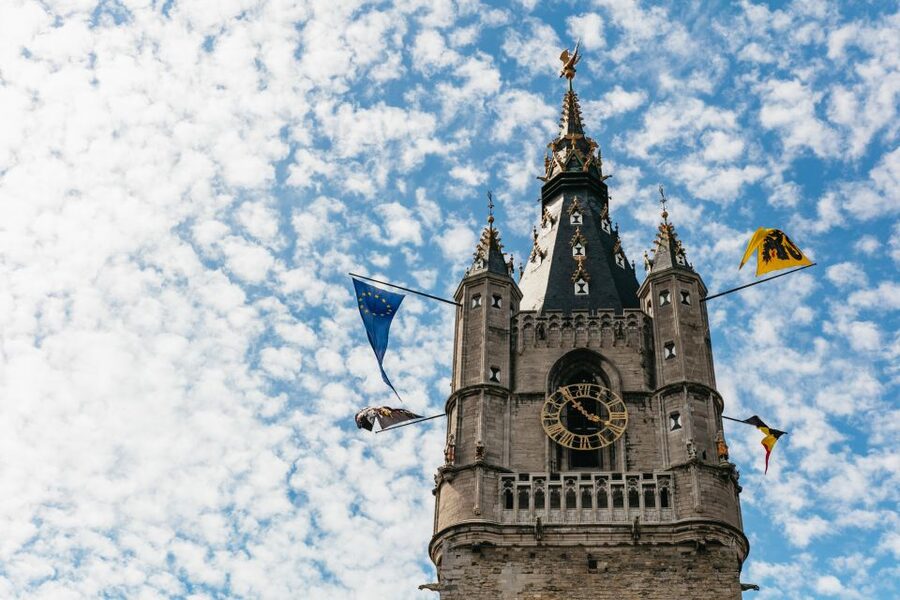
Then you move into the civic and market heart. Castle Square is where you’ll see the Belfry, and Grote Markt (Market Square) is where the energy concentrates around the Belfort. This is where Bruges becomes more than quiet canals—this is the city’s public center.
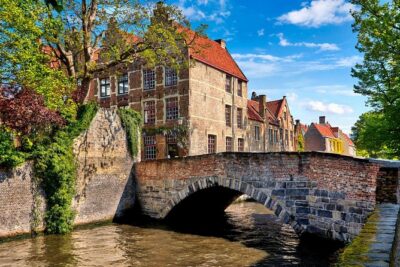
Along the way, you may also spot places like Gruuthuse Palace and the Dijver Canal, which add extra layers to the “where did the wealth come from?” story. Bruges has money stories written in stone, and the tour route helps you connect the dots.
Ghent next, more days out from Brussels
Bruges free time: lunch, chocolates, and how not to lose the group
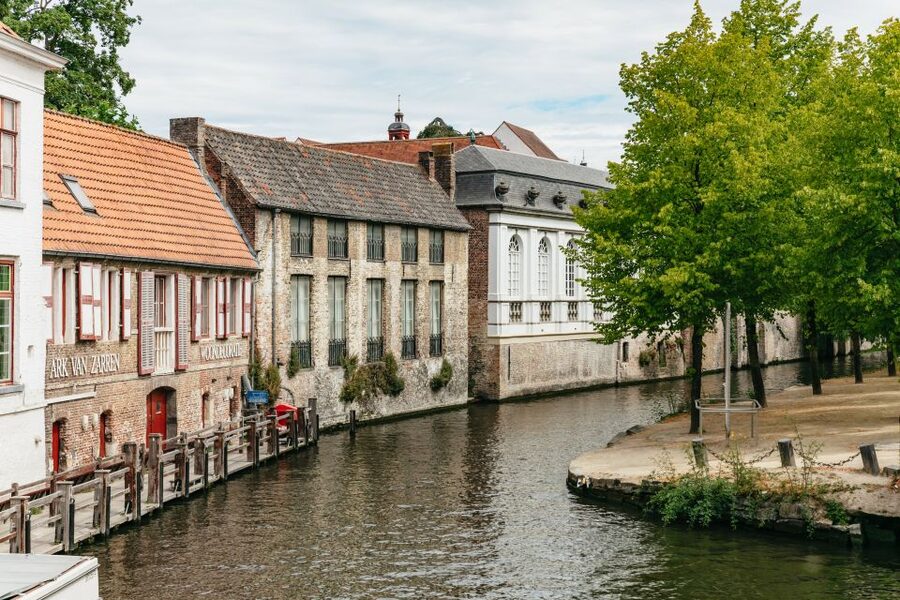
You get a break after the guided walk—about 1 to 1.5 hours—for lunch and exploring on your own. Lunch is at your own expense, so this is the moment to reset: sit down, eat something local, and not over-plan.
Use this free time with purpose. If you want photos, prioritize the areas you’re closest to when you break off. If you want to snack, Bruges is perfect for it, and you’ll have a chance to sample Belgian chocolates during the day.
One small logistics tip: you’ll have a return time to meet the coach. People who struggle on day trips usually struggle because they wander too far and then rush back. Keep an eye on the time, and when in doubt, stay within a short walk of your last landmark.
Head to Ghent: the shift from Bruges romance to big-city personality
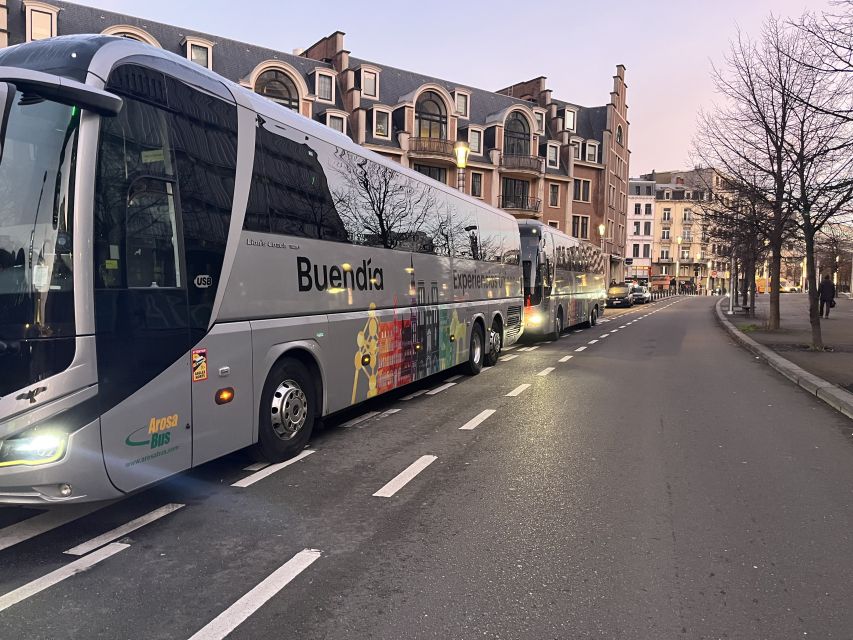
The bus ride to Ghent is shorter than the Brussels-to-Bruges stretch, but it’s still enough to reset your feet. In Ghent, the vibe changes from Bruges’s canal-lace charm to a more assertive city feel.
Your guide frames Ghent with local nicknames from the Charles V era—people were known as noose-bearers. That kind of historical detail matters because it gives you a reason to look at the city’s institutions and power structures, not just its buildings.
You’ll tour key sites by walking through the historic center with a focus on major landmarks that define Ghent’s identity.
Ghent guided highlights: Saint Bavo Cathedral and the Mystic Lamb link
Ghent’s star stop is Saint Bavo Cathedral. The big draw is its connection to the Van Eyck brothers’ painting The Adoration of the Mystic Lamb. Even if you don’t go inside for a full art experience, hearing that context while you’re there helps you understand why this church is a heavyweight on the cultural map.
You’ll also see other anchors like the Belfort (bell tower) and Ghent’s Town Hall, which blends Gothic and Renaissance-style elements. This is one of those moments where the architecture tells you the story of changing tastes and power over time.
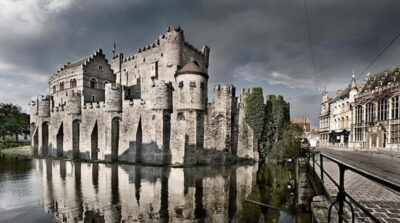
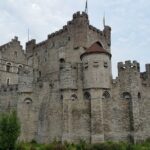
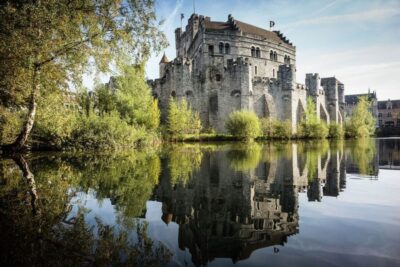
Another landmark on the route is the Castle of Gerald the Devil. It’s one of those names that sounds like it’s from a storybook, but in Ghent it’s a real part of the city’s legend-and-history mix. It helps explain why the city feels dramatic even when you’re standing on a normal street.
Ghent churches and guild houses: St. Nicholas and the Masons’ Guild facade
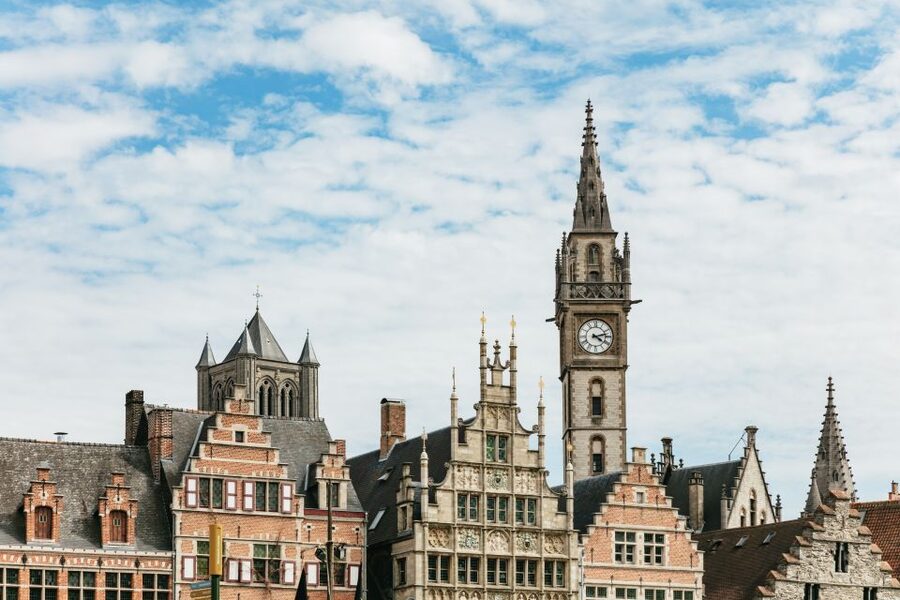
In Ghent you’ll also visit St. Nicholas’ Church, recognized as one of the city’s oldest monuments. Across from it is the unusual facade of the Masons’ Guild House. The pairing works because it shows how religion and trade-guild power shaped the same streetscape.
These stops are valuable even if you’re not a church devotee. Ghent’s streets don’t just look old; they show how civic life functioned—who built, who paid, and who mattered.
The guide’s job is to keep these details from turning into random facts. You’re walking, you’re moving, and you’re getting enough context to make the buildings feel connected rather than separate.
Ghent’s medieval port: Graslei, markets, and where the city traded
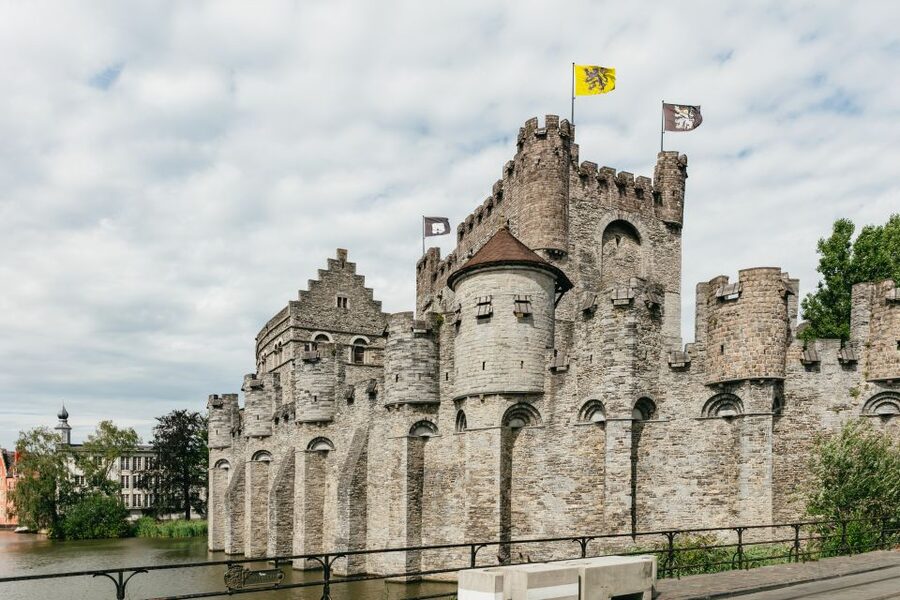
One of the best parts of the Ghent route is the stretch along the embankments of Graslei, the medieval port area. This is where you feel Ghent’s “work city” past, because the riverfront is the setting for trade, not only romance.
Nearby you’ll see highlights like the Castle of the Counts of Flanders, the Great Butchers’ Hall, the Old Fish Market, and Friday Market Square. These names sound like categories until you’re standing in the place where daily life happened.
This is also where you can take in the pace of the city. The port area gives you wide sightlines, and that helps after a day that’s already dense in walking.
If you like history that’s anchored in real locations, this is a strong payoff. You’re not just hearing about “medieval times.” You’re seeing the physical settings.
Free time in Ghent: the smartest way to use your last hours
You get another free window—about 1 to 1.5 hours—to explore Ghent before heading back to Brussels. This is your chance to follow your own interests: you might want more photo time, a late lunch/early snack, or simply to sit and people-watch.
The tour doesn’t include entrance tickets, so don’t expect this to cover major interiors in depth. Instead, think of free time as your flexible buffer: if you want to linger somewhere from the guided walk, this is when you do it.
When you return to the coach meeting point, check the time guidance from your guide. Day trips have one repeating failure pattern: people return late, then the whole group runs behind.
Also: the trip is long. Even if you feel energized, you’ll thank yourself for pacing in these final hours.
Price and value: what $55 buys you (and what it doesn’t)
At about $55 per person, this isn’t just “a ride.” You’re paying for guided walking time in two major cities, plus transportation from Brussels and back.
Included value highlights:
- Transportation to all destinations by coach
- A live guide in English or Spanish
- Walking tours in Bruges and Ghent
- Radio system support (useful when groups are big and streets are noisy)
- Eco-friendly and comfortable buses as part of the experience
Not included:
- Lunch
- Entrance tickets
- Earphones if you don’t have your own (more on that next)
If you break it down, the best value is in the guide. Two cities in one day is hard to do well on your own without turning the day into a stressful map-chasing exercise. The guide keeps you on the high-yield route and explains why each stop matters.
One practical note from the tour conditions: headphones matter. Bruges specifically has a local rule about avoiding disposable headphones due to pollution, so you may need to use your own wired earphones. If you don’t have any, you can buy them from the provider for €1.
So, if you’re value-minded, come prepared:
- Bring your own wired headphones (best)
- If buying onboard, have small cash/coins ready
Comfort, sound, and small friction points that matter
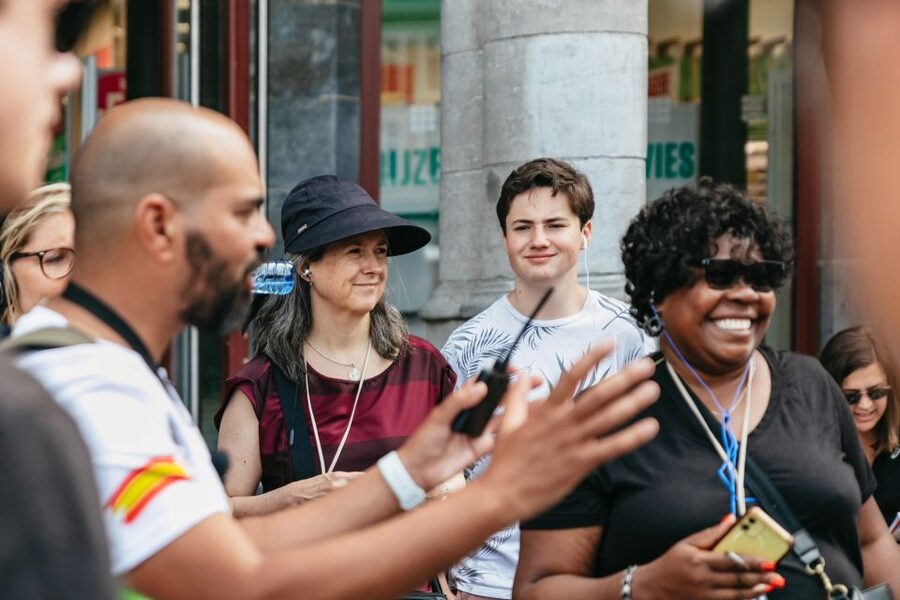
This tour runs with a radio system, which is generally helpful. That said, audio quality can vary, and some people find the radio sound less crisp. Bringing your own earphones is the simplest fix.
You’re also walking enough that shoes are not optional. Plan for cold or wet weather too. In winter months, people have noted the coach can feel warm, but you still need to be ready for outdoor walking.
Group dynamics are real on a day trip. There can be occasional slow moments around boarding or re-grouping, usually caused by people running late or not following instructions. It’s not a deal-breaker, but it helps to be the kind of traveler who returns on time and listens when the guide gives regrouping cues.
Finally, this trip is not suitable for wheelchair users or people with mobility impairments. The walking and city streets aren’t set up for easy accessibility in the data provided.
Who should book this tour, and who should skip it
Book it if you want:
- A guided “highlights route” through Bruges and Ghent
- A day that mixes structured stops with free time for lunch and wandering
- A taste of Flanders that doesn’t require planning rail tickets or transfers
Skip it (or consider a different format) if you:
- Want long museum time or ticket-based deep dives
- Need a fully accessible route
- Prefer slow travel with lots of sitting breaks
Also, if you’re the type who can’t handle long days, keep in mind this is roughly a 10.5-hour outing. It’s packed, but it’s designed to stay moving without feeling totally frantic.
Should you book this Bruges and Ghent day trip?
Yes—if you’re visiting Brussels and you want the two biggest historic-city names in Flanders in one day, this is strong value. The best part isn’t only the famous sights. It’s the way the guide connects places like Saint Bavo Cathedral to the Van Eyck story, and then ties the rest of the day together with bell towers, market squares, and port life.
If you’re deciding between this and a more relaxed plan, pick this when you want efficiency plus context. Pick something slower if you want hours in museums and lots of downtime.
My rule of thumb: if your goal is to see Bruges and Ghent clearly without spending days figuring it out, book it, show up with comfortable shoes and your own wired headphones, and treat the free time as your chance to breathe.
FAQ
Where do I meet the tour in Brussels?
Meet at Carrefour de l’Europe, under the columns of the main entrance of Brussel-Centraal station, in front of the Hilton Grand Place Hotel. The guide will be there with ID for Buendia Tours.
How long is the day trip?
The total duration is 630 minutes (about 10.5 hours).
Which languages are offered by the guide?
The live tour guide operates in Spanish and English.
What is included in the price?
The price includes transportation, a guide, walking tours in both Bruges and Ghent, eco-friendly comfortable buses, and a radio system.
What is not included?
Lunch, entrance tickets, and earphones are not included (earphones can be purchased for €1 if needed).
Do I need headphones?
In Bruges, local rules ask visitors to use their own headphones. If you don’t have them, you can purchase earphones from the provider for €1.
Is there free time for lunch?
Yes. Bruges includes time for lunch on your own, and Ghent also includes additional free time before returning to Brussels.
Can I eat on the bus?
No. Food is not allowed in the vehicle.
Is this tour suitable for wheelchair users or limited mobility?
No. It is not suitable for people with mobility impairments or wheelchair users, based on the activity information provided.
More Tour Reviews in Brussels

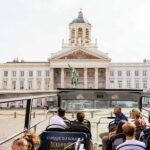
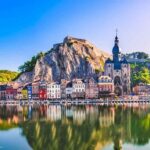
A Day in Ghent
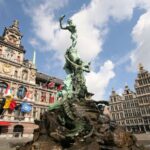
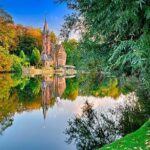
A Day in Bruges
Hot Off the Press: New Brussels Reviews

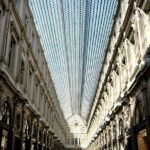
Bruges Day Trips from Brussels, compared.
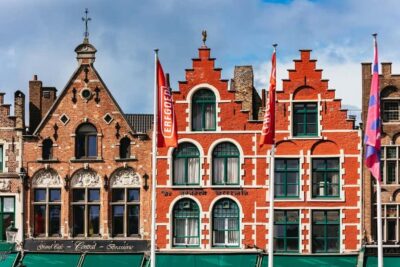 ★ 4.7From Brussels: Bruges & Ghent Day Tour – 2 Fairytale CitiesFrom $578,242 reviews
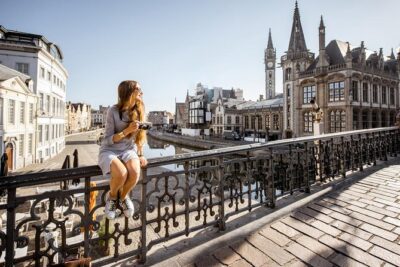 ★ 4.0Bruges and Ghent – Belgium’s Fairytale Cities – from BrusselsFrom $594,809 reviews
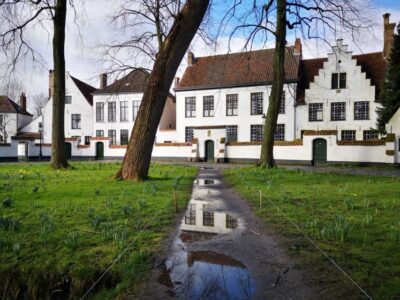 ★ 4.6From Brussels: Bruges Day Trip with Boat Tour Option (ENG)From $501,352 reviews
 ★ 4.7From Brussels: Bruges Day Trip with Boat Tour Option (ES)From $501,171 reviews
 ★ 4.5Bruges and Ghent Day Trip from BrusselsFrom $56784 reviews
 ★ 4.5Bruges Day Trip from BrusselsFrom $51619 reviews
 ★ 4.5Excursion to Bruges and Ghent by bus from BrusselsFrom $54221 reviews
 ★ 4.3From Brussels: Bruges and Ghent Full-Day Trip by TrainFrom $82103 reviews
Browse the lists this tour appears in