
Reviewed · WATERLOO & BATTLEFIELD DAY TRIPS FROM BRUSSELS
Flanders Fields Remembrance Tour from Brussels
A moving day of World War I reminders. This Brussels tour stitches together cemeteries and memorials with an evening service, so the history doesn’t stay in a textbook. I especially love the stop at Vladslo’s German Military Cemetery and the quiet weight of Käthe Kollwitz’s sculpture, Grieving Parents. I also love how the day builds toward the Last Post at Menin Gate, turning big dates into something personal. Just know it’s a long day with lots of coach time and walking, so plan for tired feet.
The strongest part is the way the sites are sequenced to help you understand the whole Ypres and Western Front story—German, Allied, and the aftermath. Guides (often people like Stefan, Dietrich, or Diederik) tend to explain the whys, not just the whats, and they keep the pace on track even when the places are emotionally heavy. The one drawback to keep in mind: lunch isn’t included, and the schedule packs in a lot, so you’ll want to eat smart and bring layers for shifting weather.
If you want a one-day, high-impact WWI experience from Brussels—without the headache of planning routes yourself—this is a solid choice. It’s also a good fit if you can handle solemn places and want real context before you sit through the evening ceremony.
In This Review
- Key moments that make this tour worth your time
- Getting from Brussels: coach comfort and the rhythm of the day
- Vladslo German Military Cemetery and Käthe Kollwitz’s Grieving Parents
- Diksmuide’s Brooding Soldier: a small town, a heavy symbol
- Flanders Fields Museum: turning WWI into something you can picture
- Passchendaele in 30 minutes: brief, but set up for scale
- Tyne Cot Cemetery: 35,000 graves and the meaning of repetition
- Essex Farm Field Hospital and John McCrae’s In Flanders’ Field
- Hill 60: strategic tunnels and the war behind the ground
- Ypres free time and dinner: make the town work for you
- Menin Gate Last Post at 8pm: the emotional payoff
- Price and value: what $113.72 buys you in real terms
- Who should book this Flanders Fields day trip
- Should you book this Flanders Fields Remembrance Tour?
- FAQ
- How long is the Flanders Fields Remembrance Tour from Brussels?
- What time does the tour start and where do I meet?
- Where does the tour end?
- Is lunch included?
- What’s included in the price?
- Is the tour offered in English?
- Do I need hotel pickup?
- Will I have free time in Ypres?
- Are site admissions included?
- Is the tour cancelled if it’s raining?
Key moments that make this tour worth your time
- Vladslo German Military Cemetery with Kollwitz’s Grieving Parents sculpture
- Diksmuide’s Brooding Soldier monument tied to the Canadian gas attack sacrifice
- Tyne Cot Commonwealth War Graves Cemetery, the big scale of the Commonwealth dead
- Essex Farm Field Hospital, where John McCrae wrote In Flanders’ Field
- Menin Gate Last Post Ceremony, the day’s emotional finish in Ypres
Getting from Brussels: coach comfort and the rhythm of the day
You start at Bd de Berlaimont 18 in central Brussels at 9:15am (no hotel pickup). You’ll meet your guide, then settle into an air-conditioned coach, which matters because this day runs long—about 13 hours total. The tour keeps the group moving, and because it’s set for up to 100 people, it usually feels organized rather than chaotic.
One practical detail I appreciate: the tour uses radios/earphones when necessary, so you can hear the guide without craning your neck over seatbacks. That’s important here, because the value of the day is in the stories tying each stop to the next. And yes, you’ll want comfortable shoes; even when some stops are short, you’re still stepping out repeatedly.
Onto the battlefields, more history days out
- Flanders Fields Remembrance Tour from Brussels
★ 4.5 · 334 reviews - Remembrance Tour: The Battle of the Bulge in the Ardennes
★ 5.0 · 51 reviews - From Brussels: The Battle of the Bulge Remembrance Tour
★ 4.8 · 37 reviews
Vladslo German Military Cemetery and Käthe Kollwitz’s Grieving Parents
The first stop is the Deutscher Soldatenfriedhof Vladslo, also called the Vladslo German War Cemetery. This is one of those places where you feel the silence more than you study it. You’re there for the sculpture by Käthe Kollwitz, Grieving Parents, which is famous for its raw grief and its refusal to turn loss into spectacle.
This stop works because it balances the day. A lot of WWI touring focuses only on one side. Here, you start with the German dead, then later you’ll move into Commonwealth sites—so you leave with a fuller picture of what the war did to real families on both sides.
You’ll have time to walk the cemetery grounds and take it in at your own pace. Admission to this stop is free, so your time is really the only cost.
Diksmuide’s Brooding Soldier: a small town, a heavy symbol
After Vladslo, you head toward Diksmuide and see the monument called the Brooding Soldier. It’s dedicated to the sacrifice of 2,000 Canadian soldiers during the first German gas attack. Even if gas warfare is a topic you’ve heard before, the way this monument frames it is different: it makes the sacrifice feel concrete rather than abstract.
This stop is also valuable because it connects Canadians to the bigger Western Front story. If you’re interested in why certain battles became turning points, Diksmuide is a quiet reminder that the war’s methods changed—and the casualties changed with them.
Flanders Fields Museum: turning WWI into something you can picture
Next comes a visit to the Flanders Fields Museum. This is the part of the day that helps you make sense of everything you’re seeing later. You get context for how WWI unfolded in Flanders and what soldiers faced in the “dank conditions” of trench warfare.
I like this museum stop because it’s not just dates and uniforms. It’s the kind of place that helps you understand why the war felt so stuck and why the environment itself became an enemy. Once you’ve seen this context, cemeteries and battlefield areas hit harder, because you can imagine what the ground looked like under pressure.
Lunch is not included on the day, so consider using the time around this museum visit to plan your food needs. The museum visit helps you learn fast, so treat it like the day’s foundation.


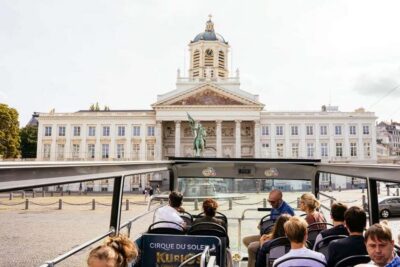

Passchendaele in 30 minutes: brief, but set up for scale
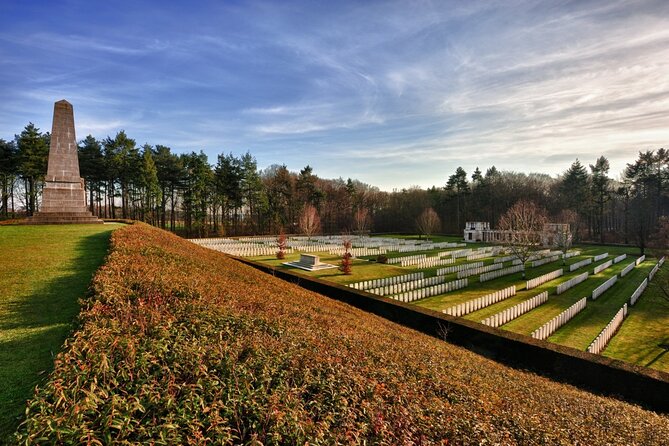
You’ll then head to the Passchendaele battlefield for about 30 minutes. This is a short window, so I’d approach it like a photo stop with meaning. You’re not trying to “master” the terrain in half an hour. Instead, you’re looking for the big idea: how a place where fighting was brutal eventually became the quiet town-like setting you see today.
If you want deeper detail, you’d need more time in the field. But as part of a full-day routing, this stop does its job. It bridges the story from museum context to the graveyard scale that comes next.
Admission here is also free, and the goal is to help you connect what you learned to what you’re about to see at Tyne Cot.
Tyne Cot Cemetery: 35,000 graves and the meaning of repetition
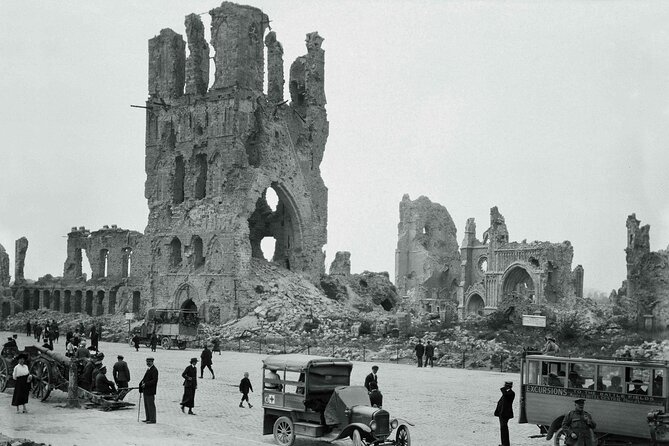
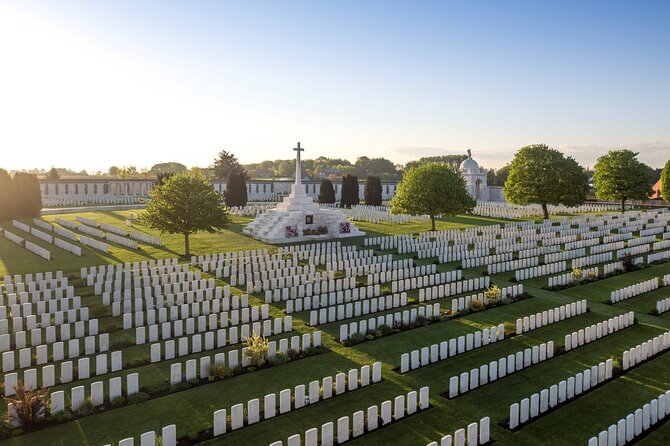
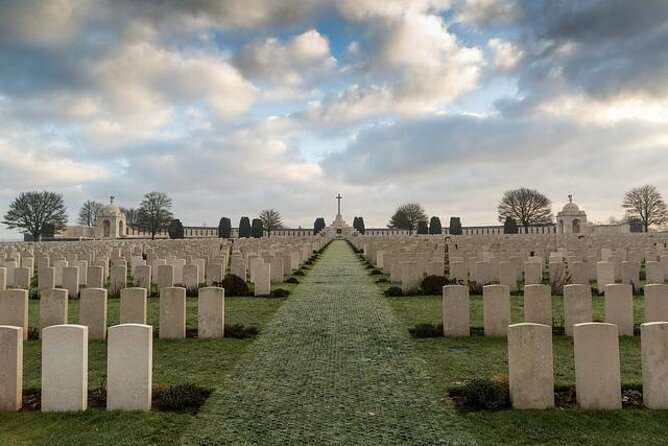
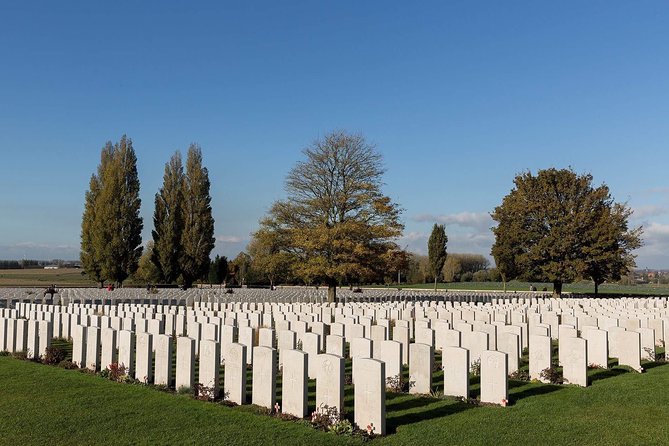
Tyne Cot Commonwealth War Graves Cemetery is usually the “wow” moment on this kind of tour for one simple reason: scale. You’re visiting the largest Commonwealth cemetery in the world, with around 35,000 graves across British, Australian, and Canadian soldiers.
This is where the day becomes more than educational. It’s emotional because it forces you to confront what “a battle” meant in human numbers. The rows repeat. The names and dates repeat. Your brain starts doing math, even if you don’t want it to. That’s the point of memorial spaces like this: they don’t let you look away.
Take your time if you can. Even if the schedule keeps you moving, you can still slow down when you reach the heart of the cemetery. Admission is free, so again you’re paying with time and attention more than money.
Essex Farm Field Hospital and John McCrae’s In Flanders’ Field
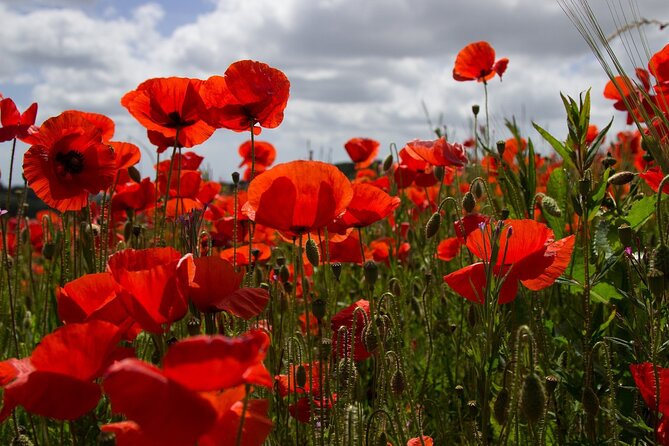
Another key stop is Essex Farm Cemetery, tied to the dressing station where Dr. John McCrae wrote In Flanders’ Field. The idea here is powerful: you’re standing near the real-world location that helped create a poem that shaped remembrance for generations.
The stop is short—about 15 minutes—so you’ll want to go in with a quick mental goal: don’t just read the markers. Think about how writing can become a response to horror. When you pair this with what you just saw at Tyne Cot, the contrast lands hard: one place shows loss by the thousands; the other shows a way humans tried to preserve meaning.
Hill 60: strategic tunnels and the war behind the ground
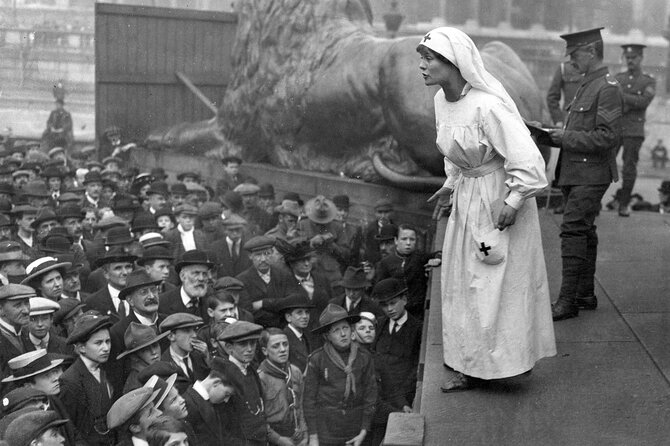
You’ll also visit Hill 60, known for strategic tunnels. This is a reminder that the fighting wasn’t only on the surface. WWI was a war of engineering, digging, holding, and countering—often in conditions that were miserable even by battlefield standards.
Even without long time on-site, the topic helps you interpret what you saw earlier. When you understand tunnels, you stop thinking of the Western Front as just trenches and instead start imagining a complex system of movement and survival. It’s a different kind of “picture in your head,” and it makes the day feel more complete.
Ypres free time and dinner: make the town work for you
After Hill 60, you reach Ypres. This is your chance for some independent time to reset and grab dinner (at your own expense). It’s also where you can see how the former war zone has become a real town with daily life.
Don’t skip the walk if you can manage it. Ypres can be beautiful in a quiet, everyday way, and it helps the day breathe. If you’re the type who needs a meal on schedule, use your free time to plan before you return for the ceremony.
Menin Gate Last Post at 8pm: the emotional payoff
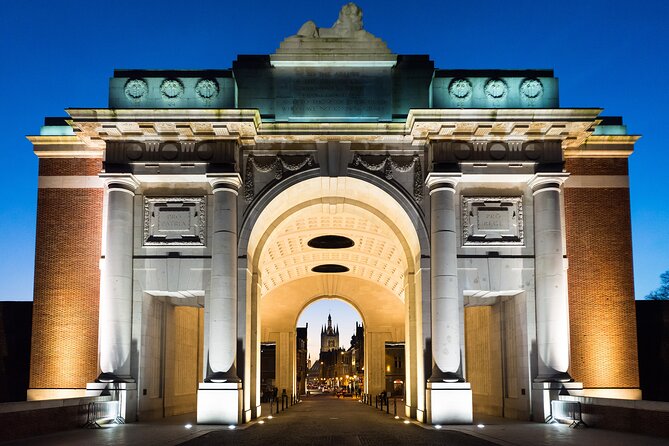
The final highlight is the Last Post Ceremony at Menin Gate at 8:00pm. You’re there for about 30 minutes, and the event is described as a daily tribute to Commonwealth soldiers and officers who were missing after battle. This matters: you’re not only honoring the known dead. You’re facing the absence and the unanswered “where” behind so many families.
The ceremony is simple in form, and that simplicity is what makes it hit. I’d treat it like a “show” you don’t talk over. Sit where you can see clearly, and take your time after. Even if you’ve read about Menin Gate before, being there at night changes the feeling.
It’s the kind of moment where the full-day routing finally clicks: Vladslo gives you one kind of grief. Diksmuide gives you another kind of sacrifice. Tyne Cot gives you the numbers. Essex Farm gives you the words. And then Menin Gate gives you the public act of remembering.
Price and value: what $113.72 buys you in real terms
At $113.72 per person, this tour is priced for a full-day logistics solution: transport from Brussels, an expert guide, and a schedule designed to hit multiple high-impact sites in one shot. You also get free admission to the listed stops and a professional multilingual guide, plus coach comfort with air-conditioning.
The value depends on how you travel. If you’re trying to DIY this route, the hardest part isn’t just driving—it’s sequencing, timing the ceremony, and understanding what you’re looking at without wandering in circles. This tour handles those pieces for you.
Two cost considerations to remember:
- Lunch is not included, so factor that into your day budget.
- The day is long, so it’s worth treating the meal and rest breaks as part of the plan, not a last-minute scramble.
Also, this tour has been booked well ahead on average (around 79 days), so if your dates are fixed, you’ll want to reserve early rather than assume space.
Who should book this Flanders Fields day trip
This is a great fit if you want:
- A one-day route that covers German and Commonwealth memory sites
- A guided explanation that helps the places make sense
- The Menin Gate ceremony as the capstone of your trip
It may be a tough fit if:
- You dislike long bus days and frequent stop-and-go
- You need a lighter schedule with more downtime between sites
- Walking is difficult for you; the tour is not recommended for people who have difficulty walking
Bring a raincoat or poncho and comfortable shoes. The weather changes fast in this part of Belgium, and you’ll be outside more than you expect when memorial sites and cemeteries pull you into slower reading and remembering.
Should you book this Flanders Fields Remembrance Tour?
If your goal is a moving, well-sequenced WWI day with high-impact stops and an evening ceremony, I’d say yes. The value is strong for what you get: coach comfort, a real guide who can explain the story in plain language, free admission to major sites, and the chance to see the Last Post at Menin Gate. It’s long, but it’s not filler.
If you hate emotionally heavy sites, or you’re looking for a relaxed sightseeing day, skip this one. This tour is built for remembrance, not casual wandering.
FAQ
How long is the Flanders Fields Remembrance Tour from Brussels?
The tour runs for approximately 13 hours.
What time does the tour start and where do I meet?
You meet at Bd de Berlaimont 18, 1000 Bruxelles, Belgium at 9:15am.
Where does the tour end?
It ends back in Brussels at Brussel-Centraal, Carr de l’Europe, 1000 Bruxelles, Belgium.
Is lunch included?
No. Lunch is not included.
What’s included in the price?
The tour includes an air-conditioned vehicle and a professional multilingual guide (and radios/earphones when necessary).
Is the tour offered in English?
Yes, the tour is offered in English.
Do I need hotel pickup?
No. There is no hotel pickup or drop-off.
Will I have free time in Ypres?
Yes. You’ll have independent time in Ypres for dinner on your own (own expense).
Are site admissions included?
Yes. The stops listed for admission are free.
Is the tour cancelled if it’s raining?
No, it’s only cancelled for extreme weather like heavy storms or floods.
More Brussels Outings

More Tour Reviews in Brussels




The Battlefields Near Brussels

Hot Off the Press: New Brussels Reviews


Waterloo & Battlefield Day Trips from Brussels, compared.
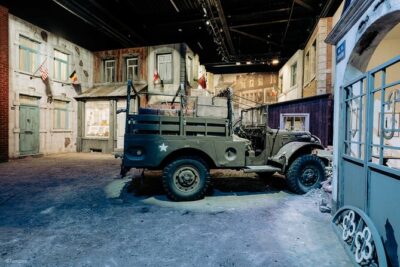 ★ 5.0Remembrance Tour: The Battle of the Bulge in the ArdennesFrom $10751 reviews
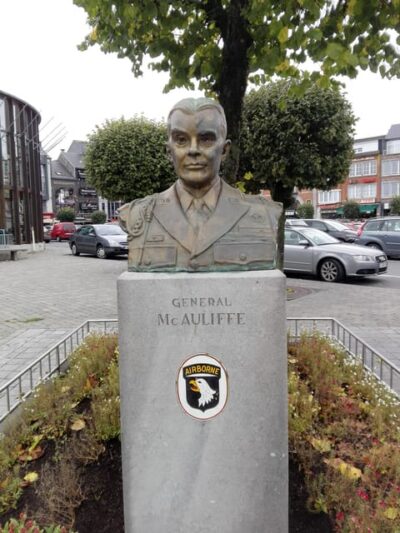 ★ 4.8From Brussels: The Battle of the Bulge Remembrance TourFrom $9737 reviews
 ★ 5.0Historic Battle of the Bulge Sites Tour from BrusselsFrom $70131 reviews
 ★ 4.5Bastogne Battle of the Bulge from Brussels (semi-private)From $1,50526 reviews
 ★ 4.5From Brussels: Patton’s Battle of the Bulge Day Trip (LUX+BE)From $1,05615 reviews
 ★ 5.0The Battle of The Bulge tourFrom $1,74413 reviews
 ★ 4.5Napoleon Last Campaign (Waterloo, Ligny..) Day Tour from BrusselsFrom $78110 reviews
 ★ 4.5Waterloo Private Battlegrounds Tour with Lion HillFrom $5159 reviews
Browse the lists this tour appears in