
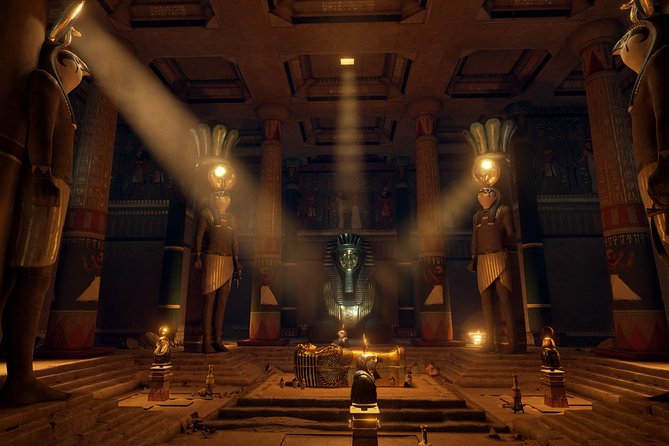
Reviewed · BRUSSELS ESCAPE GAMES & VR
Virtual Room Brussels – 1st virtual reality team experience
VR that actually requires teamwork. Virtual Room Brussels is the first collaborative virtual reality room in the city, built for small groups of 2 to 4 players. It sits at the crossroads of an escape game and a movie-like story, with moments that push you to communicate, think, and work as a team. I especially like how original and accessible it feels for a VR experience, not just a tech demo. One thing to weigh: the experience is offered in English, so if your group is more comfortable in another language, plan accordingly.
You meet at Rue de l’Escalier 16, and the whole run is about one hour from start to finish, ending back at the same spot. It’s also a private setup for your group, so you’re not sharing the experience with strangers from other time slots. You’ll use a mobile ticket, and it’s near public transportation, which helps a lot in a city like Brussels where timing matters.
In This Review
- Key things that make Virtual Room Brussels worth your hour
- Virtual Room Brussels in one hour: the real idea behind the VR
- Getting to Rue de l’Escalier 16 and using your mobile ticket
- What happens at the start: check-in, team setup, and a quick briefing
- The mission structure: escape-game pacing with cinematic storytelling
- Inside the VR room: collaborating in real time
- How the time limit changes your strategy (and why that’s good)
- Who this VR experience is best for
- Price and value: what $36.97 buys you in Brussels
- Small logistics that matter more than you think
- My quick take: the kind of Brussels night out this replaces
- Should you book Virtual Room Brussels?
- FAQ
- How many players can participate in Virtual Room Brussels?
- How long is the virtual reality experience?
- What language is the experience offered in?
- Where do I meet for the activity?
- Is this a private experience or shared with other groups?
- Will I get a confirmation after booking?
- Is it accessible for most travelers?
- What is the cancellation policy?
Key things that make Virtual Room Brussels worth your hour
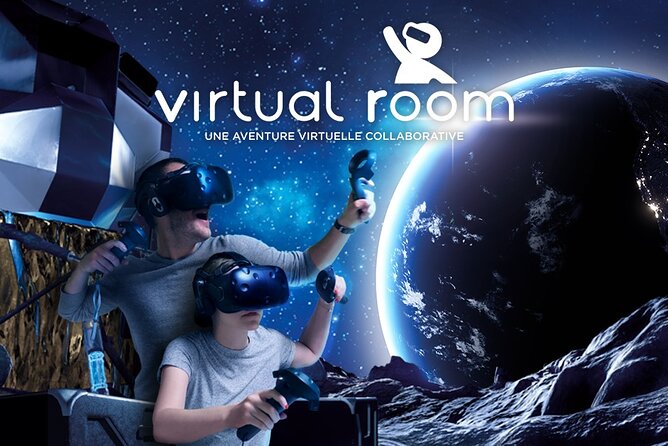
- Collaborative VR for 2–4: the room is designed for talking and coordinating, not lone-headset play.
- Escape game + cinema style: you get story beats alongside problem-solving moments.
- English offered on-site: you’ll be guided in English, so language comfort matters.
- Private group experience: only your group participates.
- Mission interplanetaire format: the “space mission” theme clearly lands well with families.
- Clear, simple guidance from staff (Momo): at least one guide stood out for explanations that are easy to follow.
Virtual Room Brussels in one hour: the real idea behind the VR
Let’s be honest: a lot of VR experiences are built like a solo attraction. You put on a headset, you react, and your friends watch from the outside. Virtual Room Brussels flips that. You’re in a team of 2 to 4 players, and the experience expects you to communicate. That changes everything, because your success depends on how well you coordinate as a group.
It also helps that the experience is described as being between an escape game and cinema. That combo usually means two things for you: there’s a storyline that keeps you moving, and there are structured challenges that ask you to make decisions together. In practice, it tends to feel less random than pure game wandering.
And yes, it’s short. About an hour is enough time to fully “get into it” without turning your day into a half-day commitment. If you want a memorable Brussels activity that doesn’t swallow your whole afternoon, this kind of time box is a big plus.
The other value piece is accessibility. It’s marketed as an experience you can join easily, with most travelers able to participate. So while it’s still VR, it isn’t positioned as ultra-technical or overly complicated.
One more puzzle before you leave, other games
- Escape Hunt Brussels, Escape Game
★ 5.0 · 103 reviews - Virtual Room Brussels – 1st virtual reality team experience
★ 4.5 · 43 reviews - Beer Tasting and Scavenger Hunt in Brussels – About 3 Hours
★ 4.5 · 35 reviews
Getting to Rue de l’Escalier 16 and using your mobile ticket

Your start point is Rue de l’Escalier 16, 1000 Bruxelles. You’ll finish back at the same meeting point. That simple loop is underrated. Brussels can be confusing if you’re bouncing between far-flung venues, so knowing you return to the same place saves stress.
The booking uses a mobile ticket, which usually means less waiting around for paper and more focus on showing up and getting started. Keep your phone charged and easy to access. If you’re traveling with kids, it’s also smart to designate one person to manage the ticket so you don’t spend the first five minutes hunting for it.
This activity is near public transportation. That matters because with VR timing, you don’t want to be late and apologizing at the door. If you’re using transit, check your route early and aim to arrive a little ahead, so you can settle quickly and get briefed without rushing.
What happens at the start: check-in, team setup, and a quick briefing
When you arrive, you’re not going to be thrown straight into hardware. The experience is built around a collaborative mission, so the early moments are about getting you ready to play together.
Expect a team setup for 2 to 4 players, then guidance for how to interact in the room. The experience is offered in English, so this is also where you’ll get the key language needed to understand your task and communicate with your teammates.
One guide name shows up clearly in the feedback: Momo. The theme is consistent: explanations that are simple and effective. I take that as a good sign for you, because VR works best when you’re not learning controls mid-mission. Clear instructions early mean more time solving and less time confused.
The mission structure: escape-game pacing with cinematic storytelling
The description is straightforward: it’s a virtual adventure built around reflection, communication, and team spirit, with an escape game–cinema vibe. That matters, because it tells you what kind of experience you’ll get.
Escape games usually bring structure: tasks, discovery, and decisions. Cinema brings story rhythm: you feel like you’re inside a scene rather than just pushing buttons. The blend is what makes this work as more than a gimmick. You’re not just wearing a headset—you’re participating in a guided, story-driven session where your team choices matter.
A nice clue comes from the mission theme people reference: Mission interplanetaire. A space-mission storyline is an easy match for VR because it naturally supports big visuals and clear “mission” objectives. It also tends to feel fun without requiring prior knowledge. You don’t have to know sci-fi lore to follow along with what you’re trying to accomplish.



Inside the VR room: collaborating in real time
Here’s the part you’re really paying for: the core VR experience. Since it’s built for teams of 2 to 4, the room experience isn’t just about who has the headset. It’s about how your team handles information.
In a collaborative setup, you usually end up doing two jobs at once:
- One part of you is focused on the immediate VR moment.
- The other part (and the other players) helps interpret what’s happening, then talk through next moves.
That’s why communication is explicitly part of the concept. You’re expected to share thoughts, coordinate actions, and stay aligned. You’re not just competing for points—you’re working through challenges together.
Also pay attention to the “reflection” angle. Even if you’re moving through a mission, the design suggests it’s not only about reflexes. It’s about thinking, checking, and deciding with your group. That kind of pacing tends to make the experience feel smarter and less chaotic, especially for mixed-age groups.
How the time limit changes your strategy (and why that’s good)
You have about 1 hour total. That time pressure can sound stressful, but for many people it actually improves the experience. Short VR sessions help keep your energy up and prevent the “we’ll never finish” feeling.
Instead of lingering, you’re more likely to stay engaged:
- You listen closely during briefing.
- You communicate faster during problem moments.
- You commit to decisions rather than endlessly debating.
If you’re the type who loves puzzles, that hour gives you enough space to get a sense of the mission arc. If you’re doing it with kids or family, the tight timing reduces the chance of boredom.
Who this VR experience is best for
This is a team experience. So think about the people you’ll bring.
It’s a strong fit if you want:
- A small-group activity with a shared goal.
- Something that mixes fun visuals with puzzle/problem-solving energy.
- A break from “just museums” days in Brussels.
It’s also a good choice for families. One piece of feedback mentions a family return plan and praises the simple, effective explanations. That doesn’t mean it’s only for kids. It means the experience design likely makes it easier for younger participants to follow the mission without needing advanced gaming knowledge.
One practical consideration: it’s in English. If your group isn’t comfortable with English, you’ll want to reconsider. In VR, misunderstandings get amplified quickly because you’re concentrating on what you see and do.
Price and value: what $36.97 buys you in Brussels
At $36.97 per person, you’re paying for a focused hour of guided, collaborative VR. VR pricing varies a lot in Europe, and the value depends on how “hands-on” it is and how much time you get.
Here’s why I think the price can make sense:
- It’s not a passive show. You’re in the experience with structured participation.
- It’s designed for teams of 2 to 4, so you get a social activity, not lone VR.
- It’s privately run for your group, which usually improves attention and reduces awkward waiting.
- It’s short enough to fit into a typical Brussels plan.
The main value risk is simple: if your group doesn’t like VR, or if you show up late and miss the rhythm, the hour can feel expensive for what you got. So go when you’re ready to fully participate, not when you’re burned out after a long walking day.
Small logistics that matter more than you think
A few details help you have a smoother session:
- Mobile ticket: keep it ready on your phone.
- Near public transportation: plan for transit time, since VR timing is strict by nature.
- Private group: you should show up together so the staff can start your briefing on schedule.
- Service animals allowed: if that matters for your group, this is a plus.
Also note the confirmation timeline. You’ll receive confirmation within 48 hours of booking, subject to availability. If you’re traveling around the same weekend as big events, don’t wait until the last moment to book.
And one more reality check for decision-making: this experience is non-refundable and can’t be changed. That means you should only book when your schedule is solid.
My quick take: the kind of Brussels night out this replaces
Brussels is great for classic sights. But sometimes you want something you can’t get at home. This is that kind of activity.
What makes Virtual Room stand out for me is the teamwork requirement. If you like group puzzle energy, you’ll likely enjoy this more than a solo headset experience. The escape-game + cinema blend also helps: you’re not just wandering through tech. You’re in a structured mission with story pacing.
And the fact that there’s a named guide, Momo, praised for clear explanations tells me the staff focus on keeping you oriented. In VR, orientation is half the battle.
Should you book Virtual Room Brussels?
Book it if you fit most of these:
- You’re traveling with 2 to 4 people who will actually talk and coordinate.
- You’re comfortable doing it in English.
- You want a one-hour activity that feels like an event, not a long commitment.
- You’d rather do a guided VR team mission than another “walk and look” Brussels day.
Skip it (or at least rethink) if:
- Your group needs a different language than English.
- You’re not confident your schedule is fixed, since it’s non-refundable and can’t be changed.
- You’re hoping for a quiet, solo VR experience.
If those points match your trip, Virtual Room Brussels is a smart use of time—and a fun break from the usual museum loop.
FAQ
How many players can participate in Virtual Room Brussels?
The experience is designed for teams of 2 to 4 players.
How long is the virtual reality experience?
It lasts about 1 hour.
What language is the experience offered in?
It is offered in English.
Where do I meet for the activity?
You meet at Rue de l’Escalier 16, 1000 Bruxelles, Belgium.
Is this a private experience or shared with other groups?
It is private. Only your group will participate.
Will I get a confirmation after booking?
Yes. You will receive confirmation within 48 hours of booking, subject to availability.
Is it accessible for most travelers?
Most travelers can participate.
What is the cancellation policy?
This experience is non-refundable and cannot be changed for any reason.
More Tour Reviews in Brussels






Games, Puzzles and VR




Hot Off the Press: New Brussels Reviews





Brussels Escape Games & VR, compared.
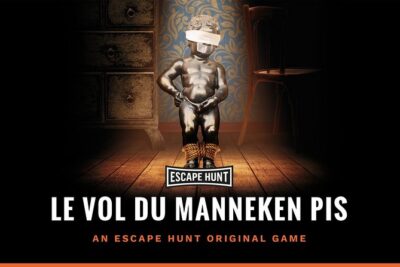 ★ 5.0Escape Hunt Brussels, Escape GameFrom $48103 reviews
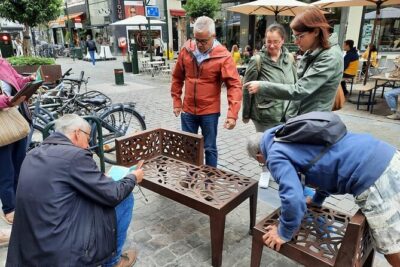 ★ 4.5Beer Tasting and Scavenger Hunt in Brussels – About 3 HoursFrom $4035 reviews
 ★ 4.0e-Scavenger hunt Mechelen: Explore the city at your own paceFrom $3734 reviews
 ★ 4.7Axe Throwing ExperienceFrom $2028 reviews
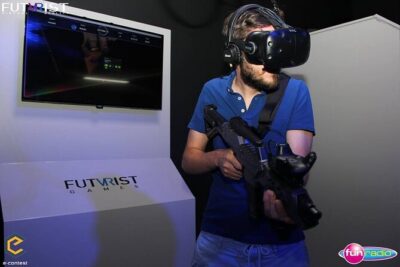 ★ 4.5Virtual reality adventure in Brussels in Virtual ZoneFrom $4626 reviews
 ★ 4.0e-Scavenger hunt Brussels: Explore the city at your own paceFrom $3722 reviews
 ★ 4.5e-Scavenger hunt Leuven: Explore the city at your own paceFrom $3721 reviews
 ★ 4.0Brussels Highlights Self guided scavenger hunt and Walking TourFrom $814 reviews
Browse the lists this tour appears in