

Reviewed · BRUSSELS ESCAPE GAMES & VR
e-Scavenger hunt Leuven: Explore the city at your own pace
Leuven reveals itself in a game. This self-guided city game turns big sights into clue stops, with a mobile ticket and content designed for an easy 2 to 4 hour visit window. You start from Monseigneur Ladeuzeplein 17 and work your way through historic Leuven without needing to match a group’s walking pace.
What I like most is the mix of recognizable icons and smaller corners. You’ll hit landmarks like the Leuven Town Hall and the University Library area, but the app also pushes you toward beguinages, gates, and church nooks you’d likely miss on a normal stroll. I also love the flexible start and stop times, so your party can pause for coffee or linger when something catches your eye.
The main thing to consider is that this is not a guided walking tour with a person talking the whole time. It’s very much a game-first experience, so if you want live narration and route structure, you may find it less satisfying.
In This Review
- Key things to know before you play
- Why this Leuven e-scavenger hunt feels different from a normal tour
- Price and value: $37.21 per group up to 6
- Timing and pace: flexible start-stop means fewer stress traps
- What you’ll need on your phone (and what to bring)
- Starting point: Monseigneur Ladeuzeplein and the university heart
- Grand Place and Leuven Town Hall: Gothic drama, clue-worthy details
- Beguinages and church corners: medieval women’s communities and oldest churches
- Herb garden and botanic history: Hortus Botanicus Lovaniensis
- Market squares and university libraries: where Leuven’s daily life shows up
- Stella Artois brewery: beer roots with a real local base
- Medieval gates, St. James tower, and Leuven’s seven-wonders bell
- Klein details that make the whole game better
- Who should book this e-scavenger hunt in Leuven?
- One drawback to take seriously: game vs tour expectation
- Should you book the Leuven e-Scavenger hunt?
- FAQ
- How long is the Leuven e-scavenger hunt?
- How much does it cost?
- Where does it start and end?
- Is it fully self-guided?
- Is it available in English?
- Do I need a smartphone or data?
- Can I cancel for a refund?
- What language and accessibility support is listed?
Key things to know before you play

- Self-paced format: Start when you want and finish when your team is done
- Built-in app content: About 2.5 hours of material inside the mobile experience
- Up to 6 people per group: Easy to keep families and friends together
- English-only offering: Great if your team reads English comfortably
- Smartphone required: Smartphone and data are not included
- Big sights plus side streets: You get both Grand Place drama and smaller medieval details
Why this Leuven e-scavenger hunt feels different from a normal tour
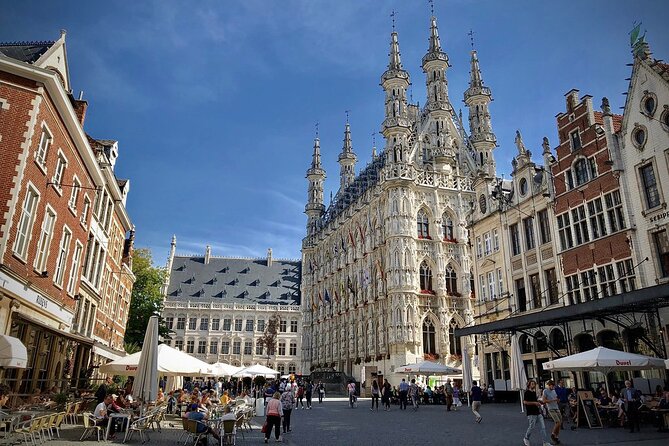
This experience is basically a city walking game in app form. Instead of following a script, you follow clues, answer quick prompts, and move from stop to stop at your own tempo. In a historic place like Leuven, that approach makes you slow down in the right spots.
You also get the best kind of structure: light enough to stay relaxed, but intentional enough to keep you moving. One review-style theme that comes through clearly is that it feels more like a treasure hunt than a traditional guided walk, which is exactly the point.
One more puzzle before you leave, other games
- Escape Hunt Brussels, Escape Game
★ 5.0 · 103 reviews - Virtual Room Brussels – 1st virtual reality team experience
★ 4.5 · 43 reviews - Beer Tasting and Scavenger Hunt in Brussels – About 3 Hours
★ 4.5 · 35 reviews
Price and value: $37.21 per group up to 6
The price is $37.21 per group for up to 6 people. That’s a big deal because you’re not paying per person like so many “app tours” do. If you’re traveling as a small family or a mixed group of friends, the math usually works in your favor fast.
It’s also the kind of activity that can stretch naturally. With a 2 to 4 hour window and about 2.5 hours of app content, you’re not trapped into a short, rushed tour. If you take breaks, grab snacks, and do a slower city pace, it can still feel worthwhile.
The one cost to keep in mind: you’ll need your own smartphone and data (not included). If your phone battery is shaky, bring a small portable charger so you don’t get stuck mid-game.
Timing and pace: flexible start-stop means fewer stress traps

You’re not assigned a hard departure time where you have to keep up. The format is flexible, so you can start later in the day if your schedule runs long. Ending back at the meeting point also keeps things simple.
Here’s the practical tip: plan for the game to take about the same time as the 2.5 hours of content, then allow extra time if you want to sit at a terrace for a while. That relaxed pacing is one of the main reasons this works well for mixed groups.
What you’ll need on your phone (and what to bring)

This is an app-based trail, so you’ll want to show up ready to navigate.
- Bring your smartphone and make sure you have data (smartphone and data are not included).
- Come with decent battery life and brightness settings you can see outdoors.
- Expect straightforward, clear instructions that let you keep moving without constantly backtracking.
If your group includes kids or adults who like figuring things out, the game format tends to keep attention better than a purely historical walk.
Student city Leuven, more ways round it



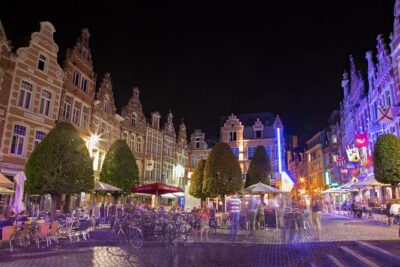
Starting point: Monseigneur Ladeuzeplein and the university heart
You begin at Monseigneur Ladeuzeplein 17. This square is tied to Leuven’s identity as a long-time university city, and it sets the tone for the kind of clues you’ll get later. Even before you start answering prompts, you’re in the right atmosphere: academic, central, and easy to orient around.
This is a good place to do a quick team huddle. Check your route, assign roles (reader, clue-solver, navigator), then start moving. The app style works best when your team shares the mental load.
Grand Place and Leuven Town Hall: Gothic drama, clue-worthy details
One of the first big “anchor” stops is the Leuven Town Hall on the Grand Place. It’s one of the most famous Gothic town halls in the world, and it’s the kind of building that makes people stop even if they came with low expectations.
In a game format, this stop works because it’s easy to recognize. You’ll likely get questions or prompts tied to the building and its setting, which helps you notice details you’d otherwise ignore. The practical win: you don’t need a lot of history knowledge to participate.
Beguinages and church corners: medieval women’s communities and oldest churches

Leuven’s medieval layer is a major theme here. The beguinage route points you to living history, including the beguinage dating back to the 13th century, with a peak in the 17th century when about 360 beguines lived there. You also may encounter the Klein Begijnhof, first mentioned in 1272, described as a street with two cul-de-sacs where women associated with the nearby Sint-Geertruiabdij lived.
Then you move into church territory. St. Peter’s Church is a standout: built in 986 in Romanesque style and noted as the oldest church in the city. The app-style prompts make you look more closely instead of just passing by.
A useful consideration: churches and quiet historic areas can feel slower in the best way, but they also mean you’ll want to keep your team together so nobody gets separated during clue checks.
Herb garden and botanic history: Hortus Botanicus Lovaniensis
Another stop centers on the Herb Garden Leuven, officially called the Hortus Botanicus Lovaniensis. This is one of those places where a game format can actually help. Instead of rushing past an attractive garden, you’re nudged to notice specific features and learn a small chunk at a time.
If your group likes gentle pacing, this is a natural place to slow down. It’s also a great break moment if you’re mixing adults and kids, because the garden style tends to hold attention without needing deep reading.
Market squares and university libraries: where Leuven’s daily life shows up
Leuven’s market culture isn’t just backstory here. You’ll get a stop tied to a square where, as a residence city of the Counts of Leuven, market law was granted in 1150, with markets held up to three times a week. That kind of detail helps the whole city feel less like a museum and more like a place that still runs on routine.
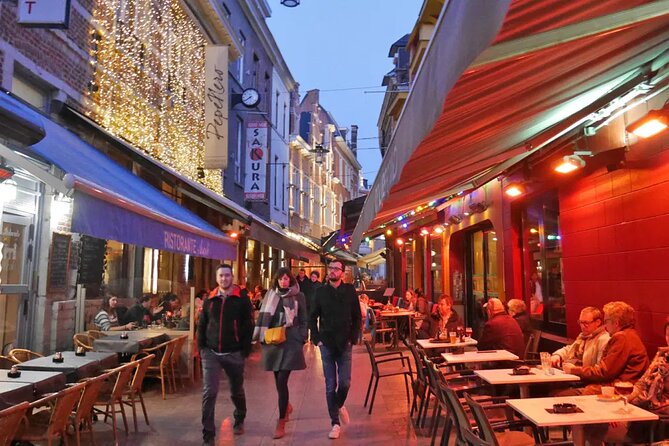
You’ll also encounter the Oude Markt, described as feeling like the longest bar in Europe because it’s packed with catering spots in one square. This is perfect game-game timing: it’s ideal for a pause, a snack, or a drink while you regroup and compare answers.
And don’t skip the university side of town. The experience includes a stop near the University Library on Ladeuzeplein, which is described as a beautiful piece of heritage. With a game format, you’ll usually notice the setting and “why this matters” without needing an hour of lecture.
Stella Artois brewery: beer roots with a real local base
Leuven is tightly linked to the Stella Artois brewery, part of AB InBev, and it’s still firmly rooted in its home city. Even if you don’t plan a formal brewery tour, this stop gives you context for why Leuven is so connected to brewing as part of local identity.
In a clue-based experience, this kind of stop is useful because it ties a modern brand to older place-based roots. You’re not just consuming a logo; you’re learning what the city’s industry looks like on the ground.
Medieval gates, St. James tower, and Leuven’s seven-wonders bell
This is where the hunt turns into a scavenger story. You’ll find the Romanesque gate from 1218–1222, noted as the only remnant of the Sint-Elisabethgasthuis, founded around 1080–1090 under Henry III, Count of Leuven. That’s the sort of detail that makes you look twice at what you’d normally see as just another old doorway.
You’ll also hear about the Romanesque Church of St. James (beginning of the 13th century). Only the tower remains, and it’s linked with an ornate bell from 1478, described as one of the seven wonders of Leuven. That’s a great clue theme because it gives you one memorable “hook” while you’re walking.
Another stop includes the Janseniuspark, where the Jansenius and Justus Lipsius tower flank the water gate in the old city wall. If your team enjoys “spot the structure” moments, this part delivers. It’s also a reminder that Leuven’s history isn’t only in buildings; it’s in how the city functioned—especially for shipping and movement.
Klein details that make the whole game better
A few design things matter more than they seem:
- The game format encourages you to find places you might not choose on your own. That’s a strong value in a well-known city.
- The prompts keep facts short and sweet, which helps you actually remember something instead of tuning out.
- There can be a bit of competition in the challenges, which adds energy without making it stressful.
The “outdoors” feel also helps. You’re in the city air, not sealed indoors, and the pacing tends to invite frequent micro-pauses.
Who should book this e-scavenger hunt in Leuven?
I’d especially recommend it if you’re:
- traveling with a small group (up to 6 works nicely),
- visiting at a relaxed pace and want freedom,
- interested in seeing famous sights plus quieter spots without committing to a long guided tour,
- bringing kids or teens who engage better with puzzles than lectures.
It’s also a solid fit if your group includes people with different interests. One person might chase the beguinage story, another might focus on towers and gates, and everyone still has the same activity structure.
One drawback to take seriously: game vs tour expectation
If your idea of a great tour is someone steering you, explaining deeply, and managing every turn, this may feel too hands-off. Even though it hits major landmarks like the Town Hall and St. Peter’s, it won’t replace a guided narrative.
Think of it like this: you’re buying time-efficient exploration plus an interactive framework. You’re not buying a talk from a live guide.
Should you book the Leuven e-Scavenger hunt?
I’d book it if you want a smart, flexible half-day that helps you notice Leuven’s medieval character without locking you into a rigid schedule. The value per group, the app-based structure, and the mix of university life, beguinage history, markets, and Romanesque details make it a strong choice for many first-time visitors.
Skip it if your group is allergic to puzzle-style tasks or expects live commentary throughout. If that’s the case, you’d likely prefer a traditional guided walk.
FAQ
How long is the Leuven e-scavenger hunt?
It lasts about 2 to 4 hours, with around 2.5 hours of content inside the mobile app.
How much does it cost?
The price is $37.21 per group for up to 6 people.
Where does it start and end?
It starts at Monseigneur Ladeuzeplein 17, 3000 Leuven, Belgium and ends back at the same meeting point.
Is it fully self-guided?
Yes. It’s a self-guided city game with flexible start and stop times.
Is it available in English?
The experience is offered in English.
Do I need a smartphone or data?
Yes. Smartphone and data are not included, so you’ll need your own device and a way to access the app.
Can I cancel for a refund?
Yes. You can cancel for a full refund if you cancel at least 24 hours in advance.
What language and accessibility support is listed?
The experience is listed as user-friendly for hearing impaired, and it allows service animals.
More Tour Reviews in Brussels






A Day in Leuven




Games, Puzzles and VR





Hot Off the Press: New Brussels Reviews





Brussels Escape Games & VR, compared.
 ★ 5.0Escape Hunt Brussels, Escape GameFrom $48103 reviews
 ★ 4.5Virtual Room Brussels – 1st virtual reality team experienceFrom $3643 reviews
 ★ 4.5Beer Tasting and Scavenger Hunt in Brussels – About 3 HoursFrom $4035 reviews
 ★ 4.0e-Scavenger hunt Mechelen: Explore the city at your own paceFrom $3734 reviews
 ★ 4.7Axe Throwing ExperienceFrom $2028 reviews
 ★ 4.5Virtual reality adventure in Brussels in Virtual ZoneFrom $4626 reviews
 ★ 4.0e-Scavenger hunt Brussels: Explore the city at your own paceFrom $3722 reviews
 ★ 4.0Brussels Highlights Self guided scavenger hunt and Walking TourFrom $814 reviews
Browse the lists this tour appears in