
Reviewed · BRUSSELS ART NOUVEAU TOURS
Brussels: Fall and Rise of Art-Nouveau Guided Tour
Art Nouveau can look decorative, until someone explains the tricks. This tour makes the style readable, from sgraffito details to the surviving traces of Victor Horta. I especially like the hands-on feel of the walking route and the way the guide connects façades to real building techniques. One thing to plan for: it’s about 3 kilometers of walking, so wet weather and comfy shoes matter.
I’d also add this is a practical, question-friendly Spanish guided tour, with extra audiovisual info along the way. You’ll cover parts of Brussels beyond the postcard center, including Saint-Gilles and Ixelles, where Art Nouveau houses still look remarkably intact. The main trade-off is that you’ll be outside most of the time, so if you hate rain or long sidewalks, prepare accordingly.
In This Review
- Key highlights worth your time
- Why Art Nouveau looks different after you learn the tools
- From Horta Metro to a 3-kilometer Art Nouveau walk
- Sgraffito vs frescoes: the detail that changes how you see façades
- Saint-Gilles and Ixelles: where Art Nouveau houses still feel steady
- Maison du Peuple traces with Victor Horta’s signature in mind
- Admiring charming streets on the outskirts instead of just the center
- Guide impact: clear Spanish explanations and real answers
- Value at $17 for 150 minutes of architecture reading
- Who should book (and who might want to adjust expectations)
- Should you book this Brussels Art Nouveau tour?
- FAQ
- Where does the tour meet?
- What’s the price and duration?
- How long is the walking route?
- What language is the live guide?
- What will I learn on the tour?
- Do we see Victor Horta’s work?
- Will I be looking at neighborhoods besides the city center?
- What’s included in the tour?
- Is the tour wheelchair accessible?
- What should I bring in case of rain?
Key highlights worth your time
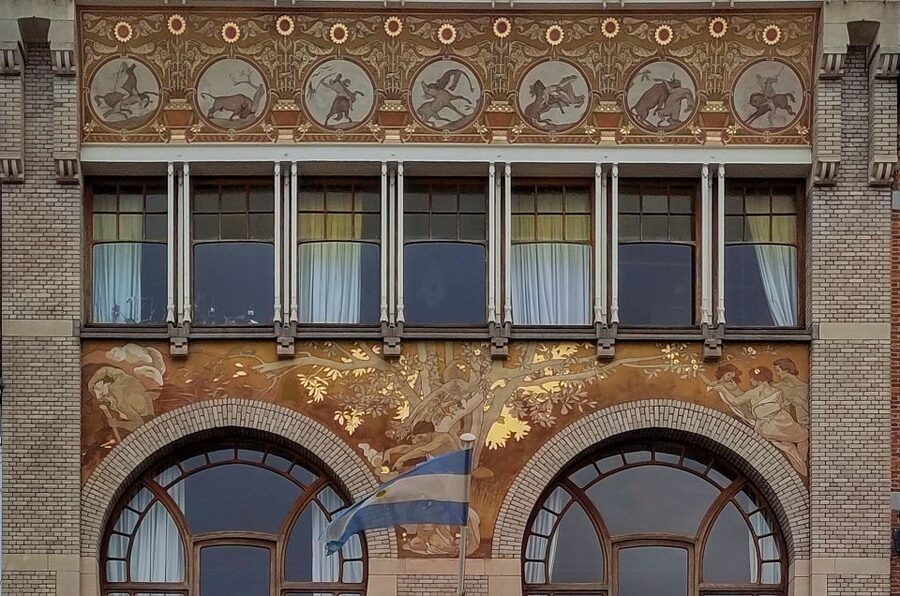
- Sgraffito explained: learn what it is and how it differs from frescoes
- Real Art Nouveau techniques: you’ll learn the most common methods used on façades
- Victor Horta focus: see the historical remains of Maison du Peuple
- Street-by-street looking: spot Art Nouveau cues as you walk through charming Brussels streets
- Outskirts route: you get a 3-kilometer loop that feels like exploring, not sightseeing traffic
- Live Spanish guide + visuals: audiovisual support helps details click faster
Why Art Nouveau looks different after you learn the tools
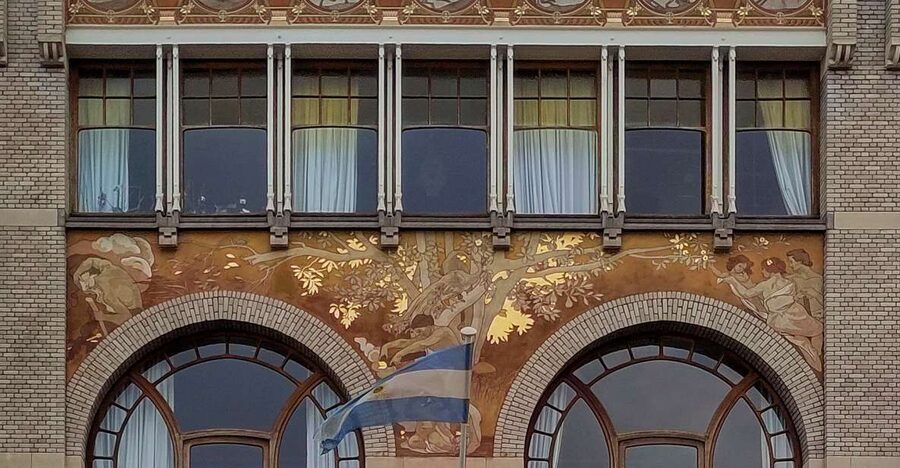
Art Nouveau in Brussels can feel like a bunch of swirling lines—until you learn the “how.” That’s the point of this tour: you stop admiring façades like wallpaper and start reading them like a technical puzzle.
You’ll learn the most used techniques in Art Nouveau, including the sgraffito technique, which is one of those terms that sounds intimidating until someone breaks it down clearly. You’ll also get the key comparison: how sgraffito differs from frescoes, which are a totally different approach to applying images and color. Once you grasp that, details on buildings stop being vague and start becoming obvious.
The tour also keeps you moving at a comfortable walking pace for about 150 minutes, so you’re not stuck staring at one corner for too long. If you like architecture but get bored by lectures, this is a good middle ground: talk, then look, then talk again.
More Horta curves and Art Nouveau facades
- Brussels: Art Nouveau Pass – Entry to Three Locations
★ 4.0 · 108 reviews - Architecture Tour of Brussels
★ 5.0 · 10 reviews - Brussels: 2-hours “Art Nouveau” Walking Tour
★ 4.5 · 7 reviews
From Horta Metro to a 3-kilometer Art Nouveau walk
The route is built around a short distance: about three kilometers on foot. That matters because it’s enough time to see variety—while still being realistic in real Brussels weather.
You’ll meet next to the Horta Metro station (lines 3 and 4) at Chaussée de Waterlo 187. The guide wears a Curiositas Mundus badge, so it should be easy to find the right person without playing guessing games.
From there, the walk focuses on the Brussels Capital Region, specifically areas known for Art Nouveau housing—especially Saint-Gilles and Ixelles. The tour isn’t just “here’s a famous building”; it’s more like learning where the style lives and how it changes street by street.
Practical note: the tour is wheelchair accessible, but you should still be ready for sidewalks and street crossings. And if rain rolls in, bring what the tour asks for: umbrella and rain gear.
Sgraffito vs frescoes: the detail that changes how you see façades
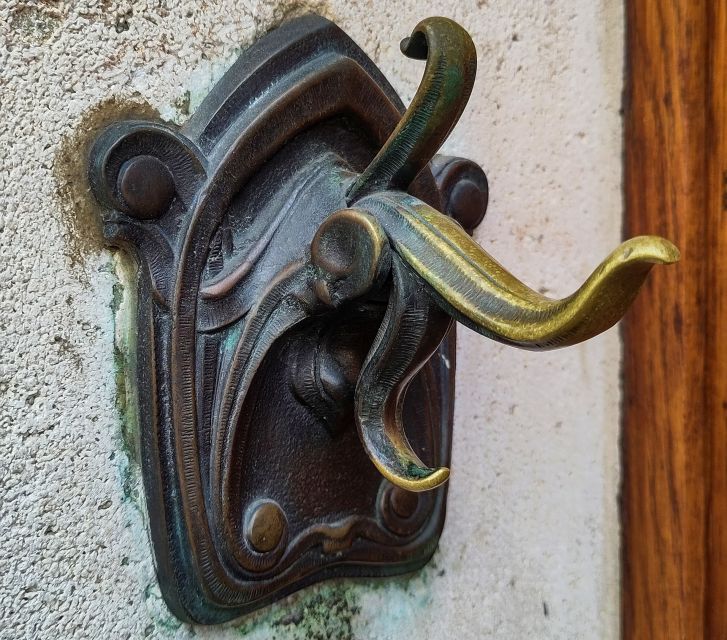
If you want one takeaway that makes the whole walk more rewarding, make it this: sgraffito is a surface technique, and frescoes are not. During the tour, you’ll get a clear explanation of what sgraffito is, and how it shows up differently on the exterior of buildings compared with fresco work.
Here’s why that matters in real life. Art Nouveau façades often include textures, layered effects, and ornamental markings that can look like paint—until you realize they’re created with a method that reveals layers rather than simply covering a wall. When you understand the technique, you stop wondering what you’re looking at and start recognizing the “grammar” of the design.
The guide also covers other common Art Nouveau techniques, which helps you build a mental checklist. After that, you’ll likely notice how certain details repeat across multiple streets. That’s the kind of pattern-spotting you can carry with you after the tour, even on buildings you haven’t seen yet.
Saint-Gilles and Ixelles: where Art Nouveau houses still feel steady
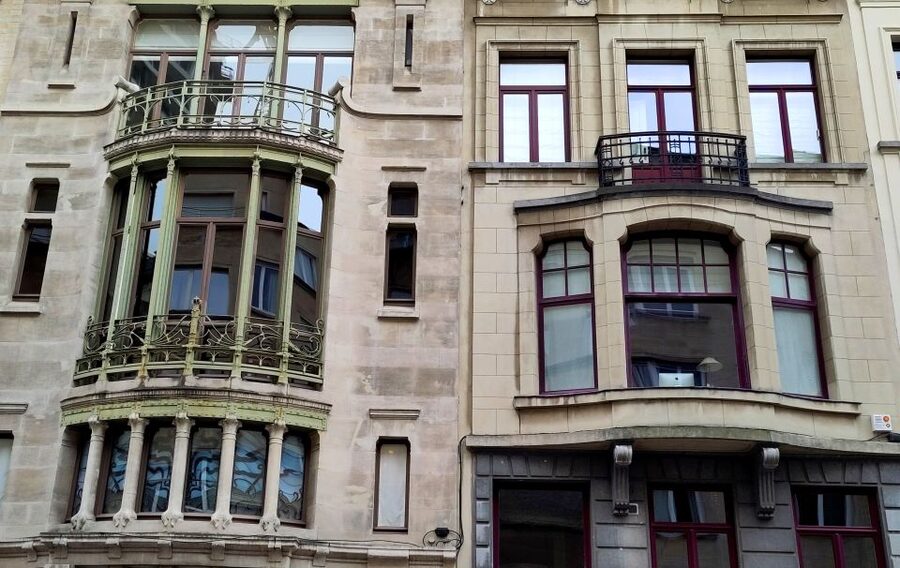
The Brussels region is made up of 19 communes, and the tour zeroes in on two in particular: Saint-Gilles and Ixelles. The reason is simple: these areas have several of the most stable houses of Art-Nouveau architecture, created by late nineteenth-century architects pushing design forward.
On a walk like this, context is everything. When you’re told the style comes from a specific place and time, the buildings feel less random. You start linking façade features to local character: the way the streets hold their rhythm, the way ornament mixes with everyday housing, and the way the look survives decades.
You’ll also get to admire some of the most beautiful streets of the Belgian capital, not only through famous set pieces but through the smaller streetscape experience—street curves, façade line-ups, and the relationship between buildings and sidewalks.
The tour’s “fall and rise” theme also makes sense here. You’ll see how Art Nouveau remains visible today, not as a museum-only style, but as something that shaped real neighborhoods. That’s a more satisfying way to understand architectural history.
Let a local lead, more easy days
Maison du Peuple traces with Victor Horta’s signature in mind
One of the tour’s anchors is the historical remains of Victor Horta’s Maison du Peuple. Even when you’re not walking through a fully preserved interior, seeing remains can be more revealing than you’d expect. It shows what the original design set out to do—and what endurance looks like in the real world.
Horta matters in Brussels Art Nouveau because his work helped define the style’s credibility and momentum. When you pair that name with what you see on the street, you connect the concept to the city’s physical fabric. This tour uses that approach instead of treating Horta like a distant textbook figure.
What I like about focusing on remains is that you learn to pay attention differently. You’re not only chasing perfection; you’re looking for clues in the surviving parts—forms, proportions, and design intent that still show through. That mindset is useful beyond this tour, too.
If you’re the kind of person who likes “how do we know what was here?” thinking, you’ll probably enjoy this segment. It turns architectural history into a street-level scavenger hunt.
Admiring charming streets on the outskirts instead of just the center
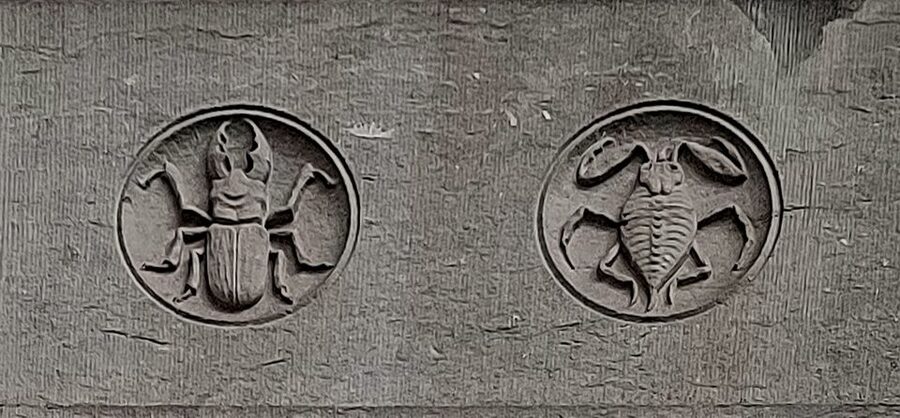
A lot of Brussels tours concentrate on the obvious hotspots. This one takes you on a route through the outskirts—still within reach of the city’s highlights, but with a different feel.
You’ll follow the guide along a three-kilometer path and stop often enough to actually look. The emphasis is on admiring streets that feel lived-in and walkable, where Art Nouveau doesn’t feel staged. The guide helps you notice what to look for, so you’re not just walking for walking’s sake.
This street-focused approach pairs well with the technique lessons. When you understand sgraffito and other methods, you can spot the signs quickly. You don’t need to be a trained architect. You just need the right vocabulary, and then the right pace.
Potential drawback: because you’re out in public streets for a chunk of the experience, you’ll want to go prepared for weather. The tour explicitly suggests bringing an umbrella and rain gear, and it’s hard to argue with that—Brussels can turn quickly.
Guide impact: clear Spanish explanations and real answers
The guide is live and speaks Spanish, and the tour includes additional audiovisual information. That combination is a big deal for architecture tours. Sometimes you get one or the other: a guide who talks a lot, or visuals that don’t help much. Here, the format aims to make details click.
The feedback around the guide is consistently strong for clarity and knowledge. In particular, the name Samuel shows up in the tour experience, described as explaining Art Nouveau in a very clear way and answering questions without hesitation. If you learn best by asking follow-ups—or you simply want to understand what you’re looking at—this style is a plus.
Also, you’ll likely appreciate that the guide doesn’t treat the walk like a timed checklist. The walking route gives room for questions, especially when you’re seeing façades in sequence.
Value at $17 for 150 minutes of architecture reading
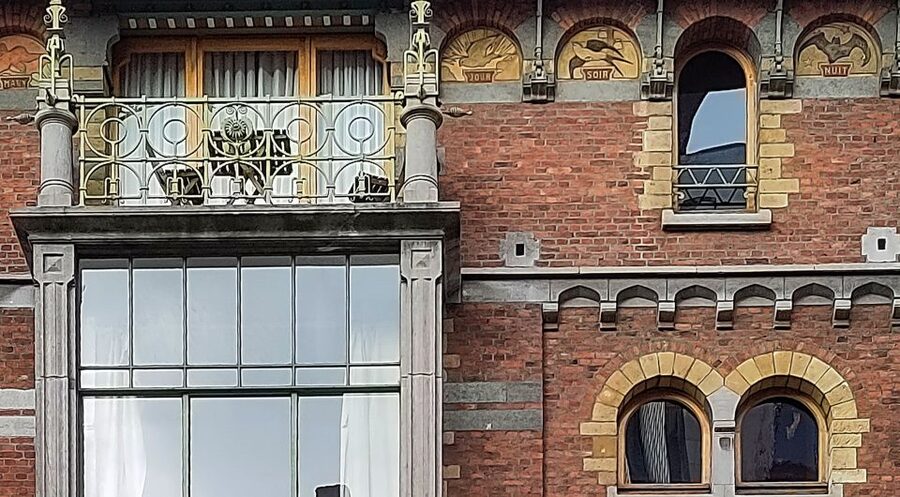
At $17 per person for about 150 minutes, this tour is priced like a smart add-on rather than a premium “big ticket” experience. The value comes from the mix: a guided walk, technique education, and support via audiovisual material.
Think about what you get for your time:
- You spend enough time on the street to actually recognize patterns.
- You learn vocabulary like sgraffito and understand how it differs from frescoes.
- You connect Victor Horta to the city through the Maison du Peuple remains.
- You cover roughly three kilometers, which is an efficient distance for a focused architectural theme.
If you’re already spending time in Brussels and want one guided activity that helps you “see more” on your own afterward, this fits well. It’s also a good entry point if Art Nouveau feels confusing right now. You leave with a mental toolkit, not just photos.
Who should book (and who might want to adjust expectations)
This tour is a strong match if you:
- Like architecture but want practical explanation, not just names
- Want to learn specific techniques like sgraffito
- Enjoy walking neighborhoods and reading façades in context
- Prefer a guided route that takes you to areas beyond the obvious center
It may be less ideal if you:
- Hate walking around in weather (rain gear is specifically recommended)
- Strongly prefer interior museum time over street-level remains
- Don’t want Spanish-language guidance
One more tip: since the tour includes about three kilometers of travel, wear shoes you’d trust on uneven sidewalks. It’s not an all-day hike, but you’ll feel every block if your feet aren’t happy.
Should you book this Brussels Art Nouveau tour?
If you want to understand Art Nouveau on a real street route, I’d book this. The technique focus (especially sgraffito vs frescoes) gives you the kind of “why” that turns a pretty building into something you can actually interpret.
It’s also a good value for the time and distance: 150 minutes for $17 is reasonable, and the pacing is built for noticing details. If you’re okay with walking roughly three kilometers and you can handle Spanish narration, you’ll likely get a lot out of it.
If rain is in the forecast, treat the umbrella and rain gear request as non-negotiable. And if you love asking questions, this guide approach sounds like it rewards curiosity.
FAQ
Where does the tour meet?
You meet next to Horta Metro station (lines 3 and 4) on Chaussée de Waterlo, at number 187. The guide wears a Curiositas Mundus badge.
What’s the price and duration?
The tour costs $17 per person and lasts 150 minutes.
How long is the walking route?
The tour includes approximately three kilometers of travel.
What language is the live guide?
The live tour guide speaks Spanish.
What will I learn on the tour?
You’ll learn the most used techniques in Art-Nouveau, including the sgraffito technique and how it differs from frescoes.
Do we see Victor Horta’s work?
Yes. The tour includes the historical remains of Victor Horta’s Maison du Peuple.
Will I be looking at neighborhoods besides the city center?
Yes. The route goes through the outskirts of Brussels and includes charming streets.
What’s included in the tour?
It includes a guided walking tour plus additional audiovisual information.
Is the tour wheelchair accessible?
Yes, the tour is wheelchair accessible.
What should I bring in case of rain?
Bring an umbrella and rain gear. The tour advises being prepared with an umbrella, raincoat, or poncho.
More Brussels Outings

More Tour Reviews in Brussels




Brussels in Art Nouveau


Hot Off the Press: New Brussels Reviews


Brussels Art Nouveau Tours, compared.
 ★ 4.0Brussels 3-Hour Guided Art Nouveau TourFrom $35282 reviews
 ★ 4.0Art Nouveau Pass – Entry to Three LocationsFrom $29108 reviews
 ★ 5.0Architecture Tour of BrusselsFrom $3010 reviews
 ★ 4.52-hours “Art Nouveau” Walking TourFrom $1367 reviews
 ★ 5.0Art Nouveau Walking Tour with a Local GuideFrom $915 reviews
Browse the lists this tour appears in