
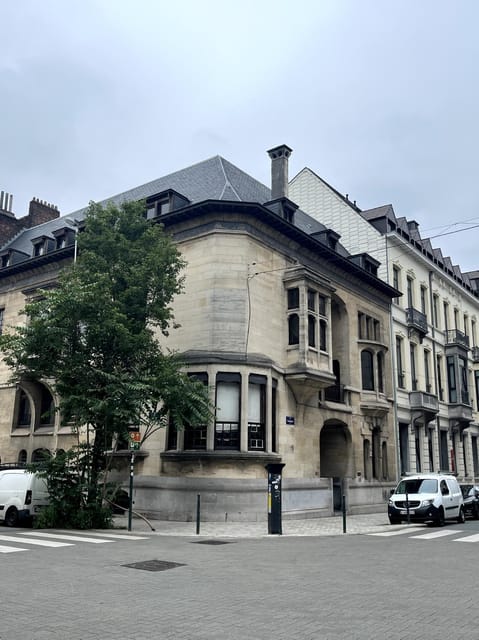
Reviewed · BRUSSELS ART NOUVEAU TOURS
Brussels: 2-hours “Art Nouveau” Walking Tour
If you like buildings with personality, this tour delivers. You get a tight introduction to Art Nouveau in Brussels, plus a practical way to read the style on the street, not in a textbook. I like how the route concentrates on famous names like Maison Cauchie and Horta’s work, and I also like that the guide explains the style in plain language while you’re still standing in front of it.
Here’s the big value: you’re not just sightseeing facades. You’re learning what made the look modern at the time, then using that knowledge to spot differences across trends as you move between addresses. One possible drawback to factor in: the “walking tour” is short and concentrated, but the exact sequence and coverage can vary, so if you want a strictly on-foot route with no detours, you’ll want to be a bit flexible.
In This Review
- Key points to know before you go
- Why Art Nouveau belongs on your Brussels map
- Merode meeting point: the fastest way to avoid a time-waste
- Parc du Cinquantenaire: setting the stage for a modern style
- The style lesson walk: trends you can actually see
- Maison Cauchie, Palais Stoclet, and Maison Saint Cyr: the big-name trio
- Horta’s world in Brussels: Hôtel Tassel and Hôtel van Eetvelde
- Maison Van Dyck, Maison Roosenboom, and the rest of the cluster
- How to spot Art Nouveau trends when you only have two hours
- Hôtel Ciamberlani and the walk ending in Saint-Gilles
- Price and value for a 2-hour Art Nouveau focus
- Who this tour is best for
- Should you book this Art Nouveau walking tour?
- FAQ
- Where is the meeting point for the tour?
- How long is the Brussels Art Nouveau tour?
- Is the tour in English?
- Is this a private group tour?
- What major Art Nouveau buildings will we see?
- Where does the tour end?
- Is transportation included in the price?
- Is the tour wheelchair accessible?
- What is included in the price?
- Can I cancel for a refund?
Key points to know before you go
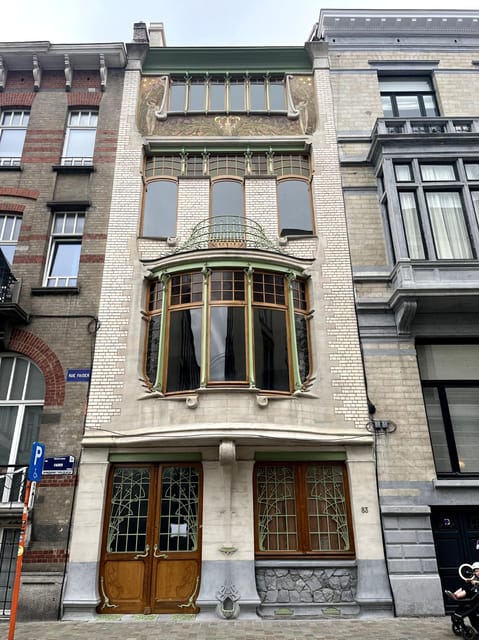
- Merode start point clarity: meet by the Brasserie Carpe Diem in front of Metro Merode, where three exits can confuse you if you arrive late.
- Horta focus with context: you’ll see multiple Horta-related houses and hotels, then learn how they fit into the bigger Art Nouveau story.
- You get style lessons on the sidewalk: the guide gives a quick portrait of trends and the key characteristics as you look at real buildings.
- A high-density 2-hour loop: expect to pack in several major addresses, including Maison Cauchie, Palais Stoclet, and Maison Saint Cyr.
- Finish in Saint-Gilles: the ending point makes it easy to continue exploring on your own after the tour breaks up.
- Good guides matter here: guides like David, Davit, and Eric have been praised for clarity and passion, and at least one guide (Yves) reportedly went above-and-beyond to extend what you see.
Why Art Nouveau belongs on your Brussels map
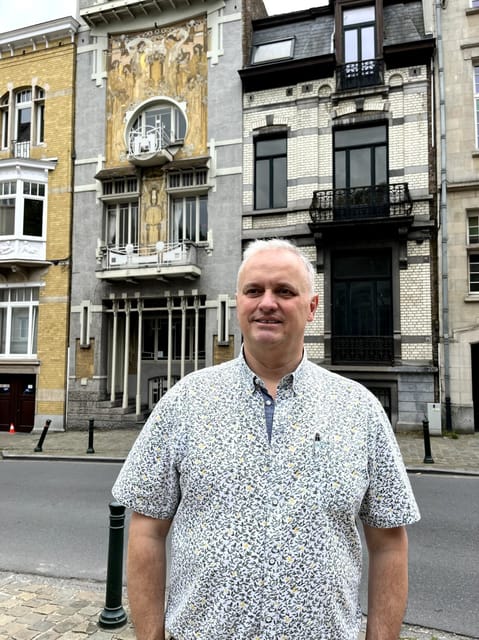
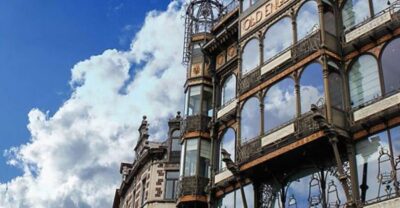
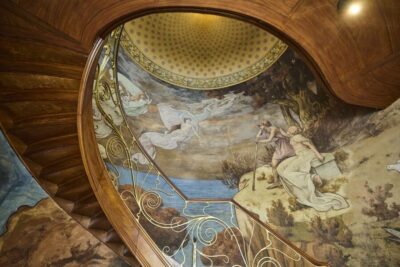
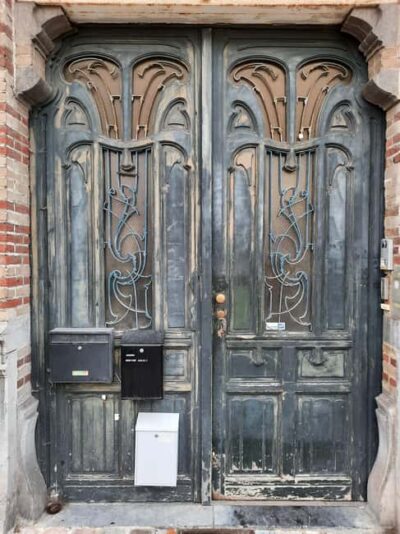
Art Nouveau can feel like a style label until you see it in person, then it clicks fast. In Brussels, it’s not stuck in museums; it’s on front doors, iron railings, staircases behind grilles, and ornament that looks like it was drawn by hand. This tour is built for that moment when a facade suddenly makes sense.
What I appreciate is the way you’re guided from “what am I looking at?” to “I can recognize the pattern.” That’s useful if you’re doing a day of architecture and don’t want your brain full of trivia. The tour also centers the idea of Art Nouveau’s impact on art and architecture, so you’re not only admiring beauty, you’re learning why it mattered.
More Horta curves and Art Nouveau facades
- Brussels: Art Nouveau Pass – Entry to Three Locations
★ 4.0 · 108 reviews - Architecture Tour of Brussels
★ 5.0 · 10 reviews - Brussels: 2-hours “Art Nouveau” Walking Tour
★ 4.5 · 7 reviews
Merode meeting point: the fastest way to avoid a time-waste
You’ll start near Metro Merode, at the entrance area by Brasserie Carpe Diem. The tricky part is simple: the station has three different exits, and you’ll want to match the exact one shown on the tour page photo. If you’re even a few minutes late, it’s easy to end up at the wrong corner and lose the head start.
Practical move: show up early, stand in front of the café, and take 10 seconds to confirm you’re facing the right exit. You don’t need to be paranoid, just precise. One awkward experience came from being sent to the wrong meeting spot, which is the kind of avoidable problem that turns a fun walk into a stressful hunt.
Parc du Cinquantenaire: setting the stage for a modern style
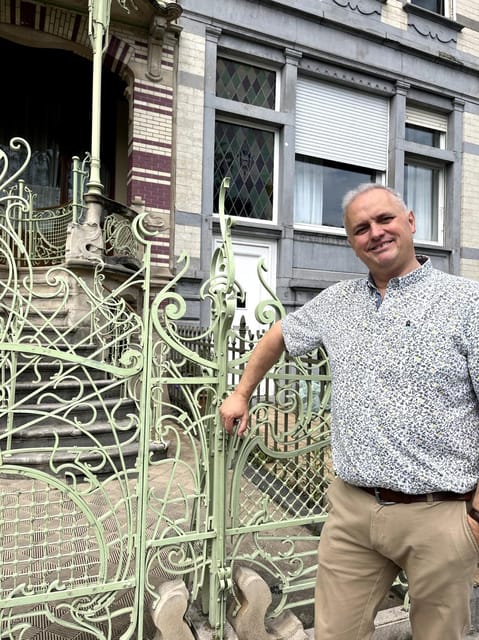
Before the houses start stacking up, you get a short orientation time at the Cinquantenaire area. The guide uses that moment to explain how Art Nouveau emerged and why the look felt modern when people were still used to older styles.
This is more than warm-up. You’ll leave with a framework for what to notice next: the guide doesn’t just point at buildings; it helps you interpret them. And since the rest of the tour is about rapid visual comparisons, that early explanation saves you from feeling lost later.
The style lesson walk: trends you can actually see
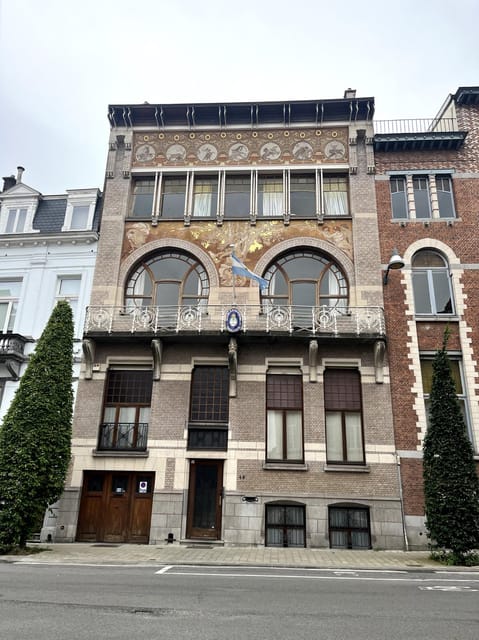
After the setup, the tour shifts into a focused sequence of addresses spread across different areas of Brussels. You’ll spend time around a less obvious stop (the tour is designed to connect the dots, not just hit the biggest postcards). Then you return to another key point near Hôtel Ciamberlani as the tour winds down.
What makes this structure work is timing. You get a short “why this style happened” layer up front, then you move into “how the details behave” while it’s still fresh. It’s a smart way to learn when you’re only out for two hours, because you can’t afford to waste time trying to translate what you see.
Brussels at walking pace, more routes


Maison Cauchie, Palais Stoclet, and Maison Saint Cyr: the big-name trio
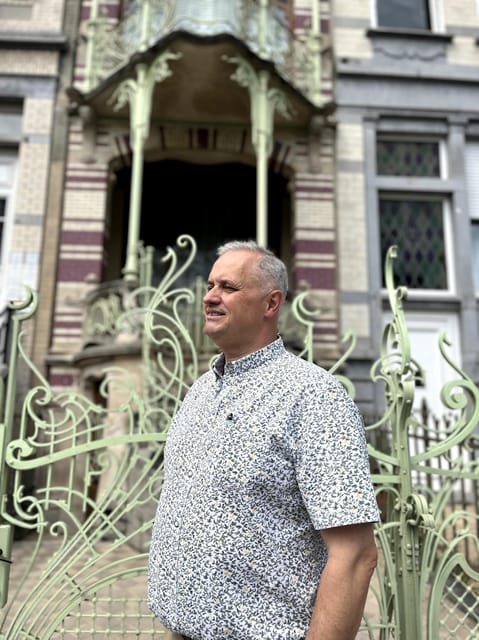
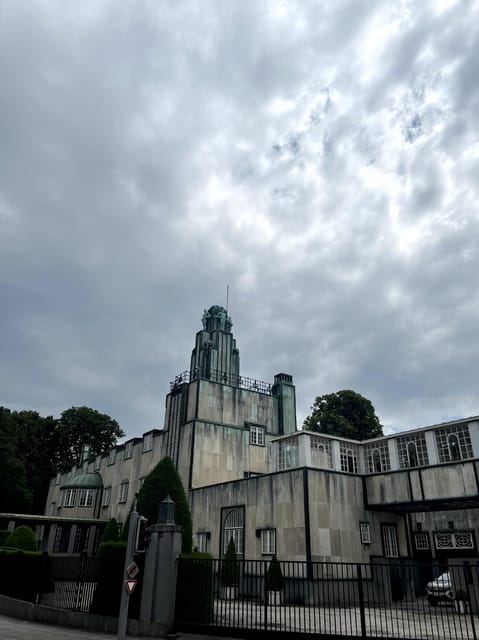
Some buildings are famous for a reason, and this route places you close to several of them. The tour includes Maison Cauchie, Palais Stoclet, and Maison Saint Cyr, which helps you see how Art Nouveau can show up with different levels of drama and different design intentions.
How to get value from these stops:
- Look at the facade as a whole, then zoom in on the ornament patterns the guide points out.
- Notice how the building’s surfaces guide your eye, instead of letting you treat the facade like decoration only.
- Try to connect what you’re seeing to the style trends the guide introduced earlier.
Even if you’ve seen photos before, seeing these in the street context matters. Brussels buildings sit in real urban space, where light, angle, and sidewalk distance change how you read the lines. That’s where the tour’s guided attention really helps.
Horta’s world in Brussels: Hôtel Tassel and Hôtel van Eetvelde
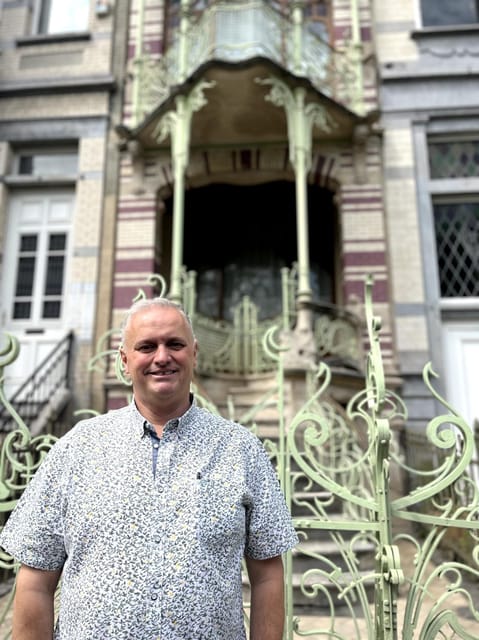
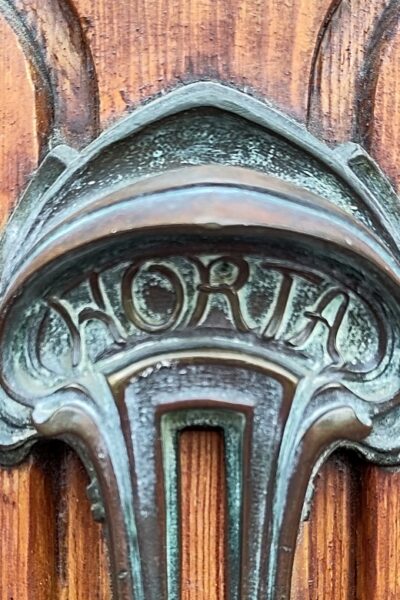
If you’re interested in Art Nouveau, you eventually hit Victor Horta, and this tour is positioned to get you there efficiently. You’ll see Horta’s major influence through stops such as Hôtel van Eetvelde and Hôtel Tassel, plus related addresses including Maison et Atelier Horta.
This is one of the most praised parts of the experience, mainly because the guide doesn’t treat Horta as a name-drop. The point is to help you recognize how the style language works from building to building. When you understand the “grammar,” each facade becomes easier to interpret.
Bonus advantage: one guide interaction reportedly made a later visit to the Horta Museum feel more meaningful. That makes sense. When you already learned what to look for, museum time becomes less about scanning and more about understanding.
Maison Van Dyck, Maison Roosenboom, and the rest of the cluster
Beyond Horta’s addresses, the tour hits other standout homes that round out the style. You’ll admire Maison Van Dyck and Maison Roosenboom, and you’ll also see additional works like Hôtel Tassel Horta, Hôtel Ciamberlani, Maison de son frère, Maison Hankar, Maison Hannon, and more.
Why this matters: Art Nouveau isn’t one single look. Even within the same movement, different designers experimented with how far to push ornament, how to handle structure, and how to blend materials. Having multiple buildings in a short window helps you spot those differences quickly.
Quick street-test you can do yourself: at each stop, pick one element the guide points out and keep it in your mind as you walk to the next building. It makes the comparisons feel obvious instead of overwhelming.
How to spot Art Nouveau trends when you only have two hours
The tour explicitly includes a quick portrait of the different Art Nouveau trends and the characteristics of the style. That’s the learning payoff, because it turns a list of buildings into a pattern you can recognize.
I’d approach it like this:
- During the first couple of stops, let the guide set your eye-level priorities.
- Later, try to predict what you’ll see before you reach the facade. That’s when learning feels fun.
- Take quick photos, but don’t rely on them. You want to remember what the guide taught you while your eyes are still processing the details.
If you’re the type who gets more from explanations than from audio apps, you’ll probably enjoy this format. A live guide can adjust in real time, based on what you’re reacting to on the street.
Hôtel Ciamberlani and the walk ending in Saint-Gilles
The tour includes Hôtel Ciamberlani (asbl) for a short guided segment. It’s a good punctuation point, because by the time you reach the last stretch, you’ve already built a mental checklist of what to notice.
The tour finishes at Av. de la Jonction in Saint-Gilles. Ending there is convenient because you’re not stuck back at the starting metro point with nothing to do next. You can continue exploring the neighborhood at your own pace and decide whether you want food, shopping, or another stop.
Price and value for a 2-hour Art Nouveau focus
This tour costs $136 per person for a 2-hour guided experience. That’s not a budget price, so the value question matters.
Here’s what you’re paying for:
- A professional guide who explains the movement and the characteristics as you see the buildings.
- Time efficiency: the route is designed to hit a high concentration of major addresses in a short window.
- A learning component: the style lesson isn’t separate from the architecture; it’s tied to each stop.
If you’re doing multiple architecture visits in a day, it can also save you time. Without a guide, you can still admire the facades, but you’ll likely miss the connections between trends and designer choices—exactly what this tour targets.
Who this tour is best for
This works best if you:
- Want a focused Art Nouveau primer with famous Brussels addresses, without spending the day jumping between far-flung areas.
- Prefer live guidance over self-guided wandering.
- Plan to see more architecture afterward, since the style framework transfers easily.
It’s not ideal if you need wheelchair access. Also, it’s a walk format, so comfortable shoes are a smart idea even though the route is only two hours.
One more practical thought: the experience has been described as a walking tour, but coverage can vary depending on circumstances. If you’re traveling with specific physical limits or you want a strictly on-foot experience only, confirm the format before you go.
Should you book this Art Nouveau walking tour?
Yes, I’d book it if your goal is to understand Art Nouveau in Brussels quickly and see the major houses with a guide who can explain what you’re looking at. The strongest reason to choose it is the pairing of famous addresses with on-the-street style teaching, which makes the whole tour feel like more than a route.
I’d think twice only if you’re very sensitive to missed meeting points or you require a fully guaranteed, strictly on-foot format. Show up early at the correct Merode exit area, and you’ll dramatically reduce the chance of start-of-tour frustration.
If you want a short, concentrated way to get the “why” behind the beauty, this is a solid bet.
FAQ
Where is the meeting point for the tour?
Meet in front of Brasserie Carpe Diem, located in front of Metro Station Merode. The metro station has three exit options, so check the meeting photo on the product page to pick the right one.
How long is the Brussels Art Nouveau tour?
The duration is 2 hours.
Is the tour in English?
Yes, the live guide provides the tour in English.
Is this a private group tour?
Yes, it is listed as a private group.
What major Art Nouveau buildings will we see?
The highlights include Maison Cauchie, Palais Stoclet, Maison Saint Cyr, Maison Van Dyck, Hôtel van Eetvelde, Hôtel Tassel, Maison Roosenboom, Hôtel Ciamberlani, and multiple additional Horta-related addresses such as Maison et Atelier Horta.
Where does the tour end?
The tour finishes at Av. de la Jonction, Saint-Gilles, Belgique.
Is transportation included in the price?
No. Transport tickets are not included if you need them.
Is the tour wheelchair accessible?
No, it is not suitable for wheelchair users.
What is included in the price?
A professional guide and a walking tour of Art Nouveau buildings.
Can I cancel for a refund?
Yes. Free cancellation is available up to 24 hours in advance for a full refund.
More Brussels Outings

More Tour Reviews in Brussels




Brussels in Art Nouveau

Hot Off the Press: New Brussels Reviews

Brussels Art Nouveau Tours, compared.
 ★ 4.0Brussels 3-Hour Guided Art Nouveau TourFrom $35282 reviews
 ★ 4.0Art Nouveau Pass – Entry to Three LocationsFrom $29108 reviews
 ★ 5.0Architecture Tour of BrusselsFrom $3010 reviews
 ★ 5.0Fall and Rise of Art-Nouveau Guided TourFrom $175 reviews
 ★ 5.0Art Nouveau Walking Tour with a Local GuideFrom $915 reviews
Browse the lists this tour appears in