
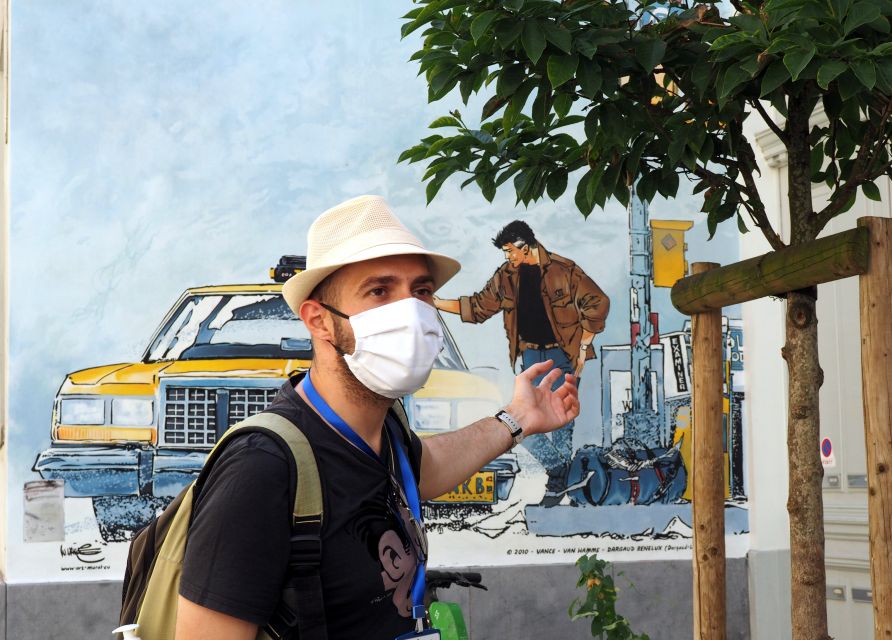
Reviewed · BRUSSELS COMICS & STREET ART WALKS
Brussels: The comic book walls walking tour
A city of walls can still surprise you. This Brussels comic-book wall walking tour turns familiar streets into panels, with stops tied to Tintin, the Smurfs, and the earliest comic-wall history. You’re on foot for about 150 minutes, following a guide who explains what you’re seeing instead of just pointing at it.
What I like most is how the tour mixes big-name characters with the nuts-and-bolts of French-Belgian comics. You also get a practical way to keep learning afterward through the included multimedia info in the app channel. It’s a small group too, with a maximum of 25 people, which helps the guide pace the walk.
One thing to consider: it’s Spanish-language on the scheduled days (and you should choose the day/language carefully). Also, it’s not suitable for visitors who are visually or hearing impaired, even though it is wheelchair accessible.
In This Review
- Quick take: what makes this tour worth your time
- Comic walls in Brussels: a walking page-turner
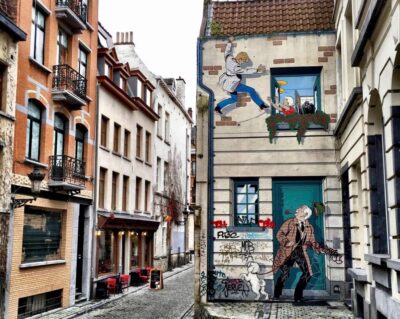
- Rue du Marché au Charbon start: Brousaille and your first clues
- Tintin’s house stop and the Moulinsart clue
- The 1991 question: what was Brussels’ first comic wall?
- Beyond the center: street walls you might miss alone
- How French-Belgian comics work: techniques you can spot on sight
- Smurfs in the city center: a quick identity jolt
- The 150-minute walk: pace, group size, and comfort
- Value and price: when 17 dollars turns into learning
- Who should book this Brussels comic wall tour?
- Should you book the Brussels comic book walls walking tour?
- FAQ
- What is the duration of the Brussels comic book walls tour?
- How much does the tour cost?
- What language is the guided tour in?
- Where is the meeting point?
- How big is the group?
- Is the tour wheelchair accessible?
- Can I cancel and get a full refund?
Quick take: what makes this tour worth your time
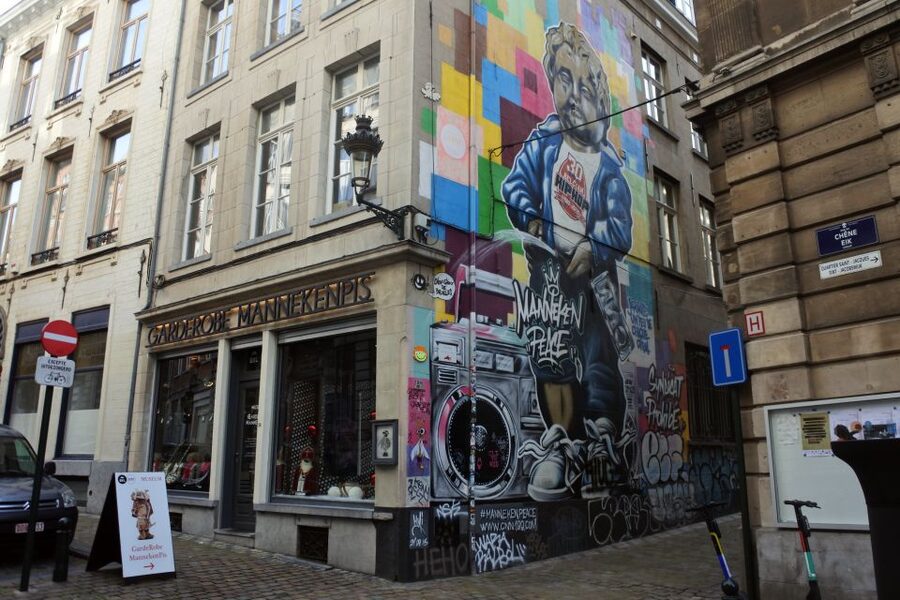
- Tintin’s house stop before he moved to Moulinsart castle, placed in the real streets of Brussels
- The first comic wall in Brussels (1991), so you’re not just looking at art—you’re tracking origins
- French-Belgian comic techniques, explained so you can recognize style on your own
- Stroll beyond the center, not just the postcard streets
- Professional guidance plus a multimedia app channel, so the info doesn’t end when you leave
Comic walls in Brussels: a walking page-turner
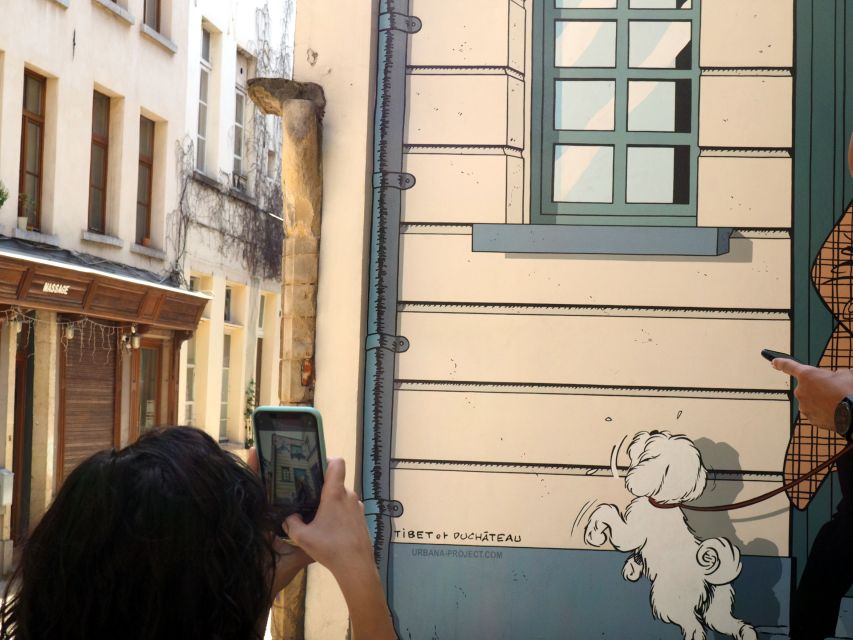
Brussels has a serious comic scene, and the tour leans into that. You’ll hear that the city has more than 80 comic walls, which changes how you see the neighborhoods. Instead of treating murals like decoration, you learn to read them: who made it, why that style matters, and what it says about the culture that produced it.
This is also one of those rare tours where you don’t need deep comic knowledge to enjoy it. Even if you mainly recognize characters (Tintin, Smurfs), the guide can connect the dots. You’ll start noticing recurring ideas—how scenes are framed, how characters are drawn to feel alive on a flat wall, and how Belgian comic storytelling became a visual language.
And because you’re walking, you experience the “how” as well as the “what.” A comic wall looks different depending on the street angle, the distance you stand at, and the way you pass by it. By the time you finish the route, you’ll likely see Brussels like a giant strip of panels—short, readable, and placed right where people actually live.
Follow more murals across Brussels
- Brussels: The comic book walls walking tour
★ 4.7 · 38 reviews - Brussels through its comics murals
★ 5.0 · 25 reviews - Comic Book Tour in Brussels
★ 5.0 · 14 reviews
Rue du Marché au Charbon start: Brousaille and your first clues
The meeting point is Rue du Marché au Charbon, 40, right by the mural of Brousaille. That matters because it’s not just a random start. The tour begins with comics already in front of you, so there’s no long lecture before you’re viewing the real thing.
You should expect a walking tour format with a group cap of 25 people. That size keeps it manageable: you can hear the guide, and you’re not fighting crowds around each wall. The total time is 150 minutes, which means you’ll get several stops without it turning into an all-day hike.
Accessibility is mixed in a practical way. The tour is listed as wheelchair accessible and doable with strollers or reduced mobility. But it is also listed as not suitable for visually impaired or hearing-impaired people. So if accessibility is your main concern, you’ll want to plan with that in mind.
One more useful detail: you’ll have complementary multimedia information via an app channel (Telegram). That’s handy when you want to review names, styles, or context after the walk.
Tintin’s house stop and the Moulinsart clue
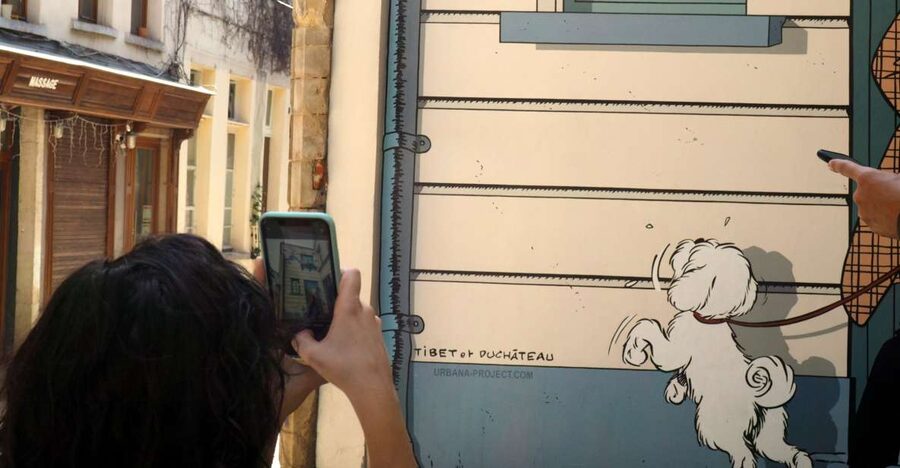
The highlight for many people is learning about the house where Tintin lived, before his story world shifted toward Moulinsart castle. This isn’t just trivia for fans. It helps you understand why a character feels “real” in Belgium’s comic tradition. The tour uses the city as a stage set, connecting fiction to geography.
Practically, this stop works well because it’s the kind of scene you can picture instantly. You’ll see where the narrative energy is anchored, and the guide helps you place it in the larger Tintin universe. If you know Tintin only from movies or translations, this kind of on-the-street context makes the character’s roots feel less distant.
And it also sets up later stops. Once you’ve seen how the tour frames Tintin’s setting, you’ll start noticing patterns in other walls: how titles and authors appear, how artists use iconic visual signals, and how the murals translate print comic style into public art.
If you’re traveling with kids, this is often where eyes widen fastest. Recognizable characters plus real streets is a winning combo.
The 1991 question: what was Brussels’ first comic wall?
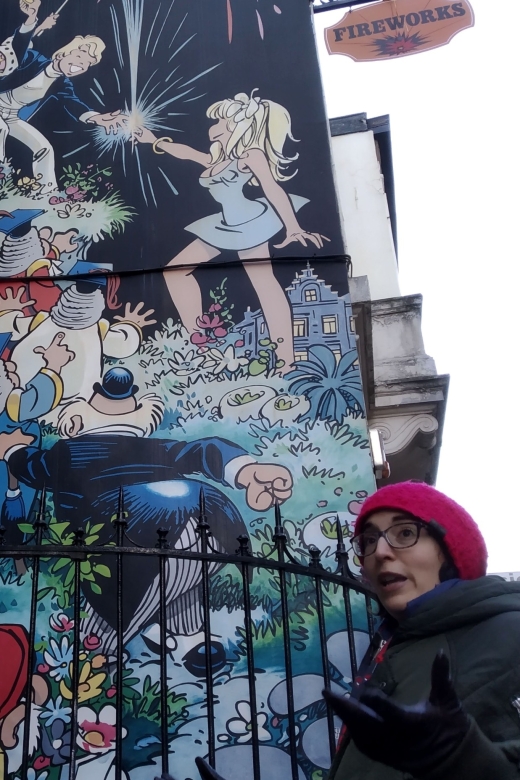
A key question on the tour is: which was the first comic wall in Brussels, created in 1991. That’s not just a history nugget. It changes how you read the walls around you. The tour helps you see this as a turning point—when comic culture became more visible in everyday public space.
Why is that important for you as a visitor? Because it gives the murals a timeline. Instead of treating each wall like a stand-alone artwork, you can track how the city’s approach evolved. Earlier walls tend to feel like they’re introducing a concept; later ones feel like the city is fully committing to comics as part of its identity.
This also makes the tour feel smarter than a simple “wall-hopping” walk. You’re learning a framework: origin first, then style and influence, then the broader network of walls across Brussels.
The guide’s explanations also help you connect the dots between different schools of French-Belgian comics. Once you know that there are distinct approaches, the walls stop looking like random colorful panels.
Brussels at walking pace, more routes


Beyond the center: street walls you might miss alone
One underrated part of this tour is the way you walk through streets that go beyond the center of Brussels. Central areas can be great for first-time orientation, but they also create a bubble. If you only see the core tourist zone, you miss how Brussels feels in motion.
On this tour, the route nudges you outward—so you experience the city as lived-in space rather than a curated show. That matters for comic walls because many of them don’t feel like art installations. They feel like part of the neighborhood’s visual language.
This is also where the “reading” skill clicks. After a few stops, you start spotting elements quickly: line work, composition choices, and how speech or narrative moments are handled when an artist has a whole building wall to work with.
There’s a simple bonus here: even if you don’t memorize everything, you’ll come away with a sense of where comic art shows up. Then, after the tour, you can spot more walls on your own and actually enjoy hunting for them instead of just chasing them.
How French-Belgian comics work: techniques you can spot on sight
A big part of the experience is learning the main techniques of French-Belgian comics and understanding the major schools behind the style. The guide doesn’t just say “this is Belgian” and move on. The value is that you learn what to look for.
You’ll get explanations that connect technique to storytelling. For example, you can start thinking about panels as rhythm: what gets emphasized, what gets simplified, and how the artist guides your eye from one moment to the next. When you’re standing in front of a wall in real life, you see that the “comic logic” still works, even when the format is stretched across architecture.
Another helpful angle: the tour also points you to where to get comics in your language. That turns the techniques into a next step. Instead of treating the tour as entertainment only, it becomes a route into further reading.
If you’re the type who likes to understand why things are made the way they are, this section is the backbone of the tour. It’s what separates it from a purely visual sightseeing loop.
Smurfs in the city center: a quick identity jolt
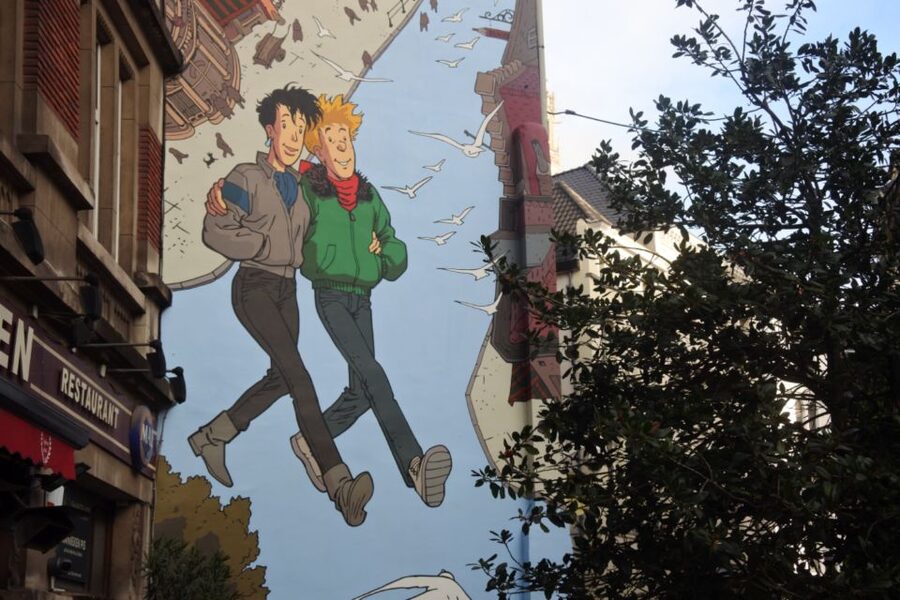
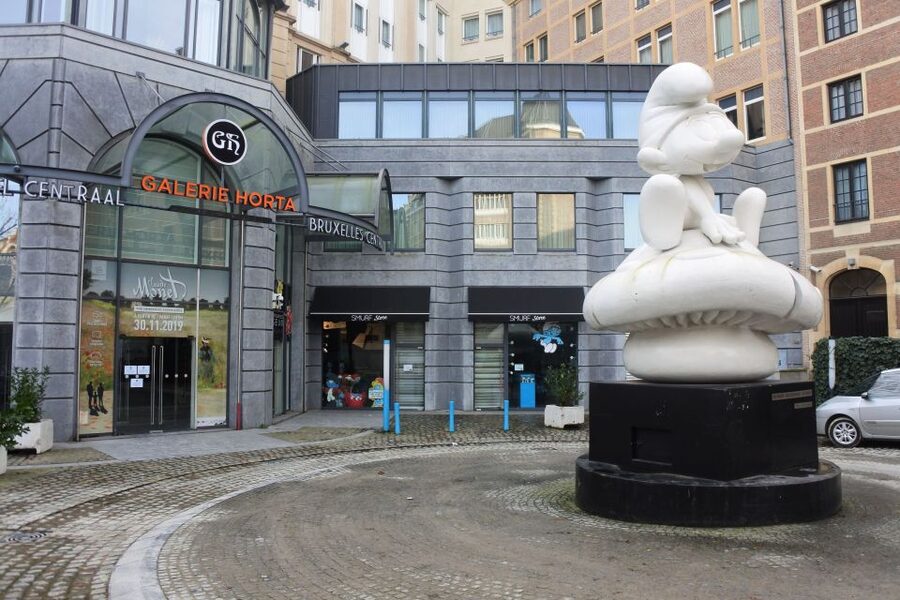
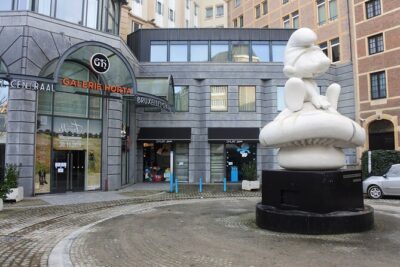
The tour includes a reference point that many people will recognize right away: the large Smurfs statue in the city center. Even if you’ve seen it before, the way it’s brought into the narrative helps you connect the dots between mainstream characters and the broader Belgian comic tradition.
This kind of stop works like a “reset.” You move from history and techniques back to instant recognition, so your brain has something familiar to hold onto while the guide continues adding context.
And honestly, Smurfs are a great bridge for mixed groups. If your travel party includes adults and kids, or people with different comic preferences, Smurfs tends to land for everyone. That makes the overall pacing smoother.
The 150-minute walk: pace, group size, and comfort
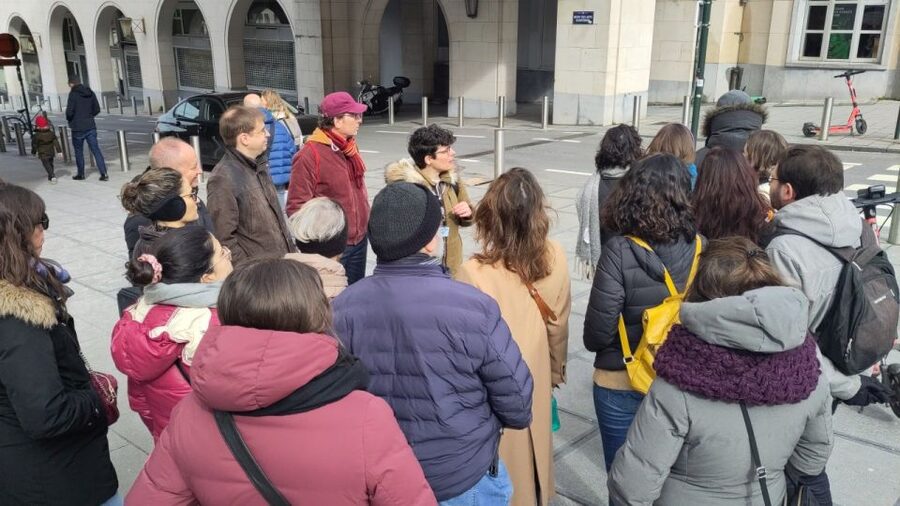
The whole tour is 150 minutes long. That’s about 2.5 hours, and it’s the right length to feel like you did something substantial without wiping you out. My advice: plan for comfort and energy like it’s a city stroll with several photo stops.
You should also know how the format feels for different personalities. Some visitors prefer faster, lighter tours; others like details and explanations. There’s a chance the tour could feel too long or too detailed if you want only quick highlights. On the other hand, if you enjoy learning and having time for conversation, the 2h30 can feel like it passes quickly.
Group size helps here. With up to 25 people, you get a lively group without losing control of the pace. The guide can also check in on comprehension, which matters more than people think when the tour is Spanish-only.
If your Spanish is basic, don’t panic. The tour is structured so the guide can slow down and ask if you’re following. Still, choose the language day thoughtfully. If you can’t comfortably understand Spanish at normal speed, you may want the English-language option when available.
Value and price: when 17 dollars turns into learning
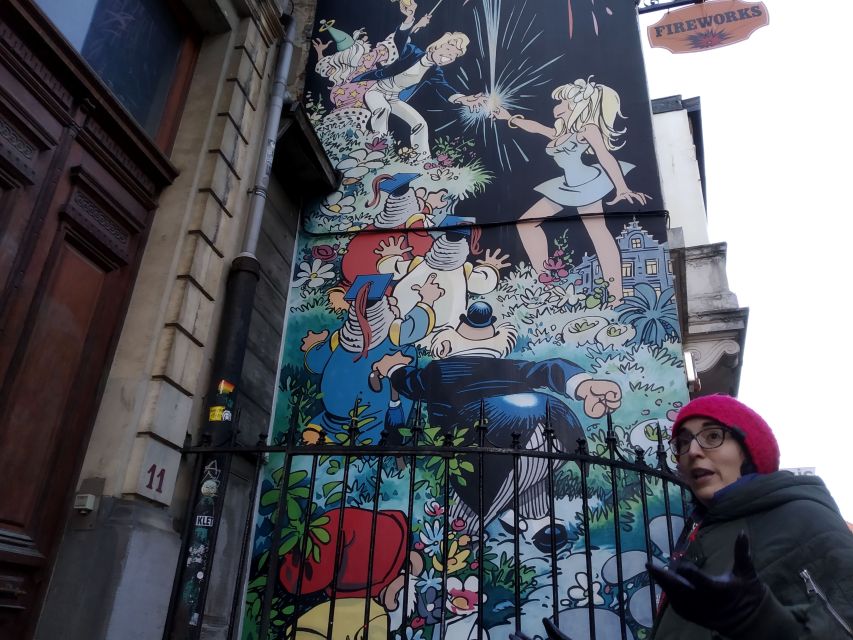
Pricing is listed as $17 per person, and there’s also an age-based option: 0€ for children 0 to 10, and 15€ for 11 and up. Either way, you’re paying for more than walking. You’re paying for a professional guide and the included multimedia support.
Here’s the value logic you can use. At 150 minutes, the cost isn’t trying to cover a museum entrance or a long attraction list. It’s covering interpretation: turning street murals into stories, timelines, and visual technique lessons. If that’s your style, the price feels fair. If you only want photos with no explanations, you may feel like it’s paying for context you didn’t ask for.
The family value is also real. Free for kids up to 10 makes this a low-stress way to entertain children while still giving adults something meaningful. And because it’s a walking tour, you don’t need special planning beyond comfy shoes and weather-ready layers.
Who should book this Brussels comic wall tour?
Book it if you want a guided walk that teaches you how to “read” the city’s comic art. You’ll get the Tintin house context, the 1991 first wall origin question, and technique lessons you can carry into future sightseeing. It’s especially good for people who like explanations more than they like passive tours.
You’ll also like it if you’re in a mixed group. Comic characters make it accessible, while the technique section gives adults a reason to care.
Don’t book it if language is a problem. The tour is Spanish-language on the stated schedule, and the information you provided says it can also be Spanish-only or English-only depending on the day. So check the day carefully and choose the language you can actually follow.
Also skip it if you rely heavily on visual or audio accessibility support. The tour is wheelchair accessible, but it is explicitly listed as not suitable for visually impaired people and hearing-impaired people.
Should you book the Brussels comic book walls walking tour?
I’d book this tour if your goal is to understand Brussels beyond landmarks. It’s a clever way to experience the city’s comic culture as something local, not a theme-park. The route starting at Rue du Marché au Charbon and the focus on origins like the 1991 first wall give it structure.
Choose it especially if you enjoy Tintin, Smurfs, or you simply want a fun, readable way to learn about French-Belgian comics on the street. The 150 minutes is long enough to feel like you gained insight, but short enough to fit into a normal travel schedule.
Pass on it if you want a quick hit with no language barrier, or if accessibility needs don’t match the tour’s listed suitability. For everyone else who’s curious about comics as art and culture, this is the kind of experience that makes you look up at walls afterward.
FAQ
What is the duration of the Brussels comic book walls tour?
The tour lasts about 150 minutes.
How much does the tour cost?
It’s listed at $17 per person. Children aged 0 to 10 can attend for 0€. From age 11 and up, the option is 15€.
What language is the guided tour in?
The live guided tour is Spanish. The information also notes that the tour is either Spanish only or English only depending on the day, so you should choose the day/language carefully.
Where is the meeting point?
Meet at Rue du Marché au Charbon, 40, next to the mural of Brousaille.
How big is the group?
The maximum group size is 25 people.
Is the tour wheelchair accessible?
Yes. It’s listed as accessible to people with reduced mobility, wheelchairs, or strollers.
Can I cancel and get a full refund?
Yes, there is free cancellation with a full refund if you cancel up to 24 hours in advance.
More Brussels Outings

More Tour Reviews in Brussels


Follow the Murals


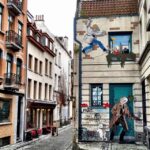
Hot Off the Press: New Brussels Reviews


Brussels Comics & Street Art Walks, compared.
 ★ 4.7The World of Banksy Museum Permanent ExhibitionFrom $16636 reviews
 ★ 5.0Brussels through its comics muralsFrom $3225 reviews
 ★ 5.0Comic Book Tour in BrusselsFrom $714 reviews
 ★ 4.82 hours Private Walking Tour of the Comics WallsFrom $10113 reviews
 ★ 4.7Brussels Comics & Street Art: Private Walking TourFrom $1214 reviews
Browse the lists this tour appears in