
Reviewed · WATERLOO & BATTLEFIELD DAY TRIPS FROM BRUSSELS
Historic Ypres WWI Sites – Tour from Brussels
Silent gates. Deep questions.
This day trip follows the WWI sites around Ieper (Ypres) with a historian guide who keeps things readable and answers your questions as you go. I really liked the way the visit turns from dates on a wall into real decisions made by people, not just soldiers, and the guide’s knack for connecting the sites to the wider picture of the war.
You also get the practical stuff that makes a long day easier: museum entries, lunch, snacks, and soda/pop are handled for you. The inclusion means you can focus on seeing, not budgeting every stop. One watch-out: it’s a 7–10 hour day with walking and uneven ground, so you’ll want comfortable hiking shoes and you’ll start early.
History Wolf Tours (run with historian guides) is aimed at people 16 and older, and it’s a private experience for your group. One review even singled out the guide as István, praising how he tailored the day to what interested the person most and carried smart conversations about the war’s politics and economics.
In This Review
- Key highlights that make this tour work
- Starting in Brussels at 8:00 am, then letting the sites set the pace
- Why the $701.35 price can feel fair (and where it may not)
- Hooge Crater Museum: reconstructions you can actually picture
- Hill 62 and Sanctuary Wood: preserved trench lines and striking 3D photos
- Menin Gate Memorial: the names, then the silence at Last Post
- Walking Ypres (Ieper) for souvenirs and lunch in the rebuilt center
- In Flanders Fields Museum: the Cloth Hall setting and the view from the Belfry
- Passchendaele Museum: dugouts, trenches, and objects that tell stories
- Tyne Cot Cemetery: when scale turns names into reality
- What the historian guide adds (and why István’s style matters)
- Who should book this WWI sites tour from Brussels
- Should you book Historic Ypres WWI Sites from Brussels?
- FAQ
- How long is the tour?
- What time does the tour start?
- Is pickup included?
- Is this tour private?
- What’s included in the price?
- Are museum entrance fees included?
- Is alcohol included?
- Is there a minimum age?
- What should I bring?
- Can I cancel and get a full refund?
Key highlights that make this tour work
- Historian-led, Q&A style visits at the main WWI stops, so you’re not stuck with a script.
- Hooge Crater Museum uses life-size battle reconstructions and an extensive weapons/equipment collection.
- Hill 62 / Sanctuary Wood is framed as some of the best-preserved trenches, with special 3D stereoscopic photos inside.
- Menin Gate Memorial is the daily ritual spot for the Last Post at 8:00 pm sharp.
- In Flanders Fields Museum sits in the rebuilt Cloth Hall, and you can climb the restored Belfry tower for wide views.
- Tyne Cot Cemetery lets you grasp the scale of Commonwealth loss, including thousands of names at the Tyne Cot Memorial.
Starting in Brussels at 8:00 am, then letting the sites set the pace
The day begins at 8:00 am, and pickup is offered. That’s a big deal for a WWI route like this. You’re not driving yourself between scattered memorials and museums, and you’re less likely to waste energy finding parking, buying tickets, or guessing how long each stop will really take.
From there, the schedule is built around giving you focused museum time, then a breather in the town. The tour moves at a pace where you can look, ask, and not feel rushed through every room. Still, expect a full day. You’ll be on your feet for stretches, especially around the cemetery and trench-focused exhibits.
Onto the battlefields, more history days out
- Flanders Fields Remembrance Tour from Brussels
★ 4.5 · 334 reviews - Remembrance Tour: The Battle of the Bulge in the Ardennes
★ 5.0 · 51 reviews - From Brussels: The Battle of the Bulge Remembrance Tour
★ 4.8 · 37 reviews
Why the $701.35 price can feel fair (and where it may not)
At $701.35 per person, this isn’t a bargain tour. But the value comes from how much is handled for you. The tour includes:
- All fees and taxes
- Lunch plus snacks
- Soda/pop
- Admission tickets for most of the day
It also includes an air-conditioned vehicle, which matters when you’re spending hours in motion and bouncing between rural sites and town stops.
Where the price might feel steep is if you’re the type who wants to go slow, linger on your own, or only cares about one or two locations. In that case, independent travel can be cheaper. But if you want a historian to steer you through the meaning of each site, the included admissions and guided time are what push the cost into “makes sense” territory.
Also note: alcoholic beverages aren’t included. If that’s part of your idea of a day out, budget for it separately.
Hooge Crater Museum: reconstructions you can actually picture
Hooge Crater Museum is the first stop, and it has a reputation for being a top private WWI museum in Belgium. What I like about it for a first stop is that it gives you a visual baseline. Before you get to the bigger memorials, you’re shown battle scenes with life-size reconstructions, plus a solid collection of weapons, equipment, and photographs.
Your time here is about 30 minutes, and admission is included. That’s enough time to take in the main exhibits without turning it into a museum marathon. The guide portion is built around explanation and questions, so if you’re wondering what you’re looking at, this is a good moment to ask.
Small consideration: because it’s reconstruction-based, people who strongly prefer purely documentary exhibits might need a minute to adjust. It’s still grounded in real artifacts and context, but you’re being shown a scene—not just reading labels.
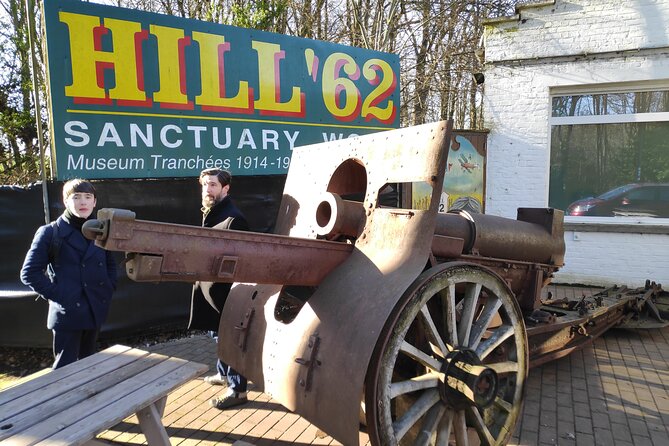
Hill 62 and Sanctuary Wood: preserved trench lines and striking 3D photos
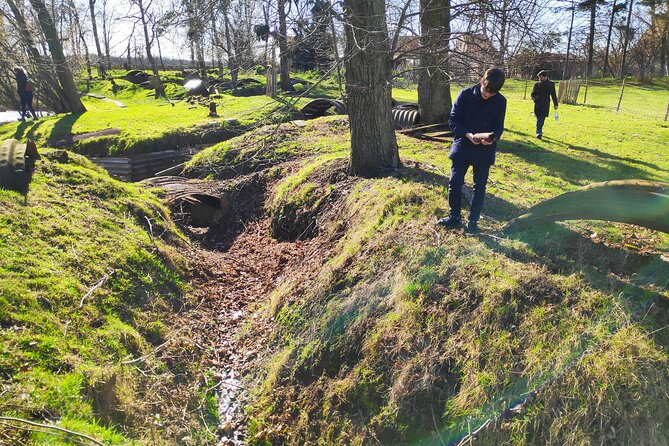
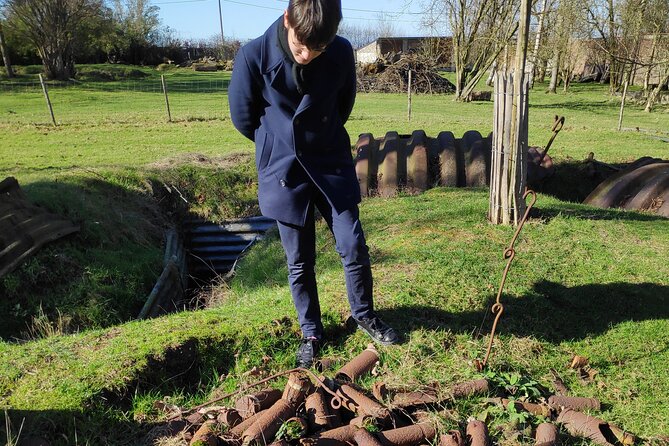
Next comes Hill 62 (Sanctuary Wood), where the tour focuses on the trench system and what’s still physically preserved. Sanctuary Wood earned its name in October 1914, when it was used as a kind of sanctuary for stragglers waiting to rejoin their units. The tour framing also points out how landowners recognized the significance early, enclosing trench lines and fencing shattered trees so the area could serve both pilgrims and visitors.
Today, Sanctuary Wood is described as offering some of the finest preserved trenches on the Western Front. That matters because when you’re standing near old trench remnants, the war stops being abstract. You start thinking about routes, concealment, cover, and how daily movement worked.
Expect about 45 minutes and included admission. Inside, you’ll also find 3D stereoscopic photographs of graphic scenes taken during the war. Those visuals can hit hard, so bring your calm curiosity. It’s not just a lesson; it’s an experience designed to make you see how close and chaotic the fighting was.
Deeper into the Brussels past


Menin Gate Memorial: the names, then the silence at Last Post
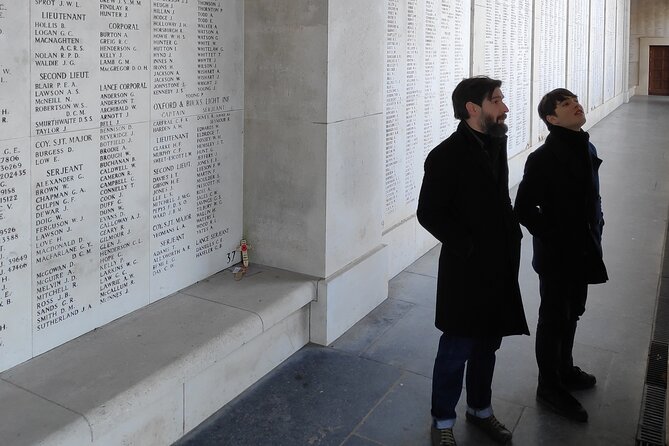
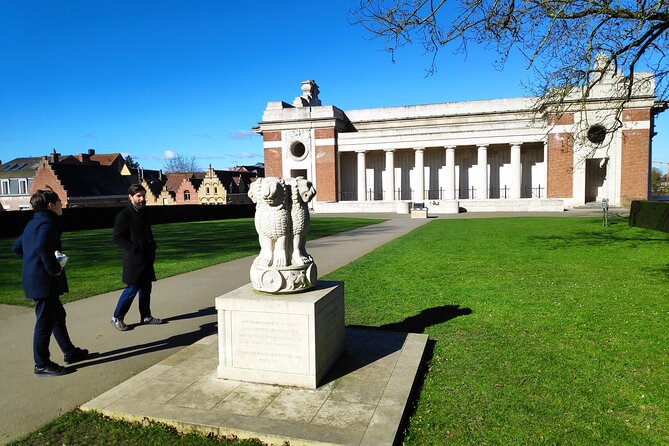
At Menin Gate Memorial, the focus shifts from trenches and museums to remembrance on a massive scale. The tour presents it as one of the strongest symbols of WWI, and specifically as a memorial to the missing. Inside, there are names of some 55,000 Commonwealth soldiers reported missing before Aug. 15, 1917.
Your time here is about 30 minutes, and admission is included. This is a good duration. You can slow down, read what you can, then step back to get the bigger meaning without getting mentally exhausted.
The tour also highlights the nightly ritual: every evening at 8:00 pm sharp, the Last Post resounds under the Menin Gate. Your schedule includes the Menin Gate stop, but it may or may not line up perfectly for you to hear that specific moment. Still, knowing it happens at 8:00 pm sharp changes the way you experience the gate. Even before the sound, it feels like you’re arriving for something.
Practical tip: bring your camera, but also pause and let your eyes do the work. With that many names, the real impact comes from being present.
Walking Ypres (Ieper) for souvenirs and lunch in the rebuilt center
After the heavy sites, the day gives you a calmer hour: in Ypres (Ieper) you’ll walk around, pick up souvenirs, and have lunch. Your time here is about 1 hour, and admission is free for this town stop.
This is also where the town’s rebuilding matters. WWI destroyed much of the region, and the modern Ypres you see now is part of the story—recovery, rebuilding, and daily life returning to a place that once held only ruins and mud.
Because lunch and snacks are included across the day, you’re not stuck hunting for food while everyone else is moving on. Use this hour to refill water, stretch your legs, and reset your head before the next museums and cemetery.
In Flanders Fields Museum: the Cloth Hall setting and the view from the Belfry
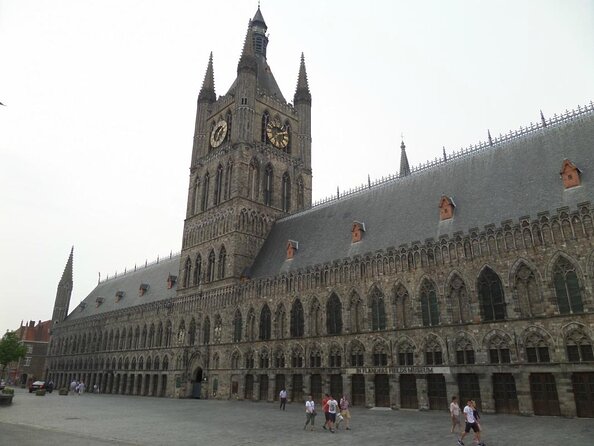
In Flanders Fields Museum is a key stop, partly because of its location. It’s located in the rebuilt Cloth Hall of Ypres, which the tour notes as a wartime hardship symbol and later a recovery symbol. That building choice isn’t decorative. It reinforces the message that this region isn’t only about what was lost—it’s also about what people rebuilt afterward.
Plan for about 1 hour 30 minutes and included admission. The museum presents the story of the First World War in the West Flanders front region, and it also keeps attention on the contemporary surroundings as tangible witnesses of what happened there.
One especially practical moment is climbing the restored Belfry tower. From the top, you can look out over Ypres and the surrounding battlefields. Even if you’ve read about the war, this view gives your brain a way to map it. Distance makes more sense. Terrain makes more sense. And it’s easier to connect why certain sites mattered.
Passchendaele Museum: dugouts, trenches, and objects that tell stories
Passchendaele Museum leans into the lived experience of soldiers during WWI. Instead of only showing posters and timelines, it uses dugouts and trenches, with unique objects arranged to take you on a journey through the Battle of Passchendaele.
You get about 1 hour 45 minutes, and admission is included. For me, this is one of those stops where you stop thinking like a tourist and start thinking like a person inside the system. The physical layout helps you understand why conditions mattered: cramped spaces, movement under threat, and the constant pressure of being exposed.
Small consideration: if you dislike heavier, more graphic presentations, pace yourself. The museum is designed to make the experience feel close. Bring water, take short breaks, and don’t force through anything that overwhelms you.
Tyne Cot Cemetery: when scale turns names into reality
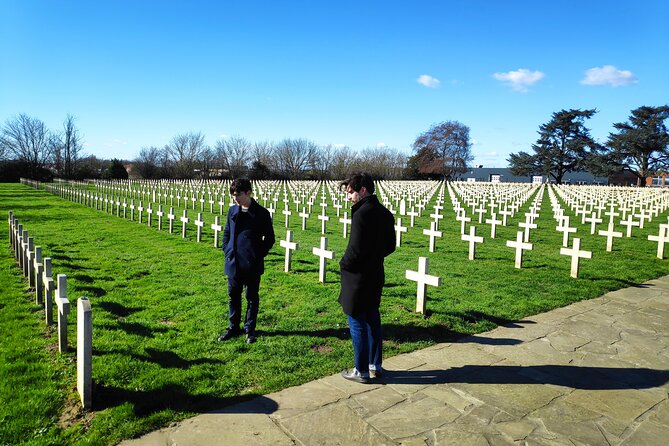
Tyne Cot Cemetery is where the day’s emotional weight becomes impossible to ignore. It’s described as the largest Commonwealth war cemetery in the world by burials. It holds 11,961 Commonwealth servicemen of the First World War buried or commemorated there.
Your time is about 1 hour, and admission is included. The tour also points out that the Tyne Cot Memorial forms the north-eastern boundary and commemorates nearly 35,000 servicemen from the UK and New Zealand who died in the Ypres Salient.
That number-heavy framing can sound abstract at first. But standing in a cemetery of this size changes how you process it. The names stop being statistics and start becoming individual lives that didn’t return home.
Practical move: if you’re moved by reading, spend a minute or two finding names that match your family research or personal interests. If you don’t have that, still take time to notice how the cemetery is laid out, because symmetry and repetition are part of how the memorial works.
What the historian guide adds (and why István’s style matters)
One of the strongest notes from recent experience is the guide’s ability to tailor the day. In particular, one group praised the historian guide István, saying he made an effort to find out what interested the person and adjust the focus accordingly. That same feedback also highlighted smart conversation about the political and economic situation behind the war.
I think that’s the best reason to choose a guided version of these sites. You can read facts on your own. But a good historian can connect the dots: why a trench line mattered, why a memorial was built the way it was, and what people were thinking as events unfolded.
So when you’re there, treat it like a two-way lesson. Ask why one site is preserved. Ask what a specific term means. Ask how the local area fits into the larger Western Front story. That’s when the day becomes more than visits—it becomes understanding.
Who should book this WWI sites tour from Brussels
This tour is a strong fit if you want:
- A guided route through major WWI memorials and museums around Ieper
- Included meals and admissions so you can focus on the sites
- A historian who’s willing to answer questions and talk about the bigger context
- A day built for serious viewing, not speed-walking for photos
It may be less ideal if you:
- Want a super casual day with minimal walking
- Only care about one or two sites and would rather travel independently
- Dislike intense, graphic war exhibits (Passchendaele Museum and the 3D photos at Hill 62 may be heavy)
Also remember the minimum age is 16, and comfortable hiking shoes are a must.
Should you book Historic Ypres WWI Sites from Brussels?
If your goal is to understand the WWI story around Ypres—politics, geography, and the human cost—this is a well-structured day. The combination of trenches you can picture, memorials that put names front and center, and museums set in real historical buildings makes the route feel coherent. And the all-in inclusions (lunch, snacks, admissions, soft drinks) help the price feel less like a random fee and more like a managed experience.
If you want just a quick photo loop, you can probably do cheaper on your own. But if you’d like the day to make sense and stick with you, this is one of the better ways to do it.
FAQ
How long is the tour?
It runs about 7 to 10 hours.
What time does the tour start?
The start time is 8:00 am.
Is pickup included?
Yes. Pickup is offered.
Is this tour private?
Yes. It’s described as private, with only your group participating.
What’s included in the price?
Included features list air-conditioned vehicle, all fees and taxes, lunch, snacks, and soda/pop, plus admission tickets for the museum stops noted as included.
Are museum entrance fees included?
Most of the major museum stops include admissions. The Ieper (Ypres) town time is free for that stop.
Is alcohol included?
No. Alcoholic beverages aren’t included.
Is there a minimum age?
Yes, the minimum age is 16.
What should I bring?
Bring your camera and comfortable hiking shoes.
Can I cancel and get a full refund?
Yes. You can cancel for a full refund up to 24 hours in advance of the experience’s start time.
More Brussels Outings


More Tour Reviews in Brussels




The Battlefields Near Brussels


Hot Off the Press: New Brussels Reviews




Waterloo & Battlefield Day Trips from Brussels, compared.
 ★ 4.5Flanders Fields Remembrance Tour from BrusselsFrom $113334 reviews
 ★ 5.0Remembrance Tour: The Battle of the Bulge in the ArdennesFrom $10751 reviews
 ★ 4.8From Brussels: The Battle of the Bulge Remembrance TourFrom $9737 reviews
 ★ 5.0Historic Battle of the Bulge Sites Tour from BrusselsFrom $70131 reviews
 ★ 4.5Bastogne Battle of the Bulge from Brussels (semi-private)From $1,50526 reviews
 ★ 4.5From Brussels: Patton’s Battle of the Bulge Day Trip (LUX+BE)From $1,05615 reviews
 ★ 5.0The Battle of The Bulge tourFrom $1,74413 reviews
 ★ 4.5Napoleon Last Campaign (Waterloo, Ligny..) Day Tour from BrusselsFrom $78110 reviews
Browse the lists this tour appears in