
Reviewed · TOURS
Evening Tour: The Dark Side of Brussels
Brussels at night changes the mood fast. This evening walk pairs major landmarks with darker stories you usually miss on daytime tours, and it’s paced as an easygoing stroll through several distinct neighborhoods. I also like that it stays in English with a real guide leading the show, and that the route ends in the Kapellekerk area instead of sending you right back the way you came. One thing to consider: the title says dark side, but the tone is more night history than horror, and the exact stop order can vary a bit by the guide and group.
For me, the best part is how quickly you get a sense of Brussels as a city of contrasts: gothic churches and grand squares in the same walk as crime, punishment, and politics. Expect lots of talking on sidewalks and in small spaces, so if you want quieter, sit-down museum time, this isn’t that kind of tour. Also, it depends on a minimum group size, so keep a flexible plan if you’re traveling solo on a tight schedule.
In This Review
- Key highlights you should know before you go
- An evening tour that treats Brussels like a living storybook
- Meeting at Grand Place, then walking your way into the evening
- Stop-by-stop: what you’ll see and why it matters
- Place du Grand Sablon: a market square start
- Place Saint-Jean: historic square, church focus
- Tour Anneessens: a neighborhood with a modern edge
- Rue de Rollebeek: cobbles, cafés, and a slower pace
- Notre-Dame du Sablon church: gothic beauty with real details
- Palace of Justice: big building energy and sweeping views
- Square du Petit Sablon: statues and a breather
- Place du Jeu de Balle: flea market neighborhood atmosphere
- Église Notre-Dame de la Chapelle / Kapellekerk area: the walk ends in Marolles
- The stories: how “dark side” plays out on the street
- Price and what you’re really paying for
- How hard is the walking, and who fits this tour best?
- Guide quality: why names keep coming up
- Should you book the Evening Tour: The Dark Side of Brussels?
- FAQ
- How long is the Evening Tour: The Dark Side of Brussels?
- What language is the tour offered in?
- Where do you meet and where does the tour end?
- What’s the price and group size?
- Do I need a mobile ticket?
- Is there a minimum number of travelers?
Key highlights you should know before you go
- Grand Place as the launch point: you start in the postcard center, then the city shifts as the walk moves outward.
- A courthouse viewpoint moment: the Palace of Justice area gives you a big-structure, skyline-style pause.
- Marolles flea-market atmosphere: you pass through the neighborhood vibe near Place du Jeu de Balle.
- Kapellekerk as the ending: the walk finishes in a local-feeling church area in the vernacular Marolles quarter.
- English mobile-friendly tour format: you get a mobile ticket and confirmations for the time you book.
- Tip-based value: the listed price is low, and many guides rely on what you choose to tip.
An evening tour that treats Brussels like a living storybook
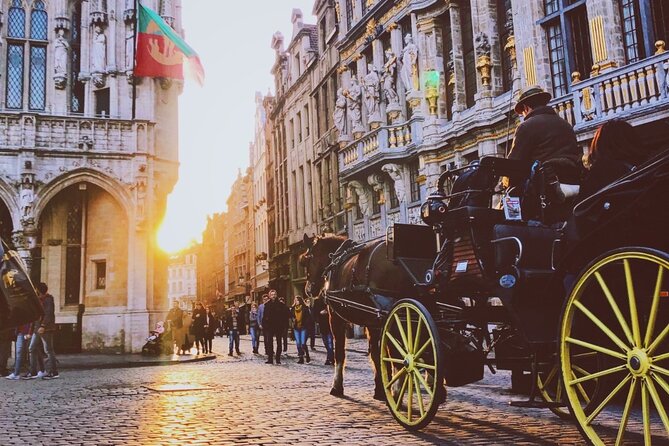
This is the kind of Brussels tour that works best when you accept one simple idea: the city’s night look is part of the experience. Yes, you’ll see famous buildings, but the real point is how a guide connects street corners to human decisions—power, fear, punishment, and politics—long before modern tourist maps showed up.
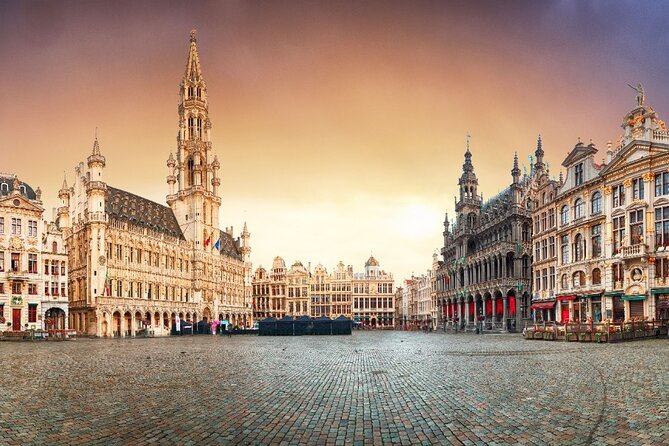
I like that the route feels like a walk you’d actually do on your own, just with a guide who gives you the missing context. You begin in the center at the Grand Place/Grote Markt area, then move through squares, churches, and side streets that each carry their own flavor. I’d call it a smart first evening in Brussels if you want a baseline story of how this city got shaped.
The “dark side” framing is worth taking with a grain of salt. Based on the experiences shared, it’s not a gore-and-guns show. It’s more about the less-flattering chapters of the city, told in a way that stays watchable and often even funny at times.
The city turns darker, more crime walks
- Evening Tour: The Dark Side of Brussels
★ 4.5 · 435 reviews - Private Tour: The Dark Side of Brussels
★ 5.0 · 20 reviews - Brussels: 2-Hour Dark Side of Brussels Private Tour
★ 4.8 · 11 reviews
Meeting at Grand Place, then walking your way into the evening
You’ll start at Grand Place/Grote Markt (1000 Brussels) and the tour ends at Kapellekerk (near Brux.-Chap/Brus.-Kap, Rue des Ursulines area, 1000 Bruxelles). That means you don’t just do a loop back to the same spot. You finish in a popular neighborhood where you can keep wandering, grab a snack, or connect onward by transit.
The duration is about 2 hours. That’s long enough to feel like you did something meaningful after dinner, but short enough that you can still have a full night ahead. The group size can be up to 35 travelers, which generally keeps things social but not cramped like some super-tight walking tours.
Practical tip: arrive early and use the main square as your landmark. There’s been at least one issue where people couldn’t find the guide in a packed square, so don’t assume it’ll be obvious. If you’re standing around looking lost, take 60 seconds to ask directly or check your confirmation details for exact meeting placement.
Stop-by-stop: what you’ll see and why it matters
This walk is built around a sequence of squares and churches, with a neighborhood drift into Marolles feel at the end. Each stop is usually brief—think quick orientation, key facts, and a story hook—so you’ll want to pay attention while you’re moving.
Place du Grand Sablon: a market square start
You begin near Place du Grand Sablon, where the area connects to the market-life side of central Brussels. Even if you only get a short moment here, it sets up the main contrast of the tour: everyday city life right next to the bigger, heavier stories.
Why it’s a good starting point: it’s central, it’s recognizable, and it helps you ease in before the tour starts getting more serious.
Other ways into a Brussels evening
Place Saint-Jean: historic square, church focus
Next is Place Saint-Jean, a classic Brussels square with old architecture and café energy. The highlight is St. John the Baptist Church, which anchors the square visually and gives the guide something solid to point at.
What you’ll likely notice: these squares aren’t just pretty—they’re also useful “stage sets” for understanding how communities organized themselves around religion, public space, and authority.
Tour Anneessens: a neighborhood with a modern edge
Tour Anneessens brings you into a district feel rather than a pure monument moment. This is where the talk tends to shift toward how Brussels changed, how different communities lived side by side, and how buildings and streets reflect that history.
A realistic drawback here: if you’re expecting every minute to be a standout attraction, this stop can feel more like a story bridge than a big-photo destination.
Rue de Rollebeek: cobbles, cafés, and a slower pace
Then you move along Rue de Rollebeek, a street where cobblestones and storefronts keep things human-scale. The guide can use this kind of street to explain how daily life and social structure overlap with bigger political events.
This section is also a good mental reset. After multiple churches and squares, a quiet street stroll helps you catch your breath and keep listening.
Notre-Dame du Sablon church: gothic beauty with real details
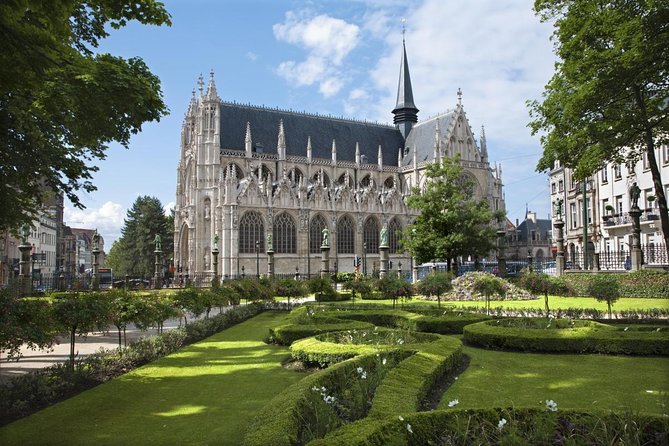
At Notre Dame du Sablon (the gothic church in the Sablon area), you get a more “look closer” moment. Expect stained glass and intricate stonework to be part of the explanation, tied into why this church matters to Brussels’ identity.
One thing I’d keep in mind: churches can be busy even in the evening. If you notice standing-room-only moments, position yourself so you can still see your guide without blocking others.
Palace of Justice: big building energy and sweeping views
The tour then heads to the Palace of Justice, one of the city’s most imposing landmarks. The guide focuses on its scale and its role as a major courthouse, and you’ll have a chance to appreciate how it sits elevated over the city.
This is one of those stops where the architecture does half the work for you. Even if you don’t love legal history, the sheer monument feel makes the stories land. Also, because it’s a landmark you can spot from a distance, it helps you map Brussels in your mind.
Square du Petit Sablon: statues and a breather
At Petit Sablon, you get a garden square with 48 small bronze statues representing medieval guilds. That detail gives your listening a nice anchor: Brussels’ past is tied to the groups that made things, traded goods, and held local power.
This is also a good pause for photos and for grabbing your bearings before you head into Marolles.
Place du Jeu de Balle: flea market neighborhood atmosphere
Now you drift toward Place du Jeu de Balle, known for the flea market scene and the Marolles neighborhood vibe. You’ll get that welcoming, lived-in feel—more secondhand and street-level than souvenir-shop.
If you’re there when market life is active, you might catch people browsing and the area’s rhythm in full swing. If not, it still works as a strong neighborhood atmosphere stop.
Église Notre-Dame de la Chapelle / Kapellekerk area: the walk ends in Marolles
The tour finishes near Kapellekerk in the vernacular Marolles neighborhood. The church and its name tie back to a chapel founded in 1134, which gives the ending some serious “time depth.”
This is a nice way to end because it doesn’t just dump you back at the central tourist core. You finish where the neighborhood identity feels stronger and where you can keep exploring on your own.
The stories: how “dark side” plays out on the street
The best tours are the ones where you don’t just collect facts—you understand why the facts mattered. This walk generally does that by linking events to the physical setting.
From what I’ve seen in feedback, the tone can shift by guide. Some guides lean toward the more unsettling chapters—punishment, murders, political conflict—while others keep it lighter and more focused on how Brussels’ institutions worked and why certain reputations stuck. A common thread is that it isn’t all dark. It’s dark-ish, with plenty of explanation so it stays clear rather than sensational.
I also like how the material tends to spread across themes:
- Buildings as evidence: churches, squares, and legal architecture aren’t treated like props.
- Politics as local reality: the guide helps you connect high-level history to city streets.
- Night context: talking about unpleasant chapters in the evening makes the city feel more real and less like a daytime postcard.
A small caution: a couple of reports mention the tour not matching the app-stated itinerary order, and another mentions end-of-tour extras like vouchers running out. I’d plan to enjoy the walk even if one stop runs short or the sequence shifts slightly.
Price and what you’re really paying for
The listed price is $3.62 per group (up to 6), for about 2 hours in English. That sounds almost too low, and the point is clear: this is effectively a low booking fee with the real value coming from the guide and your tipping choice.
In practical terms, you should treat this like a tour you’re supporting. Many guides depend on tips, and the reviews strongly suggest tipping is expected and appreciated. If you want to get the full value, bring some euros for a tip and decide what feels fair based on how much you learned.
A quick value check for you:
- If you love architecture and want context beyond plaques, this can be great value.
- If you only want a few landmarks with minimal listening, you might find the time heavy.
- If you’re okay with a night walk and a guide-led narrative, the low fee plus tipping model can feel fair and human.
How hard is the walking, and who fits this tour best?
This is a walking tour, and one of the more common practical notes is that it can feel a bit more strenuous than the quick description suggests. It’s still doable for most people, but you’ll want comfortable shoes because you’ll be on sidewalks and cobblestones in parts of the route.
Who it suits best:
- First-timers who want a structured story without booking a museum
- People who enjoy political or social history mixed into street scenes
- Travelers who like evening ambiance and not just daytime sightseeing
Who might struggle:
- Anyone with limited mobility or who needs frequent long breaks (there’s no info here about elevators or limited walking)
- People who can’t hear clearly in quiet conversation settings, since at least one review mentioned a guide’s voice could be hard to hear at times
Guide quality: why names keep coming up
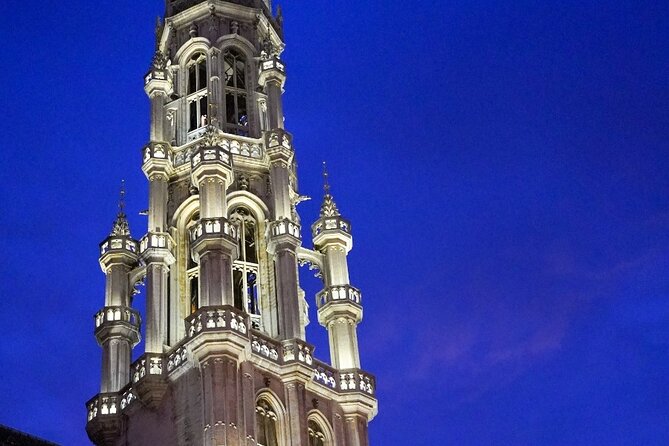
This is one of those tours where the guide matters a lot. Multiple guides were praised by name, including Den, Sebastian, Ann Marie, Rahim/Rahiem, Gunny, David, Ian, and Regime. The praise pattern is consistent: storytelling that connects buildings to meaning, and communication that keeps the group engaged.
A practical takeaway for you: if you want the best experience, show up on time, stay close enough to hear, and ask questions at natural breaks. Guides who invite interaction tend to make the tour feel more personal—and several comments praise that exact kind of engagement.
Should you book the Evening Tour: The Dark Side of Brussels?
Book it if you want:
- A night walk with a guide-driven narrative
- A mix of big-name central sights and Marolles neighborhood texture
- A “dark-ish” take on Brussels that stays understandable and not pure shock value
Skip it (or rethink your expectations) if you:
- Want a strictly horror-style itinerary
- Need every stop to match the app order exactly
- Prefer museums or seated time over sidewalk stories
My simple recommendation: if this is your first or second night in Brussels and you want to learn fast while seeing real city streets, this is a strong way to spend your evening—especially because the price is low and the guide experience is what you’re really buying.
FAQ
How long is the Evening Tour: The Dark Side of Brussels?
It lasts about 2 hours.
What language is the tour offered in?
The tour is offered in English.
Where do you meet and where does the tour end?
You start at Grand Place/Grote Markt (1000 Brussels) and end at Kapellekerk near Brux.-Chap/Brus.-Kap, in the Rue des Ursulines area (1000 Bruxelles).
What’s the price and group size?
The price is $3.62 per group, up to 6 people.
Do I need a mobile ticket?
Yes, it includes a mobile ticket.
Is there a minimum number of travelers?
Yes. The experience requires a minimum number of travelers, and if it’s canceled due to not meeting that minimum, you’ll be offered a different date or a full refund.
More Brussels Outings

More Tour Reviews in Brussels



The Darker Side of Brussels

Hot Off the Press: New Brussels Reviews

Tours, compared.
 ★ 4.7From Brussels: Bruges & Ghent Day Tour – 2 Fairytale CitiesFrom $578,242 reviews
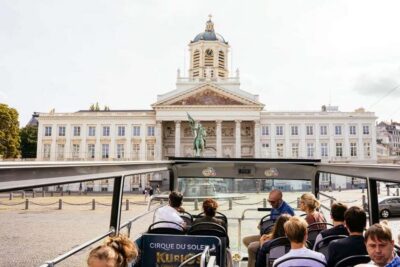 ★ 4.0Hop-On Hop-Off Bus TourFrom $294,016 reviews
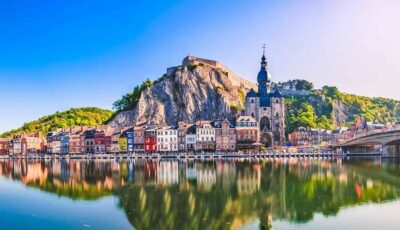 ★ 4.6From Brussels: Luxembourg Tour with Dinant VisitFrom $773,422 reviews
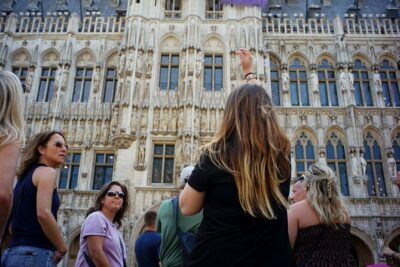 ★ 5.0Hungry Mary’s Famous Beer and Chocolate Tour in BrusselsFrom $1192,258 reviews
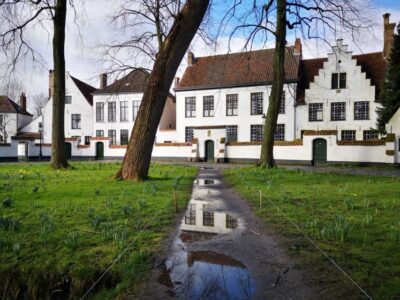 ★ 4.6From Brussels: Bruges Day Trip with Boat Tour Option (ENG)From $501,352 reviews
 ★ 4.7From Brussels: Bruges Day Trip with Boat Tour Option (ES)From $501,171 reviews
 ★ 4.5The Most Complete Tour Of BrusselsFrom $31,171 reviews
 ★ 5.0Historical Walking Tour with Chocolate & Waffle TastingFrom $421,165 reviews