
Reviewed · BRUGES DAY TRIPS FROM BRUSSELS
Private Tour – Bruges and Ghent, our fairytale cities
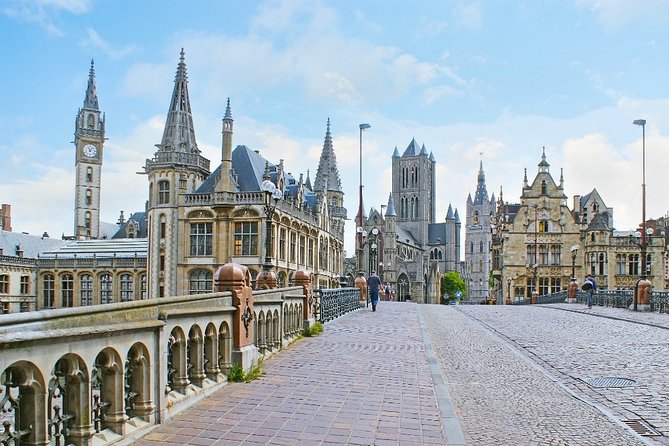
Two medieval cities in one smooth day. This private Bruges and Ghent tour is built for people who want major sights without losing hours to planning. You’ll travel with a multilingual local guide and a comfortable air-conditioned coach, then hop between unforgettable stops like Ghent’s Belfry and Bruges’ Basilica of the Holy Blood.
What I really like is how the guide keeps the day readable. I love the human touch here: you’re not just dropped at landmarks, you get context as you walk—plus practical tips on what to do next. Andrea and Stephan were singled out by name in recent experiences, and that matches the overall vibe: friendly, organized, and easy to ask questions.
One consideration: it’s still a long day with walking, and the tour isn’t recommended if you struggle with mobility. Also, food and drinks are not included, so you’ll want to plan for at least one meal on your own.
In This Review
- Key things to know before you go
- How this Bruges and Ghent tour actually saves your time
- A practical note on meeting up
- The pace of a 10.5-hour day: what to expect on your feet
- Ghent stops: Belfry views, Leie river quays, and a castle with a job history
- Stop 1: Het Belfort van Gent (Ghent’s Belfry)
- Stop 2: Graslei and Korenlei (Leie river quays)
- Stop 3: St. Bavo’s Cathedral (Gothic power and the Ghent Altarpiece)
- Stop 4: Gravensteen (the castle that kept changing jobs)
- Stop 5: Saint Nicholas Church (early-13th-century landmark)
- Switching gears: from Ghent’s medieval streets to Bruges’ canal-center life
- Bruges stops: Holy Blood, the tall Church of Our Lady, and Burg Square
- Stop 6: Basilica of the Holy Blood (a relic-focused church)
- Stop 7: Onze-Lieve-Vrouwekerk (Church of Our Lady and its tower)
- Stop 8: Stadhuis (Bruges City Hall in Burg Square)
- Stop 9: Minnewater Lake and Lovers Bridge
- Stop 10: Burg Square (the political center)
- Ten Wijngaarde beguinage and the optional canal tour you’ll likely want
- Stop 11: Princely Beguinage Ten Wijngaarde
- Stop 12: Historic Centre of Brugge + optional canal tour
- Price and value: what $57 covers and what you pay for yourself
- Who this tour suits best (and who should reconsider)
- Should you book the private Bruges and Ghent tour?
- FAQ
- What languages are available for the guide?
- Is this tour only for my group?
- Where do I meet for the tour?
- Will there be free time during the day?
- Is lunch included?
- Can I book the Bruges canal tour in advance?
- Can I bring luggage on the coach?
- Do I need to bring a passport?
- What if it’s raining?
- What’s the cancellation policy?
Key things to know before you go
- Private group feel: Only your group joins your schedule, so the guide can set a pace that fits you.
- Frequent free-entry stops: Many of the highlights here are marked as free admissions, which helps the day feel like real value.
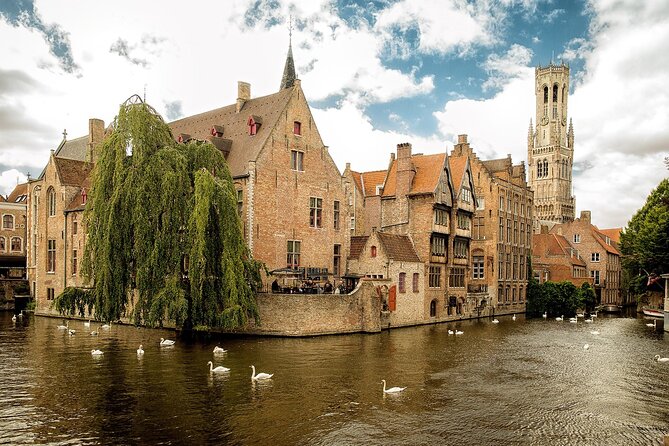
- Ghent by river, Bruges by canals: You get both water-city styles in one trip—Leie in Ghent, and canal scenes in Bruges.
- A Sunday caveat for St Bavo: Access to the Mystic Lamb in St. Bavo’s Cathedral isn’t possible on Sundays.
- Optional Bruges canal tour: If you want the classic canal experience, you arrange it with your guide on the day.
- Air-conditioned coach plus radios: Comfort on the road, and radios/earphones when needed to hear the guide clearly.
How this Bruges and Ghent tour actually saves your time
If you’re starting from Brussels, this is the kind of plan that helps you get your bearings fast. The day is long—about 10 hours 30 minutes—but it’s structured so you’re always moving between places that matter.
The big “value” angle is simple: you’re paying for transportation + a professional multilingual guide, and you’re not paying separately for most major sights along the way. There’s also a coach with air-conditioning, plus radios/earphones when necessary. That matters more than people think. On a day like this, being able to hear the guide without craning your neck makes the whole experience feel calmer.
On to Bruges, more day trips from Brussels
- From Brussels: Guided Day Trip to Bruges and Ghent
★ 4.6 · 8,353 reviews - From Brussels: Bruges & Ghent Day Tour – 2 Fairytale Cities
★ 4.7 · 8,242 reviews - Bruges and Ghent – Belgium’s Fairytale Cities – from Brussels
★ 4.0 · 4,809 reviews
A practical note on meeting up
Hotel pickup isn’t offered. Instead, you meet at the location listed on your voucher, and it’s near public transport. Start time is 9:00 am, so do yourself a favor and be on time. There’s a stated option to wait only if you tell them in advance (5 minutes if you’re delayed).
The pace of a 10.5-hour day: what to expect on your feet
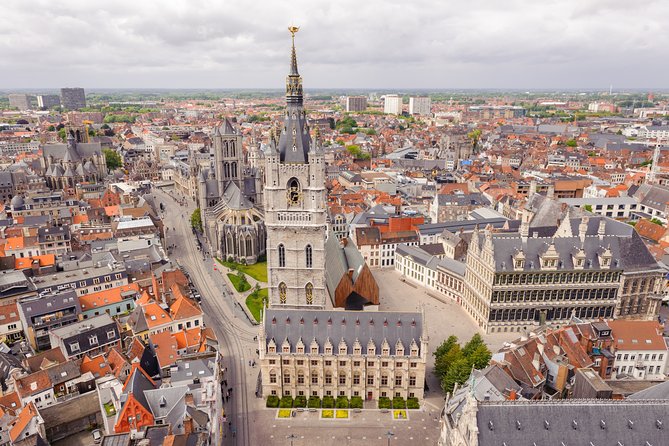
This tour is designed for people with moderate walking ability. Comfortable shoes are a must, because both Ghent and Bruges have lots of cobblestones and short walking links between sights.
You’ll also have free time built in on every excursion. The exact length isn’t fixed in the details you have here, but it’s typically enough to grab a coffee, wander a lane or two, and reset your legs before the next landmark. You’ll want to use that time well—especially in Bruges, where the center can feel packed.
A small perk that shows up in how the day feels: the guide can recommend what to do next. In past experiences, guides like Andrea didn’t just give facts; they pointed people toward places to eat and what to prioritize so you don’t end up hunting around with sore feet.
Ghent stops: Belfry views, Leie river quays, and a castle with a job history
Ghent is the perfect opening act for this trip. It feels more student-y and local than many people expect, with medieval architecture that still looks lived-in. Here’s how the day unfolds in Ghent.
Ghent next, more days out from Brussels
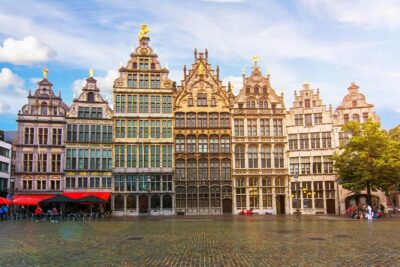
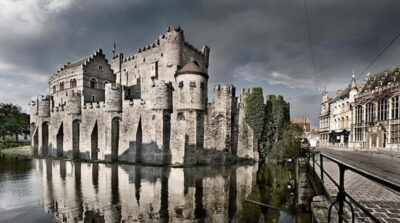
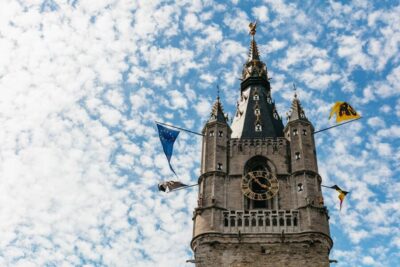
Stop 1: Het Belfort van Gent (Ghent’s Belfry)
You start with the Belfry of Ghent, a 91-metre tower overlooking the old city centre. Even if you don’t climb, it’s a strong “get your bearings” stop because the tower sets the vertical rhythm of Ghent.
Why I like this: towers like this are historical GPS systems. Once you’ve got the Belfry in your mind, you can understand where everything sits around it. Entry is listed as free.
Tip: If you’re tempted by a view, check your timing on the day. A tower is best when you’re not rushed.
Stop 2: Graslei and Korenlei (Leie river quays)
Next up are Graslei and Korenlei, the famous river quays on the Leie. These spots are postcard material, but what makes them worth time is the layout: you can see how the river shaped trade and daily life.
Entry is free. The best way to enjoy this is slow strolling. Look at the facades, then glance down toward the water level. The charm is in the proportions.
Stop 3: St. Bavo’s Cathedral (Gothic power and the Ghent Altarpiece)
St. Bavo’s Cathedral is a Gothic giant at 89 metres. It’s also the home of the well-known Ghent Altarpiece, which is one reason this stop is a must for art lovers and first-time visitors.
Entry is listed as free. There’s a key detail to keep in mind: access to the Mystic Lamb is not possible on Sundays. If your dates include Sunday, plan your expectations around what you can still see in the cathedral.
Stop 4: Gravensteen (the castle that kept changing jobs)
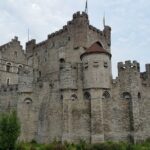
Then you reach Gravensteen, a fortress originally dating to 1180 and associated with the Counts of Flanders until 1353. After that, it wasn’t just one thing for centuries. It was re-purposed as a court, prison, mint, and even a cotton factory.
That “job history” is what makes Gravensteen click. You’re not only looking at medieval stone; you’re seeing how power and economics shifted over time. Admission is listed as free, which is a nice bonus.
Small reality check: Castles work best when you’re willing to walk a bit around them. If you’re a “quick photos only” person, you may not get full value.
Stop 5: Saint Nicholas Church (early-13th-century landmark)
Saint Nicholas Church is among the oldest and most prominent landmarks in Ghent. Work began in the early 13th century as a replacement for an older Romanesque church.
Entry is listed as free. This stop is good for people who enjoy churches but don’t want an all-day museum feel. It’s more of a landmark-and-walk moment.
Switching gears: from Ghent’s medieval streets to Bruges’ canal-center life
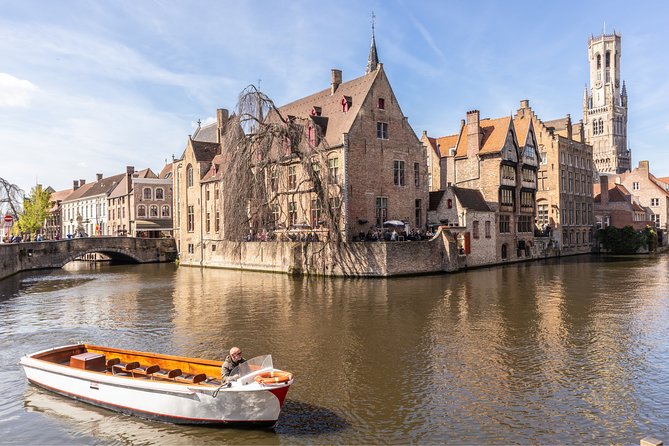
After Ghent, the day shifts into Bruges. Bruges is famous for canals, squares, and the sense that the old town is preserved as a whole.
You’ll feel this difference right away: Ghent has that river-front personality, while Bruges tends to pull you toward concentrated highlights in the center. Plan to stay flexible. If you want photos without waiting, use your free time to beat the biggest crowd surges.
Bruges stops: Holy Blood, the tall Church of Our Lady, and Burg Square
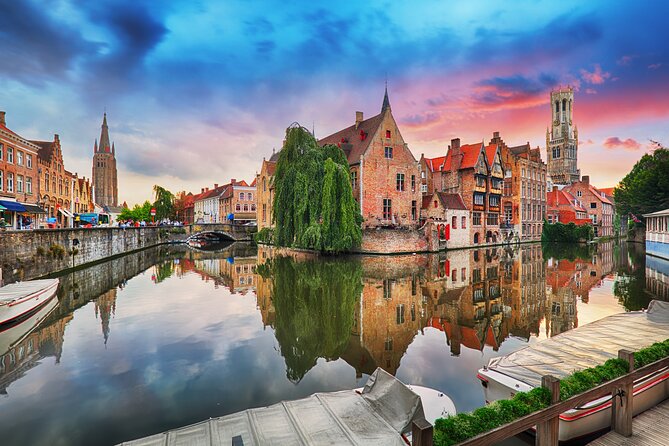
Bruges is all about iconic stops that connect into one walkable story. Here are the highlights, in order.
Stop 6: Basilica of the Holy Blood (a relic-focused church)
The Basilica of the Holy Blood is tied to a venerated relic that is said to have been collected by Joseph of Arimathea and brought from the Holy Land by Thierry of Alsace. It’s listed as a 10-minute stop, with admission free.
If you’re the type who likes religious history and local legends, this is a quick hit. If you’re more into architecture or canals, think of it as a cultural checkpoint that sets Bruges’ tone.
Stop 7: Onze-Lieve-Vrouwekerk (Church of Our Lady and its tower)
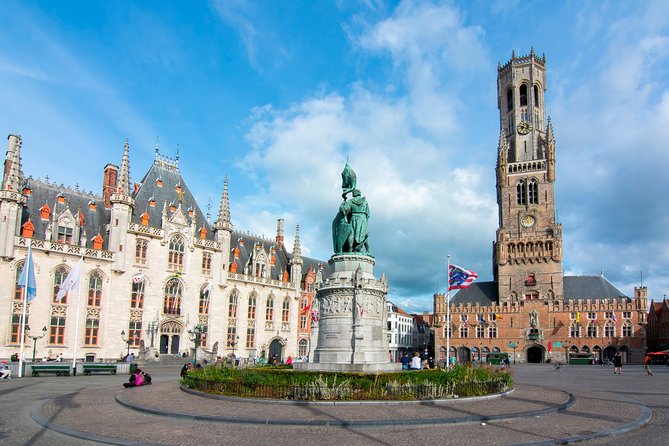
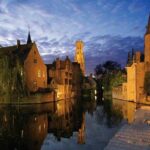
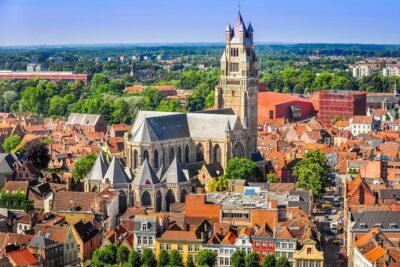
This is the big church moment in Bruges: Onze-Lieve-Vrouwekerk dates mainly from the 13th, 14th, and 15th centuries. The tower reaches 115.6 metres and is described as the tallest structure in the city and the second tallest brickwork tower in the world.
Admission is listed as free, and the stop is 15 minutes. Even in a short visit, it’s hard not to look up. The tower gives Bruges its skyline identity.
Tip: If crowds block your view, don’t fight it. Step slightly to the side and let your eye catch the tower line again from a nearby angle.
Stop 8: Stadhuis (Bruges City Hall in Burg Square)
Next is Stadhuis, Bruges City Hall in Burg Square. It’s described as one of the oldest city halls in the Netherlands region, and it sits in an area tied to a former fortified castle.
This is a good “power and politics” stop—short, but it helps you connect the architecture to the way the city ran. Entry is free, and it’s about 10 minutes.
Stop 9: Minnewater Lake and Lovers Bridge
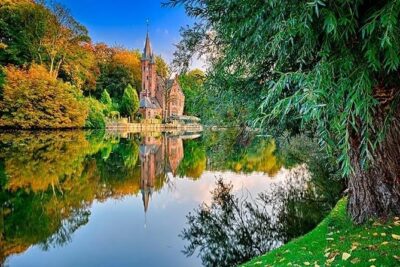
Then the tour slows down for romance. Minnewater Lake is nicknamed the Lake of Love, and there’s also the Lovers Bridge nearby. The stop is 15 minutes, and entry is free.
This is exactly the kind of break you want in Bruges. After church towers and city hall stone, you need a calmer pocket. The water-and-walk feel makes it easier to enjoy Bruges without feeling rushed.
Stop 10: Burg Square (the political center)
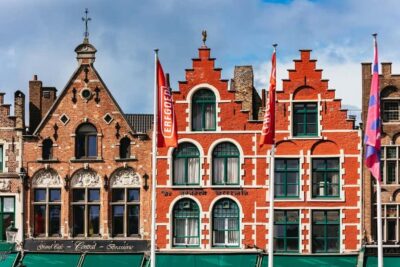
Burg Square is the city’s political center, and the architecture mix is part of why it works. The stop is listed at 20 minutes, and admission is free.
If you like to read a place by its buildings, Burg Square is where you do that. Look at the different facades and how the space shapes movement.
Ten Wijngaarde beguinage and the optional canal tour you’ll likely want
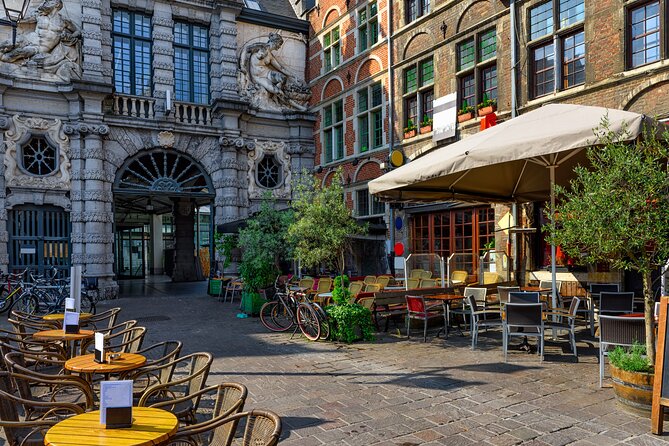
Bruges ends with two experiences that feel different from the church-and-square rhythm.
Stop 11: Princely Beguinage Ten Wijngaarde
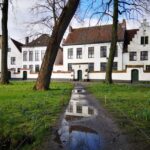
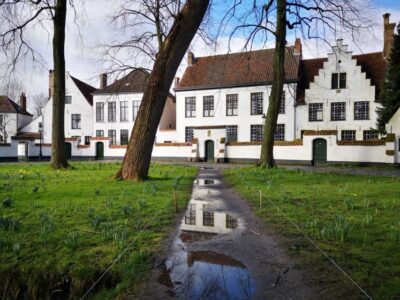
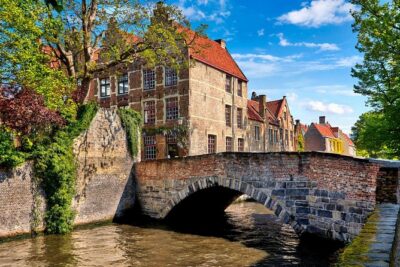
This is the only preserved beguinage in the Belgian city of Bruges. There are no beguines living there anymore, but since 1927 it has functioned as a convent for Benedictines.
The stop is 10 minutes, entry is free. Even if you only have a short time, this place is worth it because it shows a different side of social life—religious community without the same model as a cathedral-centered parish.
Stop 12: Historic Centre of Brugge + optional canal tour
Finally, you reach the Historic Centre of Brugge with time for an optional but memorable canal tour. The stop is 30 minutes for this portion, and the canal tour itself is not included.
Important detail: the canal tour can only be booked with your guide, on the day of your trip. That makes this a flexible add-on. If the timing works, you go for it. If crowds or weather don’t cooperate, you’re not stuck with a fixed ticket.
Practical takeaway: If you’re on the fence about the canal tour, I’d treat it as a “yes, if you can fit it” experience. Bruges canals are part of the city’s main identity, and this is the easiest way to see that without trying to figure it out on the fly.
Price and value: what $57 covers and what you pay for yourself
At around $57, you’re getting a private-group day with a professional guide, air-conditioned transport, and radios/earphones when necessary. You also have many stops listed as free admissions, which helps your budget feel predictable.
What’s not included is equally important: food and drinks. So build in at least one paid meal (and snacks if you know you’ll snack). Also, the canal tour is optional and not included.
To me, this pricing makes sense for three types of people:
- First-timers who want the main sights without turning the day into a map study.
- Couples and small groups who want a guided story across both cities.
- Anyone who values hearing context while walking, not just taking photos.
Who this tour suits best (and who should reconsider)
This is a strong fit if you want a guided day that covers both cities clearly. It’s especially good if you:
- enjoy medieval architecture and landmarks with clear visual impact,
- like canal-river city design and historic squares,
- want to ask questions along the way (guides can recommend what to prioritize and where to eat).
It may not be your best match if:
- you struggle with walking long distances on cobblestones (the tour isn’t recommended in those cases),
- you dislike crowded centers and prefer quieter, slower experiences (Bruges can be busy, and your time may be shared with that reality).
Should you book the private Bruges and Ghent tour?
I’d book it if you want one day that feels organized, not stressful. The combination of two major cities, guided explanations, and mostly free admissions is hard to beat, especially if you’re traveling from Brussels and don’t want to spend your time figuring out connections.
Book with extra care if your dates include a Sunday, since Mystic Lamb access at St. Bavo’s Cathedral isn’t possible then. And if you’re planning meals, plan ahead: food isn’t included, but your guide can help point you toward good options close to where you’ll be walking.
If you want a straightforward, high-impact day with enough free time to breathe, this is a solid choice.
FAQ
What languages are available for the guide?
The tour can be done in English, French, or Spanish.
Is this tour only for my group?
Yes. This is a private tour/activity, so only your group participates.
Where do I meet for the tour?
You’ll meet at the location shown on your voucher. It’s near public transportation.
Will there be free time during the day?
Yes, you’ll have free time during the excursion. Free time can range from about 45 minutes to 3 hours depending on the part of the tour.
Is lunch included?
No. Food and drinks are not included.
Can I book the Bruges canal tour in advance?
No. The canal tour can only be booked with your guide on the day of your trip.
Can I bring luggage on the coach?
Yes. The tour uses large, comfortable tourism coaches, and luggage can be taken with you.
Do I need to bring a passport?
A passport isn’t required for border controls once you’re in the Schengen Area, but it’s advised to carry an ID with you.
What if it’s raining?
The tour is not canceled for normal rain. It’s canceled only in extreme weather situations like heavy storms or floods.
What’s the cancellation policy?
Free cancellation is available up to 24 hours in advance for a full refund. If you cancel less than 24 hours before the start time, there is no refund.
More Tour Reviews in Brussels



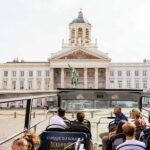
A Day in Ghent
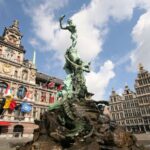
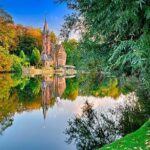
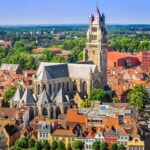
A Day in Bruges
Hot Off the Press: New Brussels Reviews

Bruges Day Trips from Brussels, compared.
 ★ 4.6From Brussels: Guided Day Trip to Bruges and GhentFrom $558,353 reviews
 ★ 4.7From Brussels: Bruges & Ghent Day Tour – 2 Fairytale CitiesFrom $578,242 reviews
 ★ 4.0Bruges and Ghent – Belgium’s Fairytale Cities – from BrusselsFrom $594,809 reviews
 ★ 4.6From Brussels: Bruges Day Trip with Boat Tour Option (ENG)From $501,352 reviews
 ★ 4.7From Brussels: Bruges Day Trip with Boat Tour Option (ES)From $501,171 reviews
 ★ 4.5Bruges and Ghent Day Trip from BrusselsFrom $56784 reviews
 ★ 4.5Bruges Day Trip from BrusselsFrom $51619 reviews
 ★ 4.5Excursion to Bruges and Ghent by bus from BrusselsFrom $54221 reviews
Browse the lists this tour appears in