
Reviewed · BRUGES DAY TRIPS FROM BRUSSELS
Bruges and Ghent Day Trip from Brussels
Two UNESCO cities in one long day.
This trip makes Bruges and Ghent feel doable, with an English-speaking guide and A/C round-trip bus that keeps the pacing sane. You’ll also walk a lot, and the day can feel tight if you want a slow, sit-down lunch.
I especially like the way Bruges is set up for quick wow moments: Minnewater, Begijnhof, and a chocolate stop at Chocolalino. In Ghent, you get the big anchors too, including St. Bavo’s Cathedral and its Van Eyck masterpiece, plus plenty of postcard photo angles along the Lys River.
One drawback to plan for: this is a heavy walking day on cobblestones, with limited free time to wander at your own pace (about 1.5 hours in Bruges and about 1 hour in Ghent). If you’re not steady on your feet, you may end up feeling rushed.
In This Review
- Key moments that make this tour worth your time
- Price and logistics: what your $56.72 is buying
- Morning departure from Brussels: the day starts fast
- Bruges walking loop: from Minnewater to Begijnhof
- Chocolalino and the beer-and-medieval-house stops
- The big Bruges postcard hits: Boniface Bridge and Rozenhoedkaai
- Burg Square and Markt: where Bruges history feels concentrated
- The bus ride to Ghent: how to keep the day from dragging
- Ghent town hall and Belfort: the cathedral tower stories
- Guild halls, bridges, and the Lys riverfront
- OOOST and Kleine Vismarkt: market energy, candy stop included
- Sint-Veerleplein and your final Ghent free hour
- Headphones and radio guides: small tech, big payoff
- Walking reality check: cobblestones and group pace
- Who this tour suits best (and who should skip it)
- Should you book the Bruges and Ghent day trip from Brussels?
- FAQ
- What time does the tour start and how long is it?
- Where do I meet the group in Brussels?
- Is the tour in English?
- Is food included?
- Do I need headphones?
- How much free time do I get in each city?
- How many people are on the tour?
- Are the attractions during the stops free to enter?
- What’s the cancellation policy?
- Does the tour run in bad weather?
Key moments that make this tour worth your time
- UNESCO hits in one day: Bruges plus Ghent, both guided on foot
- Chocolate stop that teaches you what you’re tasting: artisan sampling at Chocolalino
- Photo stops you can’t really skip: Rozenhoedkaai, Boniface Bridge, Saint Michael’s Bridge
- St. Bavo’s Cathedral inside visit: includes the famous Van Eyck work, Adoration of the Mystic Lamb
- Free time that’s real, not symbolic: about 1.5 hours in Bruges and 1 hour in Ghent
- Radio guidance rules covered: bring wired 3.5 mm headphones or buy an on-site set for €1
Price and logistics: what your $56.72 is buying
For about $56.72 per person, you’re not just paying for transport. You’re buying a guided day that stitches together two medieval cities without you needing to figure out trains, parking, schedules, or meeting points across town.
You also get an A/C bus round-trip from central Brussels, and then walking tours in both places. That’s the real value: you’re paying for someone to steer you through the “what to see first” problem, while you still get time to wander on your own.
The tradeoff is time. This runs roughly 10 hours, starting 8:30 am and moving in a set rhythm. If you want a relaxed day with long meals, you’ll need to choose carefully inside your free time blocks.
On to Bruges, more day trips from Brussels
- From Brussels: Guided Day Trip to Bruges and Ghent
★ 4.6 · 8,353 reviews - From Brussels: Bruges & Ghent Day Tour – 2 Fairytale Cities
★ 4.7 · 8,242 reviews - Bruges and Ghent – Belgium’s Fairytale Cities – from Brussels
★ 4.0 · 4,809 reviews
Morning departure from Brussels: the day starts fast
The meeting point is Carrefour de l’Europe, 1000 Bruxelles. You start at 8:30 am, and the whole plan is built around using that early departure to squeeze in both cities.
Once you reach Bruges, the bus parks at Bargeplein (Katelijnparking). You get a short bathroom stop before you begin walking, and the guide sets expectations for when to be back at the bus.
One practical tip: if you’re the type who needs coffee first, grab it before you board. The schedule has little “dead time,” so you’ll feel it later.
Bruges walking loop: from Minnewater to Begijnhof
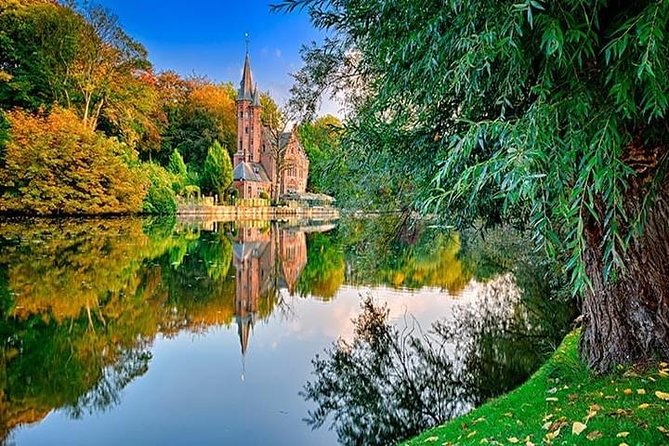
Bruges starts with a calm, beautiful intro at Minnewater, also called the Lake of Love. Your guide ties the scenery to the story of the city, so you’re not staring at water with no context. Even if you’re not a “romantic stories” person, it’s a great reset before the cobblestone marching begins.
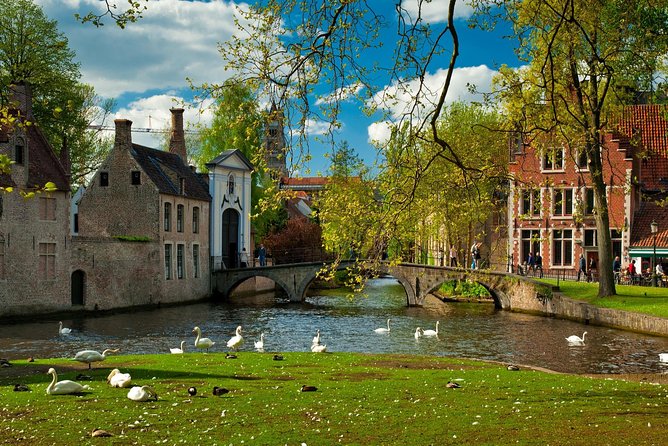
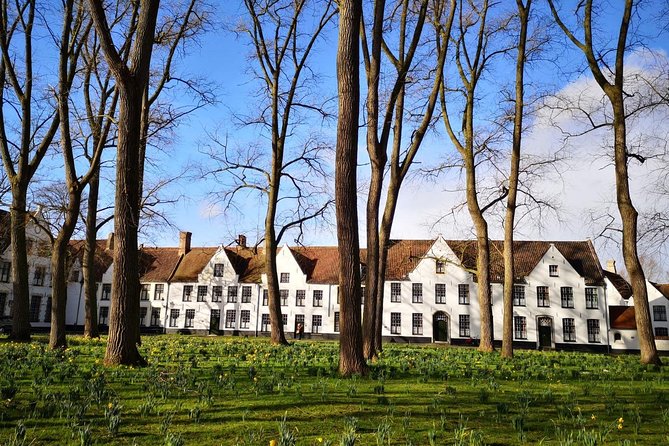
Next comes Begijnhof. This courtyard community was founded in 1245, and your guide explains why it mattered—especially the way it preserved the past of a group of women who lived there. It’s compact, but it feels like you’ve stepped into a different Bruges.
From here, the tone shifts from quiet courtyards to classic photo-and-stroll Bruges.
Chocolalino and the beer-and-medieval-house stops
One of the smartest parts of this tour is that it includes food without turning into a long food tour. At Chocolalino, you taste artisan chocolate and get pointers on how to tell handmade chocolate from the industrial kind. It’s only a short stop, but it changes how you shop afterward.
Then you move into the city’s character details:
- Walplein: your guide explains the history of Bruges beer
- Stoofstraat: you learn how to spot original medieval houses, which helps you start reading the street instead of just walking through it
There’s also a dedicated photo moment from a small bridge viewpoint. It’s the kind of stop that’s quick on the clock but useful for framing the canals and rooftops.
Even if rain hits, the route is set up so you’ll still reach major landmarks. Just wear shoes you trust.
Ghent next, more days out from Brussels
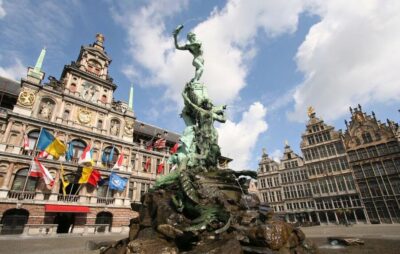
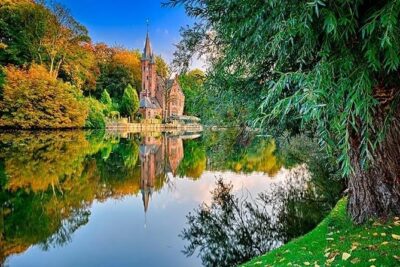
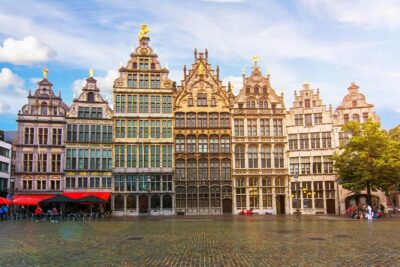
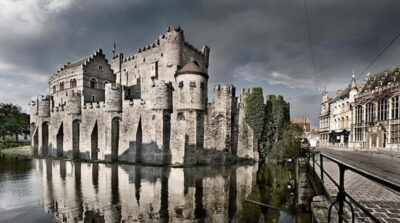
The big Bruges postcard hits: Boniface Bridge and Rozenhoedkaai
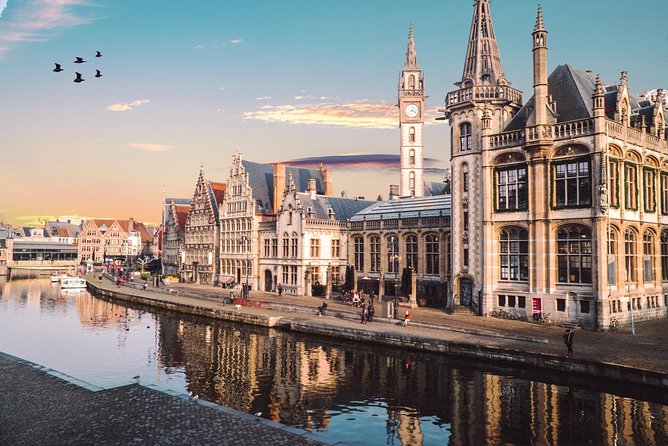
Bruges keeps delivering stop-after-stop for photos and orientation. You’ll pass or stop near:
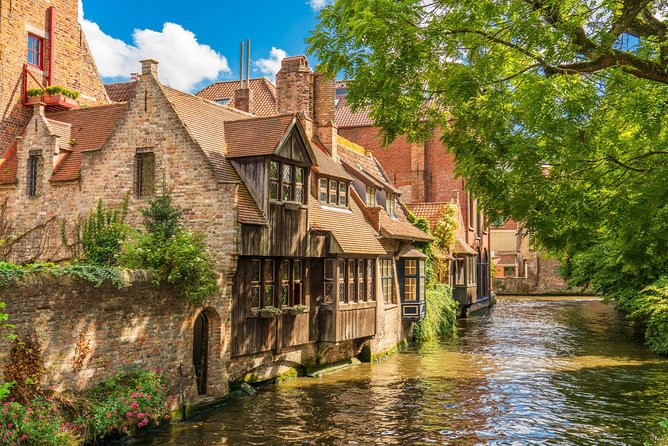
- Boniface Bridge, where your guide shares a bridge legend and gives you time to shoot photos
- Quai du Rosaire / Rozenhoedkaai, which is one of Bruges’s most photographed riverfront spots, with stories tied to the pier area
These moments are why many people choose a Bruges day trip in the first place. The key is to use the minutes well. Don’t rush your pictures at the first bridge—pick your angles, then return to the group with enough time to keep the flow.
You’ll also learn about medieval trades at Huidenvettersplein (tanners square) and then step into the “power center” zone near Burg Square.
Burg Square and Markt: where Bruges history feels concentrated
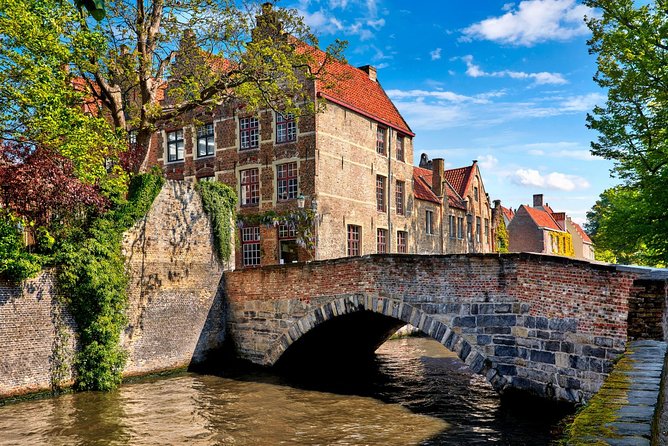
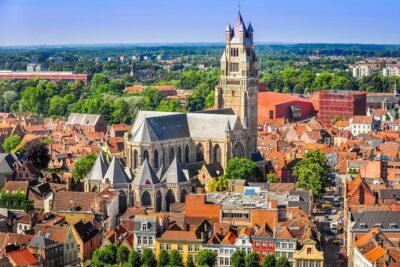
At Burg Square, you’ll see the Gothic Town Hall area, the Old Court House, and the Basilica of the Holy Blood. This is the moment where the city’s civic and religious roles start to click together.
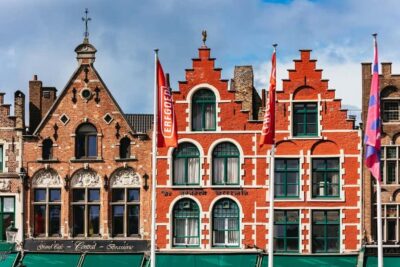
Then the tour winds up at The Markt (Grote Markt). Around the square, your guide points out buildings and shares practical ideas for where to eat and where to buy traditional chocolate. This is also where you get reminders for the exact moment to return to the bus before heading to Ghent.
The good news: you get a block of time to breathe. Bruges includes about 1.5 hours of free time (it can vary with traffic and group pace). It’s enough for:
- a sit-down meal if you keep it simple
- a chocolate shop sprint
- a relaxed wander toward the quieter canals
The pressure point is lunch. If you want a long meal plus a lot of shopping, 1.5 hours can feel short.
The bus ride to Ghent: how to keep the day from dragging
After the Bruges tour, the bus waits back at Bargeplein (Katelijnparking). Then you head toward Ghent.
This is where your timing choices matter. If you’re hungry, use this ride to plan your Ghent snack strategy. If you’re cold, layer up now, because walking later means you’ll feel wind and damp more than you expect.
Also, if you need to buy headphones or fix your audio setup, do it early. The tour uses guidance via radios in some cases, and Belgium regulations can trigger radio-guide needs.
Ghent town hall and Belfort: the cathedral tower stories
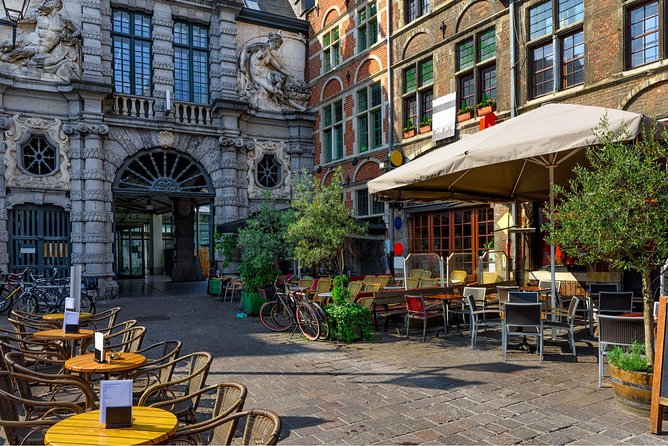
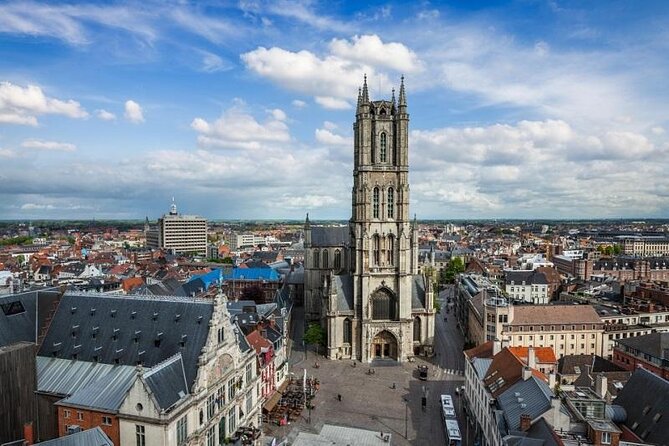
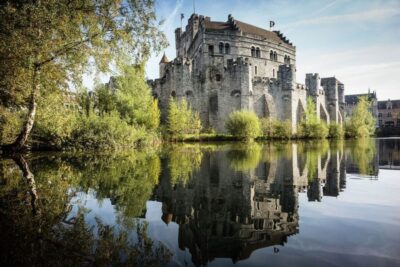
Once in Ghent, you walk toward the center and begin the guided portion in front of Ghent Town Hall (Stadhuis). Your guide explains the building’s architectural styles, so it’s not just a pretty facade. You’re learning what you’re looking at.
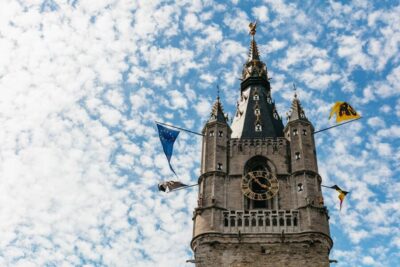
Next is Het Belfort van Gent, the emblematic tower linked to the legend of its dragon. This is a classic Ghent “signature” stop, and the story helps it feel less like a random tower photo.
Then you reach the main cultural anchor: St. Bavo’s Cathedral. You’ll discover both the outside and inside. The big draw here is the Van Eyck masterpiece, The Adoration of the Mystic Lamb, noted as the most stolen painting in history. Even if you’ve never heard of the painting before, the cathedral setting makes it land.
Guild halls, bridges, and the Lys riverfront
Ghent is where the tour shifts from major monuments to the city’s texture. You’ll stop at places that make Ghent feel specific, not generic.
A few highlights:
- St. Nicholas Church: your guide mentions how Belgian churches can host concerts and events
- Masons’ Guild Hall: you’ll see the original facade and learn what guild houses were and what’s special about this one
- Korenmarkt: the history of the building where the post office used to be
Then comes a run of great photo zones:
- Saint Michael’s Bridge, with time for pictures and a story about the church tower
- Graslei and Korenlei, along the Lys riverbank, where you’ll walk past notable buildings and get another photo opportunity
This riverbank sequence is one of the best ways to understand Ghent’s identity. You see how the city used the river, and why these streets keep showing up in travel photos.
OOOST and Kleine Vismarkt: market energy, candy stop included
You’ll also hit the food and market side of Ghent:
- OOOST (The Great Butchers’): dates to the 15th century and originally functioned as a covered market
- Kleine Vismarkt, where you’ll stop at a traditional market stall and hear about cuberdon, one of Ghent’s famous candies
These aren’t long stops, but they add local flavor to a day that could otherwise feel only like sightseeing checkboxes. They also give you something to seek later during your free time.
Sint-Veerleplein and your final Ghent free hour
The guided part ends around Sint-Veerleplein Square. Your guide explains the story of the square and points you toward places to drink traditional beer and where to buy souvenirs.
You also get the reminder for where and when to return for the bus back to Brussels. Then you get about 1 hour of free time in Ghent (again, depending on timing and group pace).
Use that hour to do one “main thing” and one “wandering thing.” If you try to do five big tasks, you’ll end up stressed right before pickup. In a city with foot traffic, stress is a travel tax you don’t need.
Headphones and radio guides: small tech, big payoff
Belgian regulations can require the use of radio-guides on some occasions. You can use your own 3.5 mm jack wired headphones (not wireless), or buy disposable ones for €1.
This matters because the tour moves through busy streets and the guide needs to be heard. If you rely on your phone speaker or noisy earbuds, you might miss directions and timing cues.
If you’re bringing your own headphones, test them before you leave Brussels. A few minutes of testing saves a lot of frustration during a long day.
Walking reality check: cobblestones and group pace
This tour works best if you’re comfortable with walking. You’re on foot in both cities, and Bruges especially means cobblestones and tight corners.
The upside is you’re not stuck waiting around endlessly. The route is planned to keep you moving from stop to stop, and the guide also gives time for bathroom breaks and photos.
The downside is you can’t “museum-rest” your way through. You’ll want sturdy shoes and a simple plan for breaks: water, bathroom, then back into the flow.
Also remember: some groups can be larger. The tour runs with a maximum of 45 travelers, and even when groups are smaller, you still need to stay with your guide through transition points.
Who this tour suits best (and who should skip it)
This day trip is ideal for you if:
- you want an easy way to see two medieval cities from Brussels
- you like guided walking tours with real time to explore on your own
- you want chocolate and market stops without building a whole itinerary
It may not be ideal if:
- you need lots of sitting time or step-free routes (the walking is continuous)
- you plan to pack in a long lunch plus heavy shopping in Bruges
- you hate group pacing and prefer to move completely on your own
If you’re the “I want one city per day and no stress” type, consider splitting Bruges and Ghent into separate days instead.
Should you book the Bruges and Ghent day trip from Brussels?
I’d book it if your goal is a smart, guided sampler that covers the major sights of Bruges and Ghent with A/C transport and enough free time to feel like you explored, not just followed a script.
I’d hesitate if you have mobility limits, dislike crowds, or want maximum free wandering time. This is a great day trip for efficient travel, but it’s still a long day with lots of steps and city noise.
If you go, come prepared: wired headphones (or €1 spares), good shoes, and a lunch plan that fits about 1.5 hours in Bruges. Do that, and you’ll get a memorable “two-city” Belgium day without the headache.
FAQ
What time does the tour start and how long is it?
It starts at 8:30 am and runs for about 10 hours (approx.).
Where do I meet the group in Brussels?
You meet at Carrefour de l’Europe, 1000 Bruxelles, Belgium. The tour ends back at the meeting point.
Is the tour in English?
Yes, it’s offered in English, and you get a professional English-speaking guide.
Is food included?
No. Food and drinks are not included, but the guide can point you to good places to eat.
Do I need headphones?
Sometimes. Belgian regulations can require the use of radio-guides on some occasions. You can bring wired 3.5 mm jack headphones, or buy disposable ones for €1. If you don’t have headphones, you can use the ones sold by the operator.
How much free time do I get in each city?
You get about 1.5 hours of free time in Bruges and about 1 hour of free time in Ghent (timing can vary with traffic and group pace).
How many people are on the tour?
The tour has a maximum of 45 travelers.
Are the attractions during the stops free to enter?
For the stops listed during the tour, the materials indicate admission ticket free at each location. If you want optional entries beyond what’s included, you’d need to check on the day.
What’s the cancellation policy?
It offers free cancellation if you cancel at least 24 hours before the experience’s start time. If you cancel less than 24 hours before, the amount paid is not refunded.
Does the tour run in bad weather?
It operates in all weather conditions, but it can be canceled due to weather. If it’s canceled for poor weather, you’ll be offered a different date or a full refund.
More Tour Reviews in Brussels


A Day in Ghent
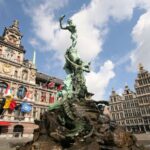
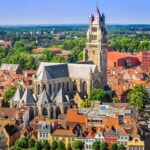
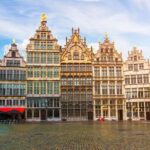
A Day in Bruges
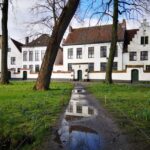
Hot Off the Press: New Brussels Reviews

Bruges Day Trips from Brussels, compared.
 ★ 4.6From Brussels: Guided Day Trip to Bruges and GhentFrom $558,353 reviews
 ★ 4.7From Brussels: Bruges & Ghent Day Tour – 2 Fairytale CitiesFrom $578,242 reviews
 ★ 4.0Bruges and Ghent – Belgium’s Fairytale Cities – from BrusselsFrom $594,809 reviews
 ★ 4.6From Brussels: Bruges Day Trip with Boat Tour Option (ENG)From $501,352 reviews
 ★ 4.7From Brussels: Bruges Day Trip with Boat Tour Option (ES)From $501,171 reviews
 ★ 4.5Bruges Day Trip from BrusselsFrom $51619 reviews
 ★ 4.5Excursion to Bruges and Ghent by bus from BrusselsFrom $54221 reviews
 ★ 4.3From Brussels: Bruges and Ghent Full-Day Trip by TrainFrom $82103 reviews
Browse the lists this tour appears in