
Reviewed · BRUSSELS OLD TOWN & GRAND-PLACE WALKS
Brussels 2-Hours Walking Tour: Must-See Highlights in the Center
Big sights, tight timing, and helpful local tips. This 2-hour center walk is a smart way to get your bearings fast and see the most recognizable spots without turning your day into a logistics puzzle. I like that it moves at an easy pace for most people, yet still hits the royal quarter, old-town icons, and the Sablon area.
Two things stand out for me. First, you get a guide-led route that connects the dots between landmarks, so places like Grand Place feel more than just postcard backdrops. Second, most stops come with free entry, which helps the tour feel like real value instead of you paying for a walk that also charges you at the door.
One thing to consider: in louder areas it can be hard to hear the guide over street noise. If you want every detail, plan to stand where the group forms and keep your phone away unless you’re checking maps.
In This Review
- Key highlights worth your attention
- A 2-hour center walk that hits the best of Brussels
- Starting near the royal zone: how the route sets the tone
- Palais Royal de Bruxelles: where the king works, plus a calm pause
- Manneken Pis: short stop, big story
- Church of Our Lady of the Sablon: Gothic details with a legend attached
- Warandepark: a royal pause in the middle of the city
- Royal Museums of Fine Arts: the Museum Quarter in one smooth walk
- Grand Place: where Brussels puts its best face forward
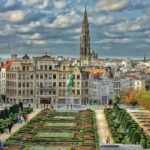
- Mont des Arts: the story and the city view
- Egmont and Hornes Fountain: 48 columns and a guild-by-guild story
- Rue des Petits Carmes: embassies and international Brussels
- Sablon Antique Market (Zavel): weekend browsing plus Brussels sweets
- What I’d ask your guide before you walk away
- Who this tour is best for
- Should you book this Brussels walking tour?
- FAQ
- Is the tour offered in English?
- How long is the Brussels walking tour?
- Do I have to pay admission fees at the stops?
- How large is the group?
- Where does the tour start and end?
- Can I cancel for free?
Key highlights worth your attention
- Small group (max 15) keeps the pace human and the questions practical
- All the main stops include free entry, so you’re not hit with surprise admissions
- Grand Place + Mont des Arts give you both classic architecture and a top-of-the-city viewpoint
- Sablon Antique Market on weekends is a great excuse to taste Brussels sweets and browse
- A route that pairs well with a food tour or another add-on in the city center
- Guides bring real food and drink leads, like Belgian chocolate, fries, waffles, beer, and even rooftop-bar ideas
A 2-hour center walk that hits the best of Brussels
Brussels can feel spread out at first. This tour helps you tighten the map into a single loop, covering the highlights that most people want on day one. You’ll start near the royal zone and end right where the city’s energy peaks: Grand Place in front of the City Hall.
The best part of a 2-hour format is what it protects. You avoid the fatigue that comes from trying to “see everything” in one day. You also leave yourself room after the tour for whatever you actually feel like doing next—museum time, a meal, or just wandering with fewer wrong turns.
Price-wise, it’s $42.14 per person for about two hours. For a guided walk, that’s not cheap. But when you notice the stops are marked free entry, the math starts to make sense. You’re paying mainly for the guided route, the pacing, and the local recommendations that help you spend smarter afterward.
Small-group size matters too. With a maximum of 15, you’re not stuck behind a wall of strangers. That can make the difference between a tour that feels like a lesson and one that feels like a comfortable walk with answers.
Deeper into the Grand-Place, more old-town walks
- Brussels Must-See Attractions Walking Tour
★ 4.7 · 67 reviews - Brussels Old City’s Highlights Walking Tour
★ 5.0 · 49 reviews - Brussels: Private Tour of the Upper and Lower City
★ 4.3 · 33 reviews
Starting near the royal zone: how the route sets the tone
You meet at Monument Léopold II, Pl. du Trône 9/1, 1000 Bruxelles. The walk ends at Grand Place (Grote Markt), right by the City Hall.
I like this start because it nudges you toward a “Brussels first-timers should know this” theme. Before you even hit the tourist magnets, you pass through areas that show how the city balances politics, culture, and everyday life.
The tour runs in English and uses a mobile ticket. It’s also close to public transportation, which helps if you’re coming in from another neighborhood or you want to bail early and continue on your own.
One practical note: wear comfortable shoes. It’s not an all-day hike, but you’ll cover multiple spots on foot and you’ll want your legs to feel fresh at the viewpoints.
Palais Royal de Bruxelles: where the king works, plus a calm pause
Stop one is the Palais Royal de Bruxelles. It’s the palace where the Belgian king has his working place. The building also includes a museum and a cozy café, which gives you a nice option if you want a brief sit-down moment.
Even if you only take in the exterior, this stop helps anchor the whole day. You’ll get a sense of how the royal story sits alongside modern city life. And because this is listed as free entry, you don’t feel pressured to rush or spend money just to step close.
What you should watch for: the contrast between grand scale and city texture. Brussels has a way of making big landmarks feel close enough to touch.
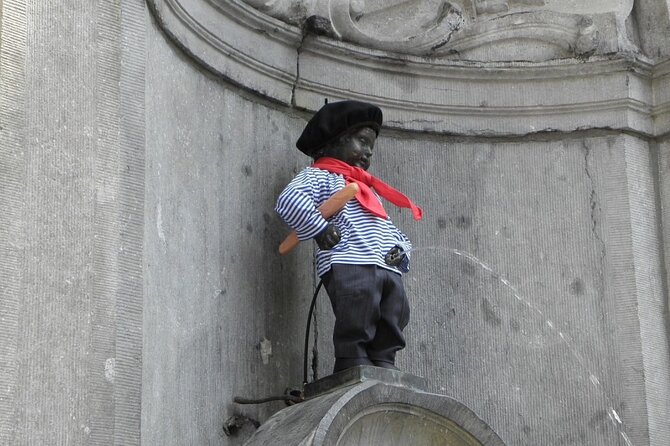
Manneken Pis: short stop, big story
Next is Manneken Pis—the famous Brussels mascot. The tour frames it as more than a quirky statue by sharing its legendary history.
This stop is brief, so don’t treat it like a long photo session. Use it as a quick reset point in your day: see it, listen, then move on. When a guide gives context, the place suddenly makes sense rather than just being a meme-sized landmark.
If you care about details, stand where you can hear. It’s easy to drift into casual wandering, but the whole idea here is to grab the story in real time.
Brussels at walking pace, more routes


Church of Our Lady of the Sablon: Gothic details with a legend attached
You then head to the Église de Nostra Senyora del Sablon (Church of Our Lady of the Sablon). It’s described as a jewel of Gothic art, and the stop comes with an amazing legend about Holy Mary.
This is one of those places where the timing matters. Step in with a question in your head, like what makes it feel “Gothic” beyond the obvious shapes. With the guide’s story, you’ll likely notice the design choices more quickly.
One consideration: if church doors are closed or the area is crowded, you may not get as much inside time as you expect. The tour still works because the core idea is the connection between art and legend.
Warandepark: a royal pause in the middle of the city
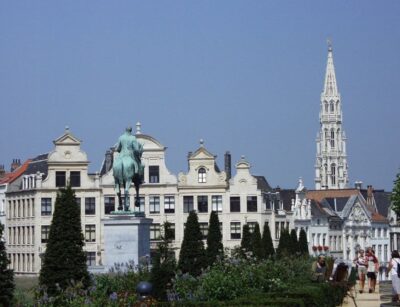
Then you hit Parc de Bruxelles (Warandepark), also known as the Royal Park because it sits in front of the Royal Palace. It’s the largest urban park in the center of Brussels.
Think of this as your breathing section. You’re walking from landmark to landmark, and suddenly you’re in a green space where the pace can slow down for a minute. Even if you only get a short look, the park gives the route balance.
If you’re traveling with someone who gets tired of standing in squares, this part helps. It’s easier to walk when you have an open space to move through instead of only tight streets and crowds.
Royal Museums of Fine Arts: the Museum Quarter in one smooth walk
After the park, you reach the Royal Museums of Fine Arts of Belgium area, often called the Museum’s Quarter. You’ll pass more than one major institution, including the Museum of Fine Arts, the Museum of Magritte, the Museum of Modern Art, and the Museum of Musical Instruments.
This stop is short, but it’s useful in a very practical way: it helps you choose what to do later. If you only have one museum day, the guide’s orientation can save you from picking the wrong place out of pure guessing.
If museums are your thing, you can use this as your “map moment.” You’ll see what each museum area represents, then decide what matches your interests—whether that’s art, modern pieces, or a more unusual collections angle like musical instruments.
Grand Place: where Brussels puts its best face forward
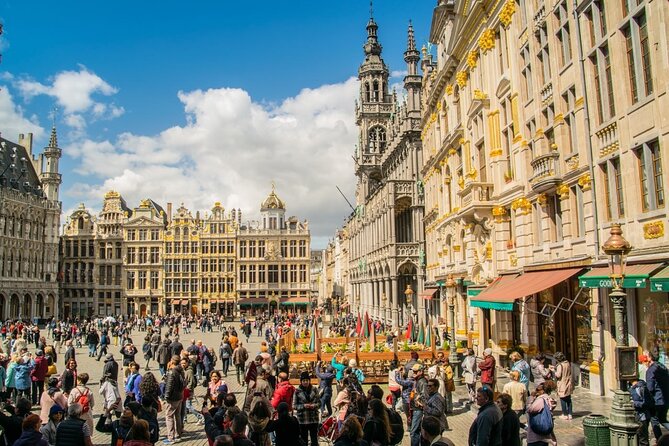
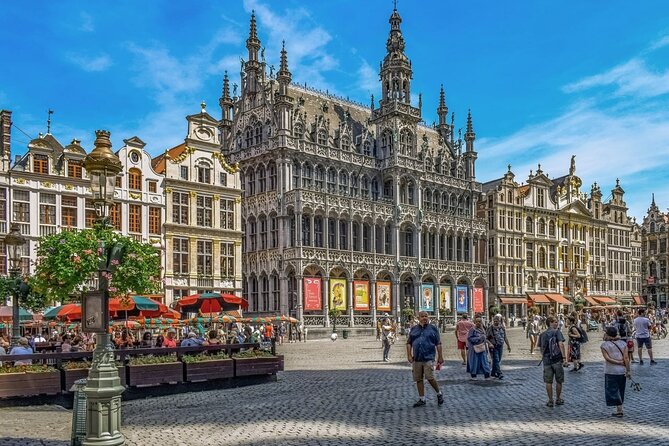
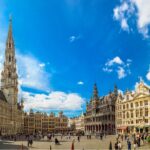
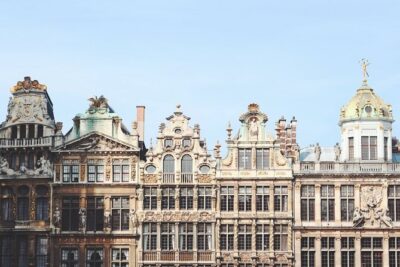
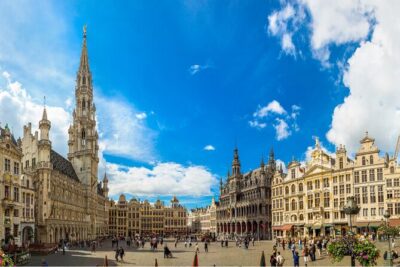
Now for the payoff. You finish this phase at Grand Place, discovering the magnificent City Hall.
This square is the kind of place where you can’t help but look up. The architecture is the main event, and the guide helps you read what you’re seeing, instead of just staring at details like they’re random decoration.
The tour keeps this stop to about 15 minutes, which is about right. Enough time to take photos and soak it in, without turning it into a half-hour detour when you still have more walking.
If you want one quick strategy: arrive ready to pause. Put your phone down for a moment and just watch how the square works as a gathering place.
Mont des Arts: the story and the city view
Next comes Mont des Arts. You’ll learn the story of the place and enjoy a breathtaking view of the city. The guide will also make memorable pictures for your memories at this special spot.
This is a great transition point. By now you’ve seen politics, religious art, parks, museums. Then you get the perspective shift—literally looking over the city.
If you’re the type who always forgets to take photos, this part helps solve that. Having someone take shots for you means you’re in at least a few of them, not only behind the camera.
Wear layers if it’s cool, since viewpoints can feel windier than streets. Nothing fancy, just comfort.
Egmont and Hornes Fountain: 48 columns and a guild-by-guild story
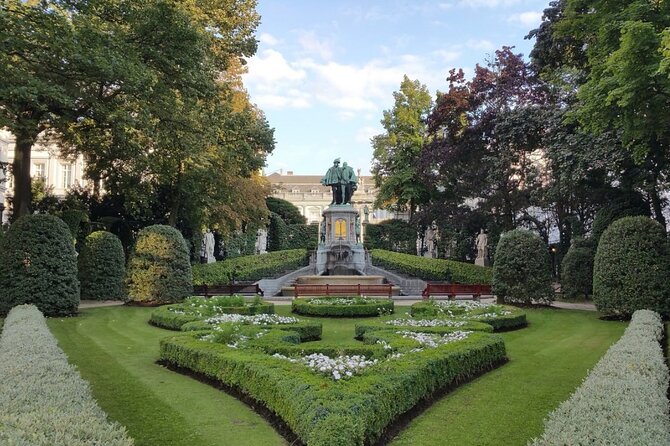
You’ll then visit Egmont and Hornes Fountain in a public garden setting. It’s divided by 48 columns, and each column is topped with a little statue representing one of the 16th-century guilds of Brussels.
This stop is special because it turns a pretty scene into a mini time machine. Those statues aren’t just decoration; they’re a clue to how Brussels organized its craft and trade identity centuries ago.
Even if you only have 10 minutes, you can still do this well. Look down at the structure and then look up at the statues. That two-step keeps you from walking past it like it’s just another fountain.
Rue des Petits Carmes: embassies and international Brussels
After the fountains and the big views, the tour shifts to Rue des Petits Carmes. It’s described as the quarter of Embassies and international representations in Brussels.
This is where the route adds contrast. The first part of your walk centers on iconic old-town stops. Here, you see the city’s diplomatic layer—still in the same center area, but with a different mood.
The benefit to you is a more complete picture of Brussels. It’s not only monuments and squares. It’s also where international staff work and where the day-to-day city continues behind the scenes.
Sablon Antique Market (Zavel): weekend browsing plus Brussels sweets
The final stop is the Antiekmarkt Zavel / Marche des Antiquites et du Livre du Sablon in the Sablon area. The market was created in 1960 and still works each weekend.
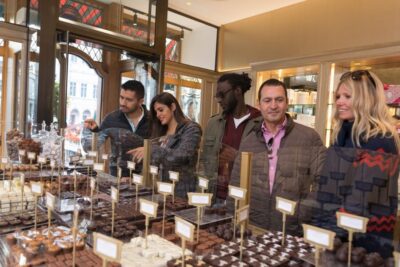
This is a strong ending because it naturally blends two kinds of travel pleasure: browsing and eating. The market area is also where you can discover some of the best chocolate and pralines producers in Brussels and learn about their unique development.
Even if you don’t buy anything, you’ll finish the tour with ideas for what to try. And if you do want to shop, this is the moment: not later when you’re tired and hungry and stuck searching.
One practical approach: buy something small enough to taste now, then save room in your day for a proper meal. Brussels chocolate is hard to resist, and you don’t want it to steal your dinner appetite.
What I’d ask your guide before you walk away
A good guide can turn a standard highlight tour into something you actually remember. Based on what guides on this route tend to share, I’d ask about food and timing right away.
Here are the kinds of leads that tend to be useful:
- Belgian chocolate and where to try it in the Sablon area
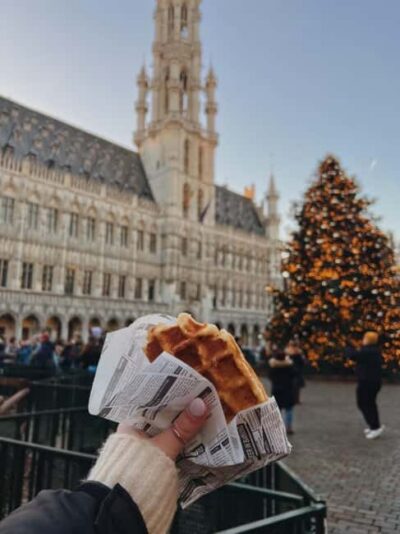
- Fries, waffles, and beer suggestions that fit your tastes
- A rooftop bar idea for an evening viewpoint
- What to do next after you see Grand Place
And if weather hits, don’t stress. One group experience notes that a guide waited out a big rainstorm under shelter and then continued. That’s exactly how you want a tour to handle real-world Brussels weather.
Who this tour is best for
This walk fits well if you’re:
- In Brussels for a short time and want a high-coverage center route
- Pairing your day with a food tour or another activity
- Traveling with someone who likes landmarks but also appreciates context
- Planning to return to the city later for museums, shopping, or repeat wandering
It also suits visitors who prefer English guidance and want a maximum group size that doesn’t feel crowded.
If you’re the type who loves long, slow museum visits, you’ll probably want to add time elsewhere. This tour is designed for walking and orientation, not for deep time inside a single institution.
Should you book this Brussels walking tour?
Yes, if your goal is to see the core sights and come away with practical leads. The big selling points are the tight 2-hour structure, the small group size up to 15, and the fact that the major stops are presented with free entry, so your money goes toward the guide and the connections rather than fees.
Book it sooner rather than later if you can. This experience is commonly reserved ahead (on average about 24 days), which hints that the time slots fill.
Skip it only if you’re expecting a long museum-heavy day, or if you know you struggle to hear in street noise. You can still enjoy it, but you’ll want to position yourself well so you don’t miss the story parts.
If you’re trying to do Brussels in one good pass, this is a very workable way to start.
FAQ
Is the tour offered in English?
Yes. The tour is offered in English.
How long is the Brussels walking tour?
It runs for about 2 hours.
Do I have to pay admission fees at the stops?
Admission tickets are listed as free for the stops included on the route.
How large is the group?
The tour has a maximum of 15 travelers.
Where does the tour start and end?
It starts at Monument Léopold II, Pl. du Trône 9/1, 1000 Bruxelles, and ends at Grand Place (Grote Markt), 1000 Brussel, in front of the City Hall.
Can I cancel for free?
Yes. You can cancel for a full refund up to 24 hours in advance of the experience’s start time.
More Brussels Outings

More Tour Reviews in Brussels




Around the Grand-Place


Hot Off the Press: New Brussels Reviews


Brussels Old Town & Grand-Place Walks, compared.
 ★ 5.0Visite guidée : Bruxelles, 1000 Ans de LuttesFrom $382 reviews
 ★ 4.7Brussels Must-See Attractions Walking TourFrom $3267 reviews
 ★ 5.0Brussels Old City’s Highlights Walking TourFrom $449 reviews
 ★ 4.3Private Tour of the Upper and Lower CityFrom $35333 reviews
 ★ 4.8Walking Tour from Central Station to Manneken PisFrom $38819 reviews
 ★ 4.5Brussels Old Town & Beer Secrets: Self-Guided Puzzle WalkFrom $611 reviews
 ★ 4.82-Hour Walking Tour of the Historic Center with a Local GuideFrom $38 reviews
 ★ 4.0A Self-Guided Tour of Brussels: From Medieval to Modern TimesFrom $95 reviews
Browse the lists this tour appears in