
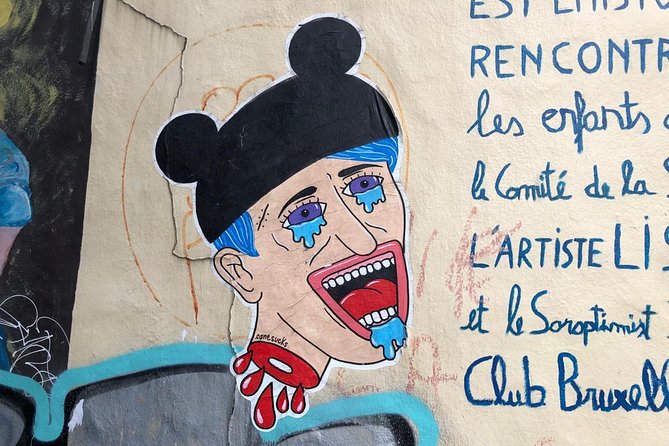
Reviewed · BRUSSELS OLD TOWN & GRAND-PLACE WALKS
Visite guidée : Bruxelles, 1000 Ans de Luttes
A thousand years in two hours can work. This English-guided walk through Brussels turns famous buildings into a street-level story of 1,000 years of struggles—with the Marolles neighborhood at the center.
I like how the tour uses real places (churches, courtyards, an elevator) to explain what life felt like for ordinary people, not just what mattered to kings.
Two things I loved: the storytelling is sharp and human, and you get memorable moments like a Polish Sunday mass inside a 12th-century church and a payoff view from the Ascenseur des Marolles.
One thing to consider: it’s short and active, so you’ll want comfortable shoes and you should be ready for a heavier social-history tone, especially around poverty and justice.
Key points to know before you go
- Small group max 25 keeps the pace easy enough to ask questions.
- English language tour with a mobile ticket, so you can show up with less hassle.
- Notre-Dame de la Chapelle includes unexpected living history, including Polish services Sundays.
- Ascenseur des Marolles gives you one of the better views over Brussels in a quick stop.
- Place du Jeu de Balle ends at a classic flea-market square with plenty of places to grab a drink or bite.
In This Review
- Why This Brussels 1,000 Years of Struggles Walk Feels Different
- The Route in About Two Hours: From Rue de la Chapelle to Jeu de Balle
- Stop 1: Église Notre-Dame de la Chapelle and Its Living Polish Community
- Stop 2: Palais de Justice and the Belgian Renovation That Wouldn’t End
- Stop 3: Ascenseur des Marolles for the View Above the Lanes
- Stop 4: Marolles Backstreets, Poverty, and Pride in the Center
- Stop 5: Place du Jeu de Balle and the Flea-Market Fight to Keep It Going
- Price, Value, and the Real Cost of a Good Guide
- Who Should Book This Tour (and Who Might Want a Different Style)
- Should You Book This Tour?
- FAQ
- What is the duration of the Brussels 1,000 Years of Struggles tour?
- What language is the tour offered in?
- How much does it cost?
- Where does the tour start and end?
- What is included in the ticket price?
- What is not included?
- Is there a mobile ticket?
- How big are the groups?
- What is the cancellation policy?
Why This Brussels 1,000 Years of Struggles Walk Feels Different
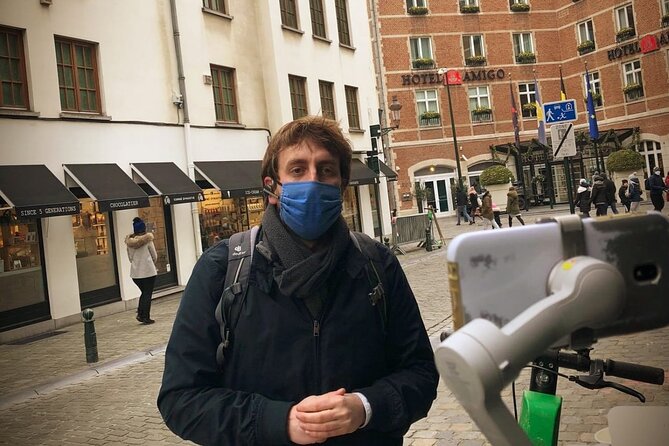
Most Brussels tours zoom in on the postcard sights. This one does the opposite in the best way: it looks at the city through friction—who had power, who didn’t, and how people kept going anyway. In just about two hours, you move from landmarks into the everyday reality that shaped the Marolles area.
What makes it work is the balance between place and meaning. You’re not just looking at buildings. You’re learning how they connect to social life: worship, public institutions, neighborhoods, and the routines of markets. It’s the kind of tour that makes you look back at what you already know—then see a different layer underneath.
The guides really matter here. In past groups, I’ve seen strong praise for storytelling from people like Francois, Simon, and Thomas, who were singled out for their passion and their ability to answer questions. That local-feeling approach is a big part of why this stays memorable even after you move on to your next Brussels stop.
The Route in About Two Hours: From Rue de la Chapelle to Jeu de Balle
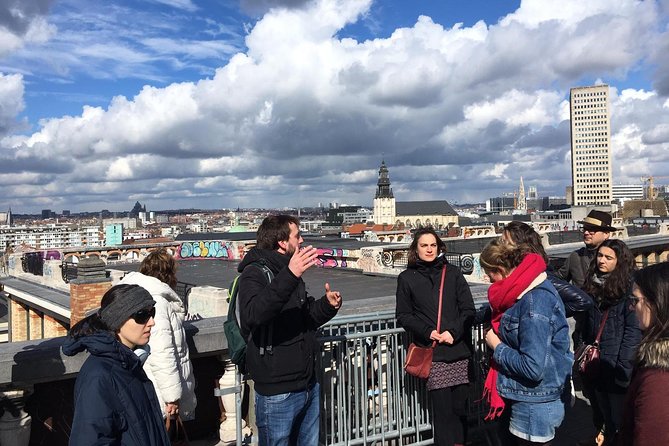
This tour runs for around 2 hours and is designed as a walking loop through central neighborhoods. It’s small-group friendly, with a maximum of 25 travelers, which means you’re more likely to get genuine interaction instead of being treated like background noise.
You’ll start at Rue de la Chapelle 21, 1000 Bruxelles, Belgium. The tour finishes at Place du Jeu de Balle at Pl. du Jeu de Balle 64, 1000 Bruxelles, Belgium, with the final meeting point described as being in the middle of the square.
Practical note: you’ll move between five main stops—each one is timed fairly tightly—so arrive a few minutes early if you can. With mobile tickets involved, you’ll also want your phone ready for check-in without digging through apps.
Deeper into the Grand-Place, more old-town walks
- Brussels Must-See Attractions Walking Tour
★ 4.7 · 67 reviews - Brussels Old City’s Highlights Walking Tour
★ 5.0 · 49 reviews - Brussels: Private Tour of the Upper and Lower City
★ 4.3 · 33 reviews
Stop 1: Église Notre-Dame de la Chapelle and Its Living Polish Community
The first stop sets the tone: start with faith and community, then let history unfold through what’s still happening today. Église Notre-Dame de la Chapelle dates back to the 12th century, and it’s not just a museum-still-life. It’s used actively, including mass in Polish every Sunday.
One detail I really appreciate is how the church also hosts painting expos. That matters because it connects the building to contemporary culture rather than treating it as a frozen relic. You’re seeing how an old structure can keep serving people now—spiritually and artistically.
There’s also a practical upside here: the stop duration is short (about 10 minutes) and admission is free, so it’s an easy entry point even if you’re not in the mood for a long history lecture right away.
Possible drawback: if you prefer tours that stick to purely political or architectural stories, the church’s mix of art and worship could feel like a mood shift. Still, that shift is exactly what makes it more human.
Stop 2: Palais de Justice and the Belgian Renovation That Wouldn’t End
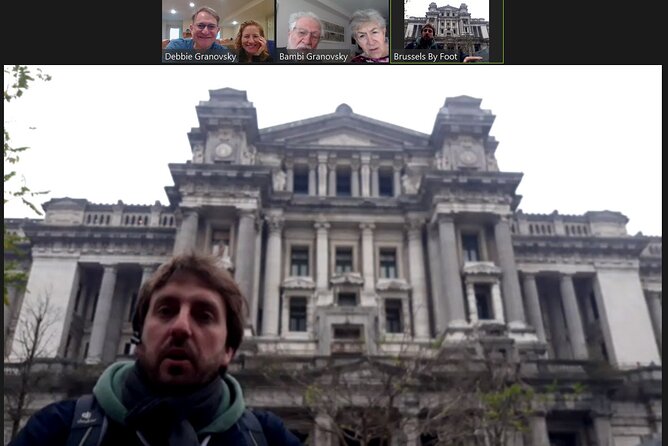
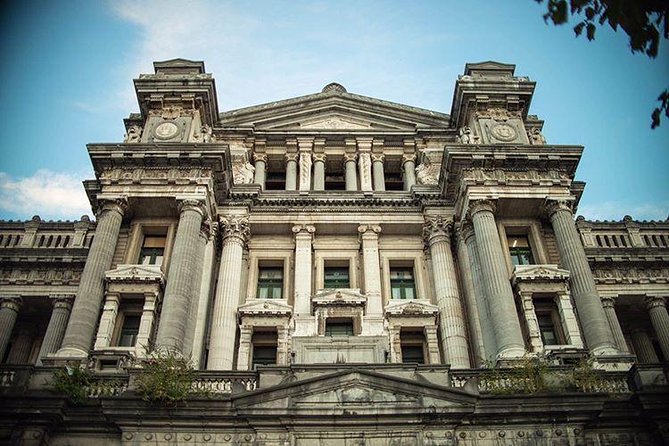
Next you’ll face a Brussels institution that turns planning into legend. The Palais de Justice is tied to a long-running drama: renovation works started about 40 years ago and, in the telling, never ended. That’s the kind of story that gets people to lean forward because it’s relatable—public projects and endless delays exist everywhere.
This stop works best if you like hearing how cities spend money and how that shapes public trust. The tour frames it as a typically Belgian scandal and waste of public money, and it gives you a way to understand why big civic buildings can feel frustrating rather than inspiring.
It’s also a good contrast point after the church. One place is about lived community continuity; the other is about the state’s unfinished promises. Together, they help explain why the Marolles story is about more than charm—it’s also about systems.
Time-wise, you’re there for about 15 minutes, and admission is free, so you don’t lose too much momentum. You’ll just have enough time to grasp the larger idea and still keep moving.
Stop 3: Ascenseur des Marolles for the View Above the Lanes
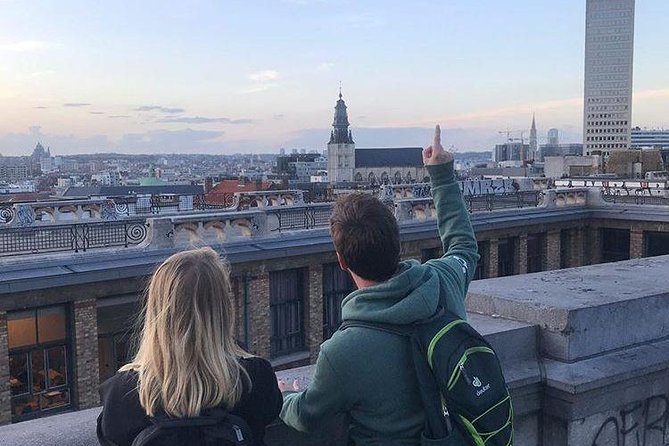
Then you get your payoff moment: the Ascenseur des Marolles. It’s a short stop (around 5 minutes), but it’s there for a reason. You’re told you can discover the best view of Brussels from the top of this elevator.
I love moments like this because they reset your brain. After absorbing social history, you get a spatial reward: the city opens up and you can start imagining how the neighborhood’s layout affects daily life. Views aren’t just pretty here—they help you place everything you’ve been hearing.
Admission is free, which keeps this tour unusually good value compared to tours that pad costs with attractions. And since the elevator stop is brief, it doesn’t drag.
What to consider: the best view depends on conditions, and you’ll want to listen to your guide about where to stand to see what they’re pointing out.

Stop 4: Marolles Backstreets, Poverty, and Pride in the Center
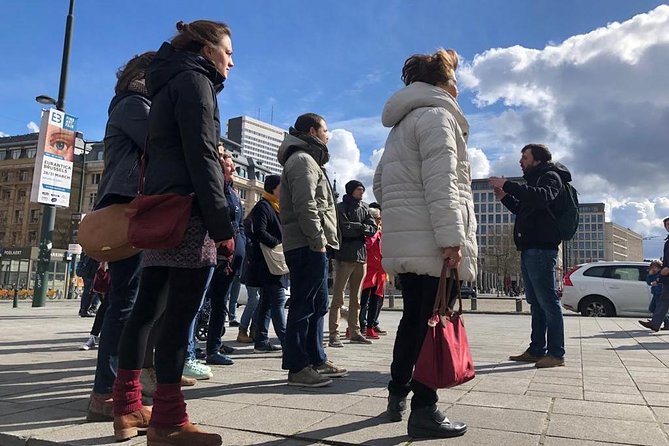
Now you’re in the heart of the story: the Marolles district. This is described as an unruly area with unexpected history—also a quiet poor neighborhood in the center of Brussels. You’ll move through tiny streets and blind alleys, which instantly changes the feel of the walk compared with the broader avenues.
This is where the tour earns its title. The guide frames Marolles as a place shaped by disadvantage, but also by independence. In past tours, that theme came through strongly: living conditions and progress through centuries for people who were disadvantaged yet strongly minded and self-reliant.
One of the most useful ways this stop helps you is by teaching you to see borders. Even when you’re in the same city, there are lines—sometimes visible, sometimes felt—between neighborhoods and social realities. That perspective stays with you after you leave, because you’ll start noticing it in other parts of Brussels too.
Time for this stop is about 20 minutes, which feels right. It’s long enough to feel the neighborhood’s texture without turning into a slog.
Possible drawback: because the area has lots of narrow lanes, the walk can feel more “local” and less “sightseeing postcard.” If you want only major attractions, Marolles might feel less obvious at first. But if you’re curious, that’s where the charm is.
Stop 5: Place du Jeu de Balle and the Flea-Market Fight to Keep It Going
The finale lands you at Place du Jeu de Balle, a square famous for its daily flea market. This isn’t a random stop. It’s where street life and resilience intersect in a very practical way.
The tour explains how people have always struggled to keep this place conserved. That detail matters: markets are fragile. They depend on space, rules, and community support, and change can threaten the very routine that makes them meaningful.
You’ll spend about 10 minutes here, and then the tour finishes in the natural next step: one of the many bars and restaurants around the square. That’s a great end design because you’re not rushed off to “your next plan.” You’re already in the right place to keep the vibe going.
If you’re there on a day when the market is operating, you’ll likely find more energy here than you’d expect from a normal square. Even if you’re not, the atmosphere still works as a closing snapshot of the neighborhood’s daily rhythm.
Price, Value, and the Real Cost of a Good Guide
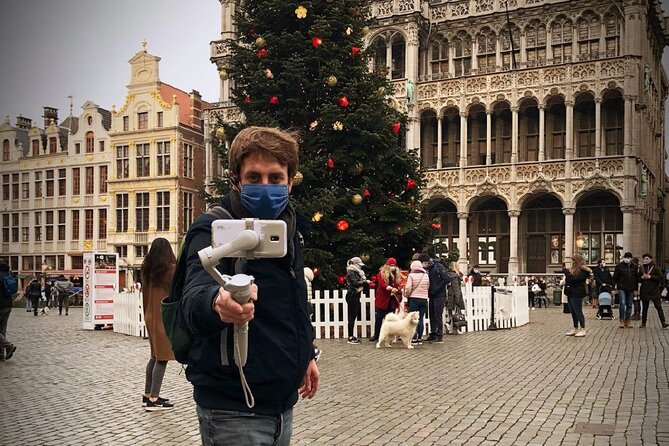
Let’s talk money, because at $3.62 per person, this is priced to shock you—in a good way. You’ll also notice something else: most stops list free admission, including the church, the Justice Palace, the elevator, and the square elements.
So what are you really paying for? Mostly, you’re paying for interpretation—someone translating what you see into meaning. That’s where the guide quality shows up. When a guide is good, the value isn’t in entry fees. It’s in how quickly you understand what you’re looking at.
The tour includes entrance fee and registration fees. What’s not included is gratuities, listed as €10.00 per person. If you do book it, I’d plan for that extra line item. A low ticket price and a suggested tip are often a sign that the provider expects you to reward good guiding directly.
Group size also affects value. With a max of 25 travelers, you’re more likely to get real answers. That makes a difference on a tour like this, where questions can turn into extra layers of understanding.
Who Should Book This Tour (and Who Might Want a Different Style)
This tour is a great fit if you want Brussels through the lives of ordinary people—social history, neighborhoods, and the way institutions and public spaces affect daily reality. It’s also a smart choice for locals. If you’ve been living in Brussels for years, this kind of street-level perspective is often exactly what makes familiar places feel new again.
It’s also good for people who like authentic districts rather than just scenic highlights. Marolles is not designed for quick sightseeing. It’s designed for living, and that comes through in the walk.
You might choose something else if:
- you only want famous monuments and viewpoints with minimal discussion, or
- you prefer purely light, upbeat city stories (this one includes tough themes around struggle and public spending).
That said, the storytelling style is often praised as engaging and not boring, which helps keep the experience from turning too heavy.
Should You Book This Tour?
I’d recommend booking if you want Brussels that goes beyond the standard checklist. The mix of a working historic church, a civic building with a long-running scandal, a quick elevator view, and the Marolles neighborhood story at street level gives you a full picture of the city’s contrast. Add in the very low ticket cost and the strong guide reputation, and the value is hard to beat.
If you’re the type who reads plaques and then wants the human story behind them, you’ll feel right at home here. If you’re only chasing landmarks, you may have to adjust your expectations—but you’ll still come away with better context for what you see around town afterward.
FAQ
What is the duration of the Brussels 1,000 Years of Struggles tour?
It lasts about 2 hours.
What language is the tour offered in?
The tour is offered in English.
How much does it cost?
The price listed is $3.62 per person.
Where does the tour start and end?
It starts at Rue de la Chapelle 21, 1000 Bruxelles, Belgium, and ends at Pl. du Jeu de Balle 64, 1000 Bruxelles, Belgium (in the middle of the square).
What is included in the ticket price?
Entrance fee and registration fees are included.
What is not included?
Gratuities are not included, with €10.00 per person listed.
Is there a mobile ticket?
Yes, you’ll have a mobile ticket.
How big are the groups?
The tour has a maximum of 25 travelers.
What is the cancellation policy?
You can cancel for a full refund up to 24 hours in advance. If you cancel less than 24 hours before the start time, the amount paid won’t be refunded. Free cancellation applies within that window.
More Tour Reviews in Brussels




Around the Grand-Place


Hot Off the Press: New Brussels Reviews

Brussels Old Town & Grand-Place Walks, compared.
 ★ 4.7Brussels Must-See Attractions Walking TourFrom $3267 reviews
 ★ 5.0Brussels Old City’s Highlights Walking TourFrom $449 reviews
 ★ 4.3Private Tour of the Upper and Lower CityFrom $35333 reviews
 ★ 4.8Walking Tour from Central Station to Manneken PisFrom $38819 reviews
 ★ 4.5Brussels Old Town & Beer Secrets: Self-Guided Puzzle WalkFrom $611 reviews
 ★ 5.0Brussels 2-Hours Walking Tour: Must-See Highlights in the CenterFrom $4210 reviews
 ★ 4.82-Hour Walking Tour of the Historic Center with a Local GuideFrom $38 reviews
 ★ 4.0A Self-Guided Tour of Brussels: From Medieval to Modern TimesFrom $95 reviews
Browse the lists this tour appears in