
Reviewed · BRUSSELS OLD TOWN & GRAND-PLACE WALKS
Brussels: Private Tour of the Upper and Lower City
Brussels has two faces, and this tour shows both. You’ll bounce between the Lower City legends and the Upper City viewpoints, with a guide who ties buildings to the way the city grew. The best part is how fast you get oriented: squares, statues, and major architecture in a tight loop.
I really like the way the route moves from famous stops like the Grand Place and Manneken Pis to quieter corners such as Saint-Géry island. I also appreciate that you don’t just look from the street, since you can see inside the Cathedral of St. Michael and St. Gudula, including the stained-glass windows. In reviews tied to this experience, guides like Emil have been praised for mixing different periods of the city’s development, which is exactly what helps Brussels click.
The main drawback is the pacing: 3 hours means you’ll walk at a city pace, including uphill stretches in the Upper City. If you hate walking or need lots of rest time, you may find it a bit tight, especially since museum tickets aren’t included and stops may be partly “pass by” depending on what you choose.
In This Review
- Quick hits on what makes this Brussels private tour work
- Why this Lower-and-Upper-City route saves time in Brussels
- Grand Place to Manneken Pis: start where Brussels becomes real
- Saint-Géry island and St. Catherine Square: the city’s layers at street level
- De Brouckère and Monnaie squares, plus the federal opera house
- Saint-Hubert Royal Galleries: ending the Lower City in glass and light
- The Upper City climb: Cathedral of St. Michael and St. Gudula from the inside
- Place des Palais, royal park, and palace: a classic power axis
- Musical Instruments Museum or Magritte: choosing your Upper City flavor
- What you learn on the way: Art Nouveau, beer, and chocolate context
- Price and value: $353 per group for a private 3-hour orientation
- Logistics that matter: hotel pickup, languages, and walking pace
- Who should book this private Brussels tour (and who might skip it)
- Should you book this private tour of the Upper and Lower City?
- FAQ
- What’s included in the Brussels private tour price?
- How long is the tour, and what parts of Brussels does it cover?
- Where does the tour start and end?
- Are museum tickets included?
- What languages does the live guide speak?
- Is free cancellation available?
Quick hits on what makes this Brussels private tour work
- Lower + Upper City in one plan so you don’t waste time figuring out which neighborhoods to hit
- Grand Place to royal shopping arcades with big landmarks and easy wayfinding
- Stained-glass inside the cathedral instead of only seeing it from outside
- Options around the museums depending on the day and your preferences
- Small private setup with hotel pickup possible for a smoother start
- Guide energy matters: past groups highlighted guides who keep things enjoyable even in bad weather
Why this Lower-and-Upper-City route saves time in Brussels
Brussels can feel like a puzzle at first. One neighborhood looks different from the next, and the city’s story spans centuries, not decades. This tour tackles that problem by splitting your time into two clear parts: Lower City landmarks and Upper City viewpoints.
For you, that means less guessing. You’re not trying to map out where to go next or which square is “the important one.” You also get the context that turns photos into understanding: why certain buildings were built where they are, and how the center of power shifted over time.
It’s also a practical length. A 3-hour private tour won’t replace a full-day museum binge, but it does give you a strong first draft of Brussels. That’s the sweet spot if you only have a short stay or you want a smart foundation for the rest of your trip.
Deeper into the Grand-Place, more old-town walks
- Brussels Must-See Attractions Walking Tour
★ 4.7 · 67 reviews - Brussels Old City’s Highlights Walking Tour
★ 5.0 · 49 reviews - Brussels: Private Tour of the Upper and Lower City
★ 4.3 · 33 reviews
Grand Place to Manneken Pis: start where Brussels becomes real
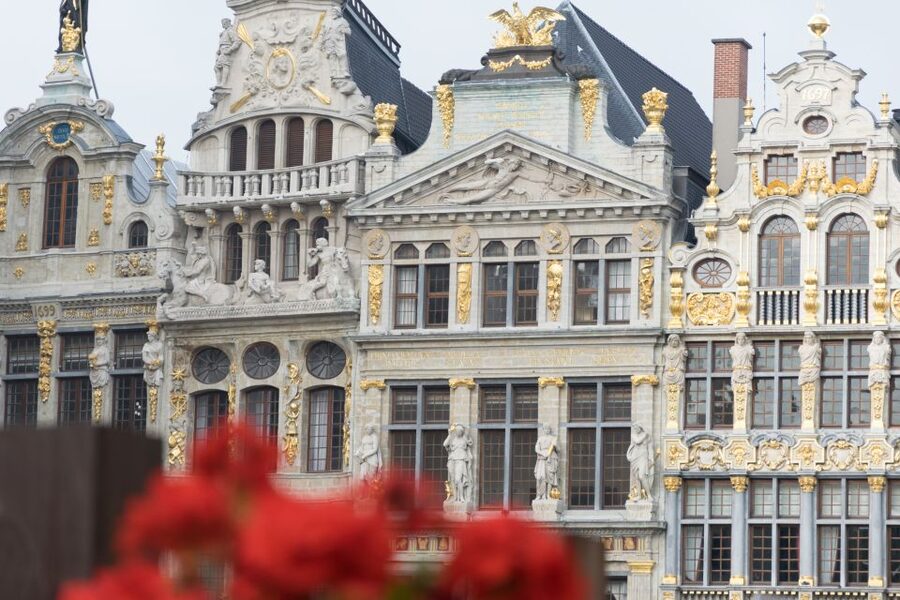
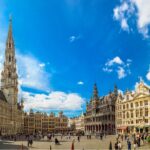
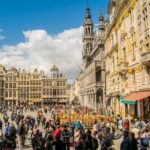
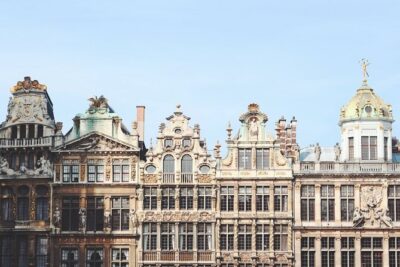
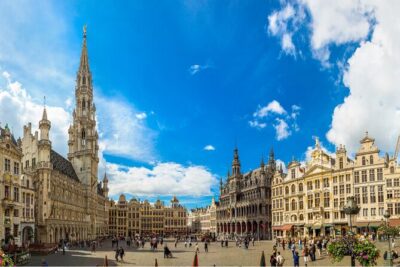
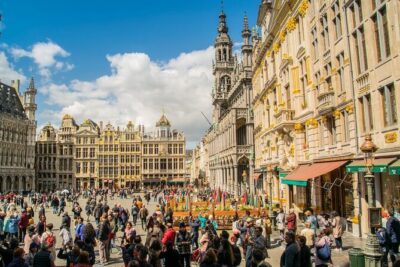
You begin in the Lower City at the Grand Place, Brussels’s central square and the place that instantly tells you you’re in the right city. This is where you can stand back for a minute and get your bearings: grand facades, busy streets funneling toward the square, and a sense that Brussels likes to show off.
From there, the route heads toward Manneken Pis, the famous bronze figure that’s more than a quirky photo stop. It works as a quick “culture signal,” because it connects playful Brussels identity with the city’s long tradition of public symbolism.
I like that the tour doesn’t treat these landmarks as isolated icons. The guide ties them to how the city developed, and that makes it easier for you to remember what you’re seeing. You’re basically learning how to read the city, not just where to stand for a picture.
Saint-Géry island and St. Catherine Square: the city’s layers at street level
Next comes the Saint-Géry island area, described as the once-largest island in the Senne river. Even without getting lost in technical details, it’s a useful idea to carry: the geography of Brussels shaped where people could build, trade, and gather.
Then you reach St. Catherine square. This stop is important because it shifts the feel from postcard-famous to “I could actually meet a friend here.” You get a sense of the scale of plazas and how they function as transition points between larger showpieces.
If your goal is to feel like you’re walking through real Brussels (not just chasing the big hits), these mid-route stops matter. They give your brain something concrete to anchor to between major monuments.
De Brouckère and Monnaie squares, plus the federal opera house
De Brouckère and Monnaie squares bring you back into the “downtown energy” zone, where architecture and civic life blend. These spaces help you understand how Brussels manages public space: open squares that pull people through commercial streets and cultural venues.
The tour includes a look at the spectacular federal opera house of Belgium. That’s a strong move because opera houses are built for drama, but they also reveal what a city valued at the time—whether it was prestige, public culture, or the kind of gathering that puts a city on the map.
One thing I appreciate is that this part isn’t only about admiring the exterior. The value is in the interpretation. When a guide explains what you’re looking at—style choices, timing, and cultural intent—you start noticing details yourself.
Bigger loops across Brussels


Saint-Hubert Royal Galleries: ending the Lower City in glass and light
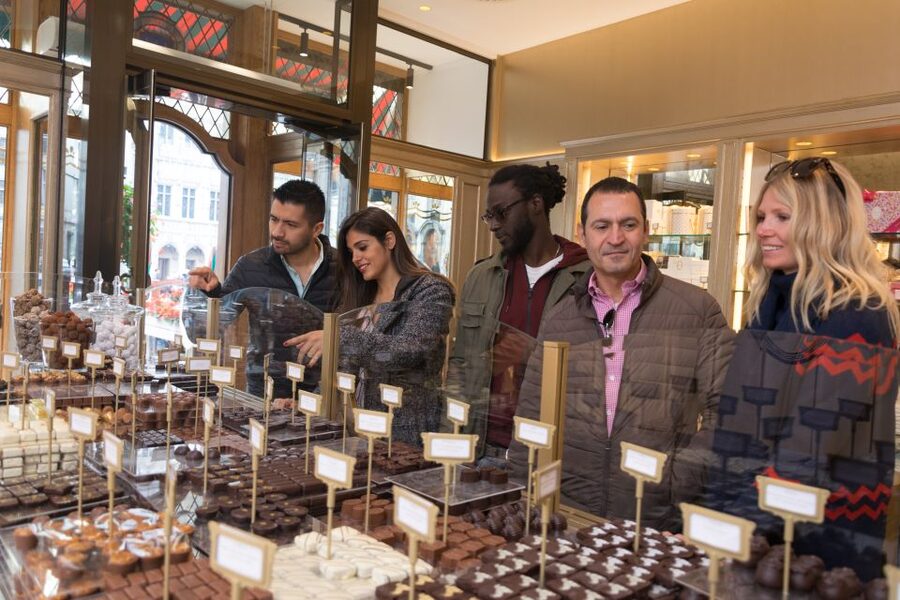
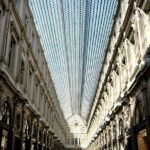
The Lower City part ends at the Saint-Hubert Royal Galleries, a set of glazed shopping arcades. This is one of those stops that works especially well on a guided route, because the guide can point out why arcades like this became such an important form of urban space.
Instead of leaving the city center feeling like you ran from stop to stop, you finish somewhere that slows the pace for a moment. You get a more intimate view of Brussels through glass, metalwork, and the rhythm of shops.
And if you’re trying to plan the rest of your day, this is helpful. Royal Galleries is a natural place to reset your sense of time and direction before the Upper City climb.
The Upper City climb: Cathedral of St. Michael and St. Gudula from the inside
In the afternoon, you start again from the Grand Place and head uphill toward the Cathedral of St. Michael and St. Gudula. The climb is the obvious physical difference between the two parts, but it’s also where the tour’s story really changes tone.
From outside, you’ll recognize the cathedral as a major landmark. But the tour’s standout here is that you can admire the stained-glass windows from inside. That matters because color and light can’t be fully captured from the street.
For you, this is the moment that turns “architecture tour” into “experience.” Sit with the windows for a minute and notice how interior light changes your perception. Even if you’re not a church person, stained glass is one of the best ways to understand a city’s aesthetic priorities.
Place des Palais, royal park, and palace: a classic power axis
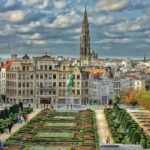
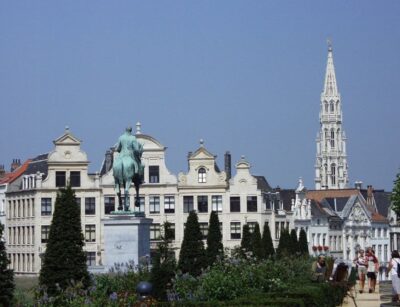
After the cathedral, you move toward Place des Palais, where you find the royal park and palace. This area is a key Brussels perspective because it shows the city’s formal side: power, ceremony, and the kind of planning that creates a visible center of gravity.
The tour’s wording focuses on the practical sightseeing, but the effect is more than that. You start understanding how Brussels separates everyday life from official spaces—and how both sit close enough that you can feel the transition in minutes.
If you’re taking photos, aim to slow down here. The lines and open spacing make it easier to frame the city’s scale without crowds blocking every angle. It’s a calmer visual break after the cathedral interior.
Musical Instruments Museum or Magritte: choosing your Upper City flavor
Next, you visit the Musical Instruments Museum, or you can pass by the Magritte museum and the Palace of Fine Arts to arrive at the Petit Sablon and Grand Sablon.
I like this flexible approach, because it respects different interests. If you want a more focused museum angle, the Musical Instruments Museum fits well. If you’re more in the mood for art and design references, the Magritte and Palace of Fine Arts path gives you that alternative.
Then you end up at Petit Sablon and Grand Sablon, which are great final squares because they feel more residential and refined than the main downtown stops. You finish with a softer mood, and that’s exactly what you want when a tour is only a few hours long.
What you learn on the way: Art Nouveau, beer, and chocolate context
The tour highlights mention learning about Art Nouveau, Belgian beers, and chocolate. That doesn’t have to mean tastings or museum lectures. In a guided street-and-squares plan like this, it usually means you get the cultural references behind what you’re seeing.
Art Nouveau is a big deal in Brussels, and having it explained while you walk makes the details stick. The beer and chocolate angle also helps you connect Brussels to everyday Belgian culture, not just grand monuments.
If you’re the type who loves cultural crumbs—why a style looks the way it does, why people talk about certain Belgian foods, why certain icons became symbols—this tour is built for you. It keeps the city practical and lively, even when you’re surrounded by stone and bronze.
Price and value: $353 per group for a private 3-hour orientation
This tour costs $353 per group, up to 20 people, and lasts about 3 hours. That pricing structure changes the math fast depending on your group size.
If you’re traveling as a family or a small group of friends, it can be a very efficient way to get a curated route instead of paying for multiple individual guides. You also get the benefits that usually cost extra on your own: interpretation tied to specific stops, and a plan that covers both Lower and Upper City without you building the route yourself.
The value also depends on expectations. Tickets to museums aren’t included, and transport and meals are not included. So think of this as a guided walking and storytelling experience with optional museum-related time—not a full ticket-and-transfers tour.
If you want the biggest return, do a light “museum follow-up” after. Use this tour to find what genuinely interests you, then come back later on your own with the ticket types you actually want.
Logistics that matter: hotel pickup, languages, and walking pace
Pickup is included, and you can request pickup from your Brussels hotel. That reduces friction on day one, especially when you’re still getting your bearings.
You’ll also have a live guide available in Spanish, Dutch, English, French, German, Italian, Russian, and Portuguese. That language range is genuinely useful in a diverse group, and it lowers the odds of you missing half the story.
The tour is wheelchair accessible. Still, it’s a city route with uphill segments in the Upper City. If you or someone in your party uses a mobility aid, it’s smart to plan for occasional walking segments and ask your guide how they handle pace and stops.
And on timing: it runs as a private group format, with tours limited to a certain number per group to keep service smooth. In real terms, that usually means you can actually ask questions and not feel rushed every 30 seconds.
Who should book this private Brussels tour (and who might skip it)
This is a strong fit if:
- You want an efficient first pass over Brussels in a short stay
- You like architecture, major squares, and understanding what you’re looking at
- You prefer a guide to connect the Lower City and Upper City into one story
- You’re traveling in a group that can share the private tour cost
You might skip it if:
- You already have a tight schedule packed with full museum time and don’t want walking
- You dislike uphill city walking, even with breaks
- You only care about one type of attraction (for example, only museums or only food), and you don’t want a mixed route
Should you book this private tour of the Upper and Lower City?
Yes—if you want Brussels to make sense quickly. This tour gives you a clean orientation: start at Grand Place, hit the signature Lower City anchors, then shift to the Upper City with a cathedral interior stop and a finish near the Sablon squares. It’s not trying to do everything. It’s trying to do the right things first.
I’d especially consider booking if you value guided interpretation. Reviews tied to this experience mention guides like Emil for explaining how different periods shaped the city, and Hr. Boeykens for keeping the group in good spirits even when weather gets cold. That kind of energy matters on a walking tour.
If you want, tell me your travel dates and whether you care more about museums or squares, and I can suggest how to pair this tour with the right follow-up plan for the rest of your Brussels day.
FAQ
What’s included in the Brussels private tour price?
The tour includes a professional guide, and pickup is possible from your Brussels hotel. Wheelchair accessibility is also listed. Transport, museum tickets, and drinks and meals are not included.
How long is the tour, and what parts of Brussels does it cover?
It lasts 3 hours and is split into two parts: the Lower City and the Upper City. You start in the Lower City around the Grand Place and later go uphill to the Upper City area.
Where does the tour start and end?
In the Lower City, it starts at the Grand Place and ends at the Saint-Hubert Royal Galleries. In the Upper City, it starts again from the Grand Place and finishes around Petit Sablon and Grand Sablon.
Are museum tickets included?
No. Tickets to museums are not included.
What languages does the live guide speak?
The live tour guide is available in Spanish, Dutch, English, French, German, Italian, Russian, and Portuguese.
Is free cancellation available?
Yes. You can cancel up to 24 hours in advance for a full refund.
More Brussels Outings

More Tour Reviews in Brussels

Around the Grand-Place


Hot Off the Press: New Brussels Reviews

Brussels Old Town & Grand-Place Walks, compared.
 ★ 5.0Visite guidée : Bruxelles, 1000 Ans de LuttesFrom $382 reviews
 ★ 4.7Brussels Must-See Attractions Walking TourFrom $3267 reviews
 ★ 5.0Brussels Old City’s Highlights Walking TourFrom $449 reviews
 ★ 4.8Walking Tour from Central Station to Manneken PisFrom $38819 reviews
 ★ 4.5Brussels Old Town & Beer Secrets: Self-Guided Puzzle WalkFrom $611 reviews
 ★ 5.0Brussels 2-Hours Walking Tour: Must-See Highlights in the CenterFrom $4210 reviews
 ★ 4.82-Hour Walking Tour of the Historic Center with a Local GuideFrom $38 reviews
 ★ 4.0A Self-Guided Tour of Brussels: From Medieval to Modern TimesFrom $95 reviews
Browse the lists this tour appears in