
Reviewed · BRUSSELS OLD TOWN & GRAND-PLACE WALKS
A Self-Guided Tour of Brussels: From Medieval to Modern Times
Brussels tells its story in steps. This self-guided walk uses the VoiceMap app and an experienced producer, Isaac, to connect royal power, street art, and big city views. I especially like the offline audio/maps, and how the route mixes famous sights with smaller details you can actually stand and look at.
You’ll get a clear path, plus lifetime access in English, so you can repeat it until it clicks. One thing to consider: the walk has a lot of climbing, so plan comfy shoes and take breaks when you need to.
In This Review
- Key highlights worth your time
- How the VoiceMap self-guided system actually feels
- Starting at Pl. des Palais: royal power, then the streets
- Royal Square and Godfrey of Bouillon: a founder’s statue in plain sight
- Walking into UNESCO Grand Place: guild houses, power, and symmetry
- Tintin mural stop: comics as local culture
- Palais de Justice climbs: best city views, plus a lot of stairs
- Musical Instruments Museum area: listen for context, not tickets
- Mont des Arts Garden and the bell clock moment
- Mary Magdalene Chapel: religious architecture with a purpose
- Agoraplein – Grasmarkt: harbor remnants and medieval walls
- Galerie de la Reine and Toone: elegant shopping and puppets
- Jeanneke-Pis and Manneken Pis: the city’s jokes, in bronze
- La Monnaie De Munt and De Brouckèreplein: art and city rhythm
- Black Tower contrast: old structure, modern next door
- Saint Catherine and the Ancien Clocher Sainte Catherine remnants
- Stock Exchange and Brussels City Museum: money meets memory
- Town Hall and the final zoom-out toward lookout views
- Price and value: why $9.99 can work (or not)
- What to bring, so the tour stays smooth
- Who this self-guided Brussels tour suits best
- Should you book this Brussels self-guided tour?
- FAQ
- How much does the Brussels self-guided tour cost?
- How long is the tour?
- Where does the tour start and end?
- Do I need tickets or museum entrance fees?
- What do I need to use the tour on the ground?
- Does it work without internet?
- Can I use the tour more than once?
- Is it refundable if I cancel?
Key highlights worth your time
- Lifetime access in English means you can redo the route whenever you want, not just once.
- Offline audio + maps (audio, maps, geodata) helps you keep moving without hunting for signal.
- Isaac’s storytelling ties landmarks to Belgium’s royal and civic story, so you’re not just collecting photos.
- Viewpoints stacked on purpose with climbs to big panoramas like the Palais de Justice and other lookout spots.
- A quirky Brussels mix from Tintin street art to puppet theater and both Manneken Pis characters.
How the VoiceMap self-guided system actually feels
This isn’t a group bus tour. It’s a walk you control, with the app guiding you stop by stop. After you book, you get instructions and a unique code to download the tour. From there, your phone shows directions to the starting point, and when you’re in the right place you tap start.
Two practical wins:
- You can use the tour before your booking date and after, so you can check your route in daylight.
- You also have a virtual option at home, which is handy if you want to get oriented before you walk.
The tour runs about 1 hour 30 minutes to 2 hours, and most of that time is real strolling with story on top. The app includes offline access to audio, maps, and geodata, which matters in a city where you’ll often be moving block to block.
Deeper into the Grand-Place, more old-town walks
- Brussels Must-See Attractions Walking Tour
★ 4.7 · 67 reviews - Brussels Old City’s Highlights Walking Tour
★ 5.0 · 49 reviews - Brussels: Private Tour of the Upper and Lower City
★ 4.3 · 33 reviews
Starting at Pl. des Palais: royal power, then the streets
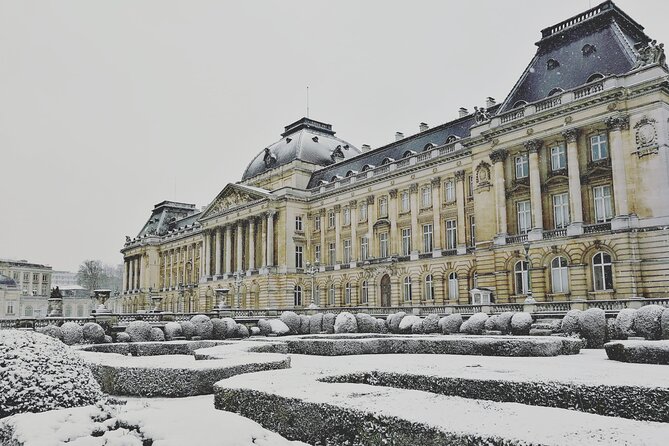
The walk begins at Pl. des Palais 1, 1000 Bruxelles, near the Royal Palace area. This first stretch is all about connecting the Belgian royal family to what you’re seeing around you. You’ll also pick up the role of Coudenberg Palace’s historical significance, which helps explain why this part of Brussels feels so layered—old authority right beside modern city life.
Tip for your first minutes: keep your phone low and your eyes up. The stories work best when you pair what’s said with what’s built.
Royal Square and Godfrey of Bouillon: a founder’s statue in plain sight
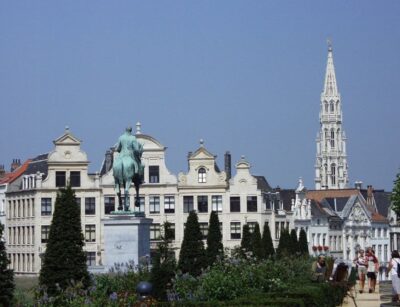
Next you move through the Royal Square and spot the statue of Godfrey of Bouillon. This is one of those moments where a single monument can anchor your understanding of a whole era. Brussels doesn’t just have pretty buildings; it has a habit of putting political meaning into public space.
Then you start heading toward one of the city’s best-known wow moments.
Walking into UNESCO Grand Place: guild houses, power, and symmetry
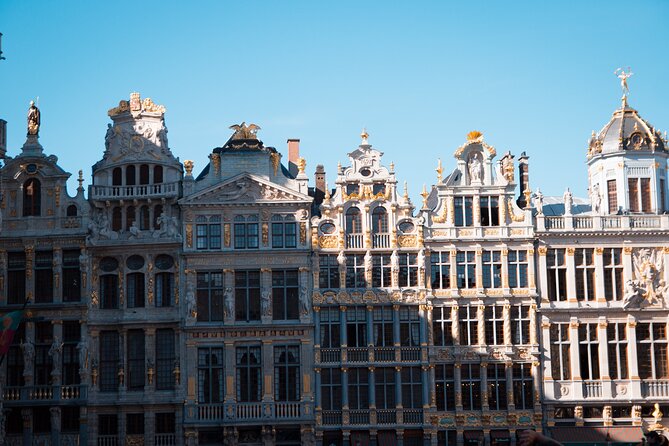
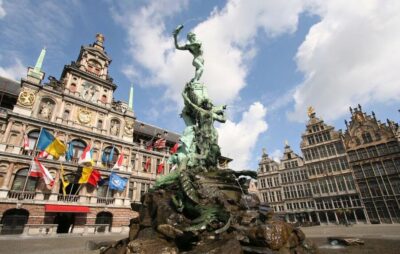
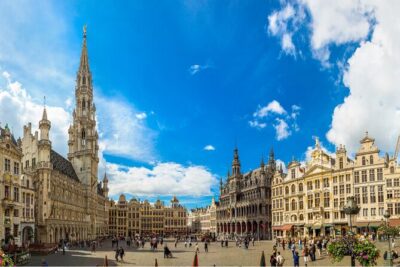
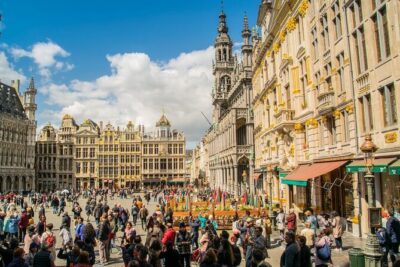
The UNESCO-listed Grand Place is the architectural showpiece of Brussels. As you walk through it, the focus turns to the ornate guild houses and palaces that ring the square. The effect is instant: even if you’ve never studied European civic history, the scale and detail tell you this wasn’t built for quiet living.
What makes this part valuable on a self-guided format is timing. You can linger when something catches your eye—carvings, facades, window shapes—then move on before the area gets too crowded in your personal comfort level.
Let a local lead, more easy days
Tintin mural stop: comics as local culture
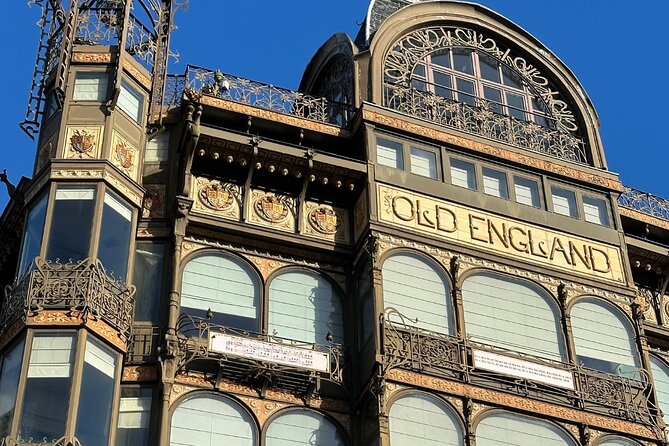
Not every capital treats street art like it deserves a place on the main route, but Brussels does. You’ll spot a Tintin comic mural and get a quick lens on how Belgium’s comic culture shaped public identity and art in the streets.
If you’re traveling with kids, this stop gives you a reset. Even if you’re not, it’s a reminder: Brussels isn’t only kings and churches. It’s also jokes, stories, and pop culture that people actually live with.
Palais de Justice climbs: best city views, plus a lot of stairs
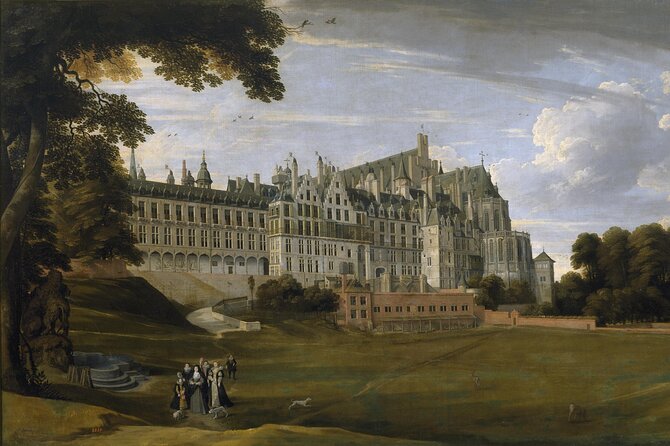
The route takes you up to the Palais de Justice for panoramic views. This is one of the biggest payoffs of the whole walk. You earn it with effort—so if you’re short on time or energy, treat this as your priority photo stop.
A key consideration: this tour can feel like it’s all uphill in parts. If you want the best experience, plan for short breaks. Pause midway, drink water, then continue. Self-guided is meant for that.
You get another strong viewpoint experience later too, so if you take your first big picture set here, you won’t feel like you’re repeating yourself later—you’re collecting different angles.
Musical Instruments Museum area: listen for context, not tickets
You’ll pass by the Musical Instruments Museum and hear stories about the evolution of music through the ages. The important part: your tour includes the listening, not the entry. Tickets and museum fees aren’t included, so you’ll be using this stop as a narrative checkpoint from the outside or from whatever view is possible around you.
Even without paying in, this works because it changes how you see Brussels’ museums. Instead of just spotting a building, you’re listening for themes—how the city curates sound as culture.
Mont des Arts Garden and the bell clock moment
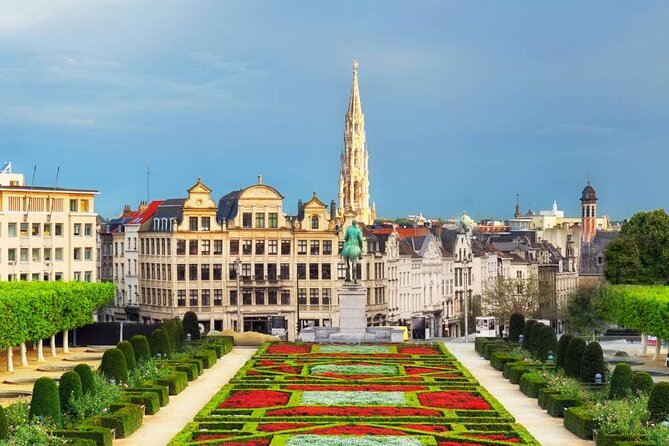
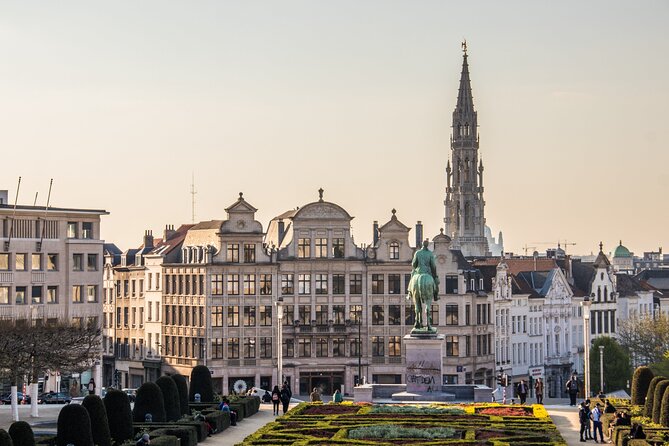
Then you reach the Mont des Arts Garden, which gives you a calmer stretch. It’s a good spot to slow down, regroup, and look back at the city with less sensory pressure.
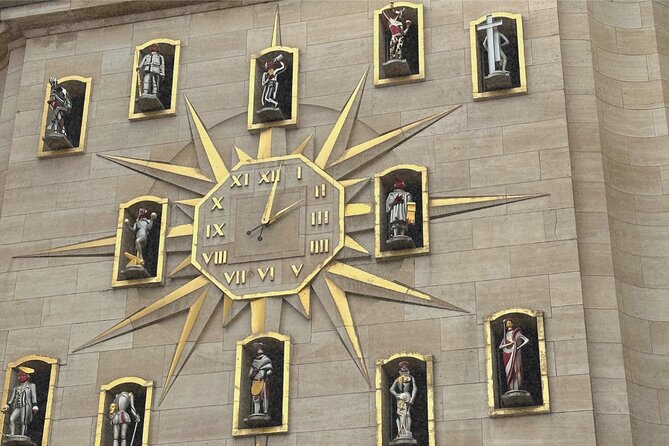
Right after, you pass by the Klokkenspel van de Kunstberg, where the bells add a musical layer to the day. I like this kind of stop because it turns the route into a lived soundtrack, not just spoken audio.
Mary Magdalene Chapel: religious architecture with a purpose
Next is the Mary Magdalene Chapel, where the focus shifts to religious heritage and architectural significance. This stop is useful because it balances the earlier civic energy of Grand Place with slower spiritual history.
If you love architecture, stand still for a minute and let your brain switch gears from stories about rule and commerce to stories about belief.
Agoraplein – Grasmarkt: harbor remnants and medieval walls
At Agoraplein – Grasmarkt, you’ll learn to look for traces of older Brussels. The tour points out remnants of the former harbor and traces of medieval city walls. This is the kind of information that makes you feel smarter as you walk, because you start seeing lines and spaces as historical leftovers, not random layout.
It’s also a helpful reminder that Brussels wasn’t always the same city you see today. It grew, shifted, and rewired its own borders.
Galerie de la Reine and Toone: elegant shopping and puppets
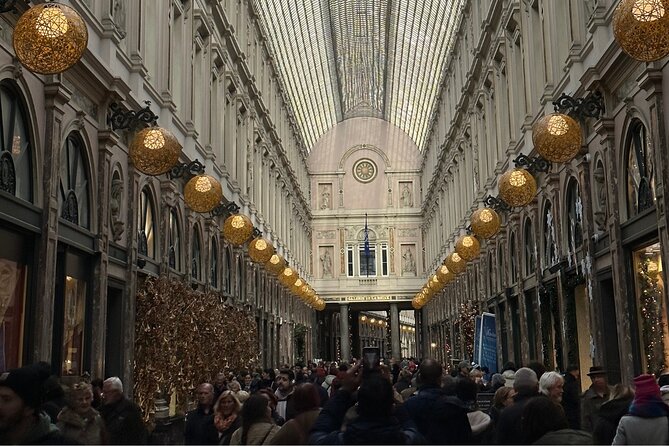
You’ll pass through Galerie de la Reine, a historic shopping arcade with intricate architectural details. This is where the tour’s pacing works well: after heavier civic history, you get a lighter, more human-scaled space.
Then you arrive at Toone, the puppet theater. If you’ve never been around European puppet traditions, this stop is an eye-opener. Even if you don’t step inside, the story helps you understand why this kind of entertainment survives in one city more than another.
Brussels is full of serious monuments. Toone adds the counterweight that makes the city feel like it has a sense of fun built into everyday life.
Jeanneke-Pis and Manneken Pis: the city’s jokes, in bronze
The route includes both Jeanneke-Pis and the iconic Manneken Pis. I love how these stops reframe Brussels. They’re not only quirky landmarks; they’re a signal that the city’s humor is a real part of its public identity.
If you get a little annoyed by tourist traps, consider this: you’re being directed to the symbolism, not just told where to stand. After you get the context, it feels less like a box-check and more like a cultural wink.
La Monnaie De Munt and De Brouckèreplein: art and city rhythm
Next comes La Monnaie De Munt, the renowned opera house, which adds another layer of culture beyond museums. Again, the tour is about the story, not entrance fees. Even a quick look at the surroundings helps you connect Brussels’ arts scene to its civic pride.
Then you walk through De Brouckèreplein, a more active public square. This section matters because it reminds you the route isn’t frozen in the past. The old city lives right now, in places where people meet and move.
Black Tower contrast: old structure, modern next door
You’ll pass by the Black Tower, an ancient structure amid newer buildings. This is one of those Brussels moments where the city’s timeline is visible at sidewalk level. Instead of treating history as a museum exhibit, it’s still integrated into the streets.
If you want photos that show the timeline clearly, step back from the tower for a wider shot, then return for a closer one.
Saint Catherine and the Ancien Clocher Sainte Catherine remnants
The walk includes the Church of Saint Catherine and also the Ancien Clocher Sainte Catherine. Together they help you notice how Brussels holds onto fragments. You’re not just looking at a single intact landmark; you’re looking at what remains, and why remnants still carry meaning.
This is a good stretch if you like religious buildings but also like the idea of learning how cities change over time.
Stock Exchange and Brussels City Museum: money meets memory
You’ll pass by the Brussels Stock Exchange, a clear indicator of the city’s economic role. From there, you reach the Brussels City Museum, which helps you deepen your understanding with a mix of historical artifacts.
Because ticket fees aren’t included, I’d treat this stop as a story-driven orientation unless you decide to enter later on your own.
Town Hall and the final zoom-out toward lookout views
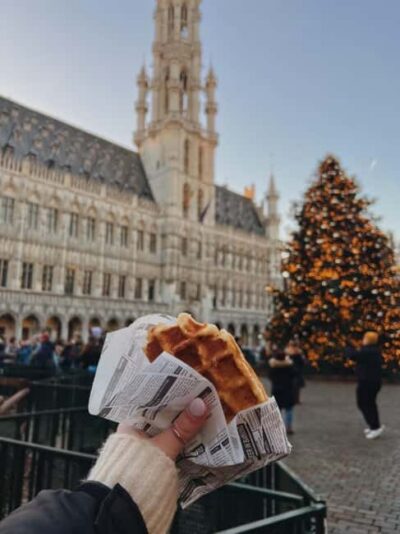
Next up is the Brussels Town Hall, where you’ll marvel at its architectural splendor and learn how administration shaped the city’s public face.
After that, the route continues with Anneessenstoren and the Church of Our Lady of Victories at the Sablon. The Sablon area is a nice rhythm shift: you move from civic power toward a calmer sacred setting where details are easier to notice.
Then you reach the View Grande Roue Bruxelles for another panoramic angle. And finally, you climb again to the Palais de Justice steps for a top city view, followed by finishing at Lookout des Marolles at Rue des Minimes 66, 1000 Bruxelles.
That ending matters. Lookouts give you a mental map. Once you can see the city layout, all the earlier stops feel connected instead of scattered.
Price and value: why $9.99 can work (or not)
At $9.99 per person, this tour is priced like a low-risk way to get a guided walking experience without committing to museum tickets. You’re paying for the app, the audio, and the route structure—not for entrances.
You also get lifetime access and offline support, which is the real value. If you only use it once, it can still be worth it because it helps you interpret what you’re already seeing. If you reuse it on different trips or re-walk portions, the price starts to feel more than fair.
What can make it not worth it for some people:
- If you hate walking climbs, the route may annoy you.
- If your phone battery runs low easily, bring an external charger or plan frequent breaks (smartphone isn’t included).
- If you’re expecting museum entry included, you’ll need to buy tickets separately.
What to bring, so the tour stays smooth
The tour includes offline audio and maps, but not your phone or headphones. So plan for:
- a charged smartphone
- your preferred headphones (or speaker use, if you don’t mind it)
- comfy shoes for lots of walking and stairs
Also, because this is a self-guided app format, a technical hiccup can ruin the flow. If audio ever starts looping or glitching, you can contact VoiceMap support by email or telephone (the tour help info indicates both options). It’s a good backup plan.
Who this self-guided Brussels tour suits best
This tour is ideal if you:
- want a guided walk without a fixed group schedule
- like learning the story behind landmarks like Grand Place, Manneken Pis, and Palais de Justice
- enjoy a mix of major icons and smaller cultural stops like Toone and comic street art
It’s also a solid first-time approach to Brussels because it gives you “where am I” context early, then keeps layering meaning as you go.
If you prefer totally flat walking routes or want zero phone time, look at alternatives. This one is built for phone-in-hand narration.
Should you book this Brussels self-guided tour?
I’d book it if you want a structured way to see medieval-to-modern Brussels in about two hours, with offline audio and lifetime access for $9.99. The mix of royal lineage, UNESCO Grand Place, comedy landmarks, and city panoramas is a strong payoff for the effort.
I would hesitate if uphill walking is a deal-breaker for you, or if you know your phone tech often misbehaves on the go. In that case, you could still enjoy Brussels—but you’d likely be happier with a simpler plan that doesn’t depend on app audio.
If you do book, my advice is simple: load it up, test your audio at home, and give yourself time for the viewpoints. Brussels rewards patience, and this tour is built for that kind of pacing.
FAQ
How much does the Brussels self-guided tour cost?
It costs $9.99 per person.
How long is the tour?
The duration is about 1 hour 30 minutes to 2 hours.
Where does the tour start and end?
It starts at Pl. des Palais 1, 1000 Bruxelles, Belgium and ends at Lookout des Marolles, Rue des Minimes 66, 1000 Bruxelles, Belgium.
Do I need tickets or museum entrance fees?
Tickets or entrance fees for museums and attractions are not included.
What do I need to use the tour on the ground?
You’ll need your own smartphone and headphones. The tour provides the VoiceMap app and offline access to audio, maps, and geodata.
Does it work without internet?
Yes. It includes offline access to audio, maps, and geodata.
Can I use the tour more than once?
Yes. You get unlimited use of the tour before your booking date and after it, and you have lifetime access in English.
Is it refundable if I cancel?
No. It is non-refundable and cannot be changed for any reason.
More Brussels Outings

More Tour Reviews in Brussels




Around the Grand-Place



Hot Off the Press: New Brussels Reviews




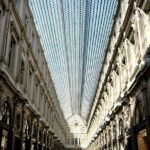
Brussels Old Town & Grand-Place Walks, compared.
 ★ 5.0Visite guidée : Bruxelles, 1000 Ans de LuttesFrom $382 reviews
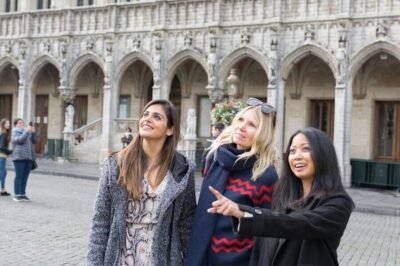 ★ 4.7Brussels Must-See Attractions Walking TourFrom $3267 reviews
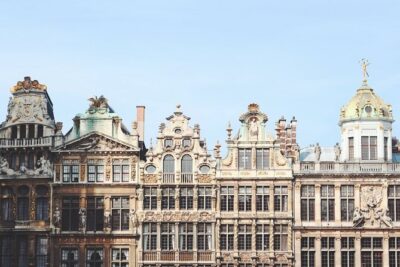 ★ 5.0Brussels Old City’s Highlights Walking TourFrom $449 reviews
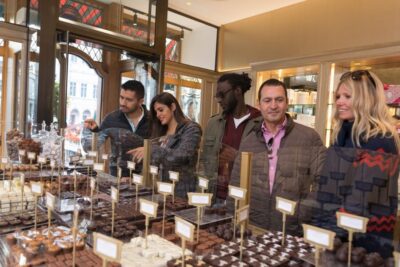 ★ 4.3Private Tour of the Upper and Lower CityFrom $35333 reviews
 ★ 4.8Walking Tour from Central Station to Manneken PisFrom $38819 reviews
 ★ 4.5Brussels Old Town & Beer Secrets: Self-Guided Puzzle WalkFrom $611 reviews
 ★ 5.0Brussels 2-Hours Walking Tour: Must-See Highlights in the CenterFrom $4210 reviews
 ★ 4.82-Hour Walking Tour of the Historic Center with a Local GuideFrom $38 reviews
Browse the lists this tour appears in